I thought my headaches were caused by caffeine withdrawal — it was a brain tumour
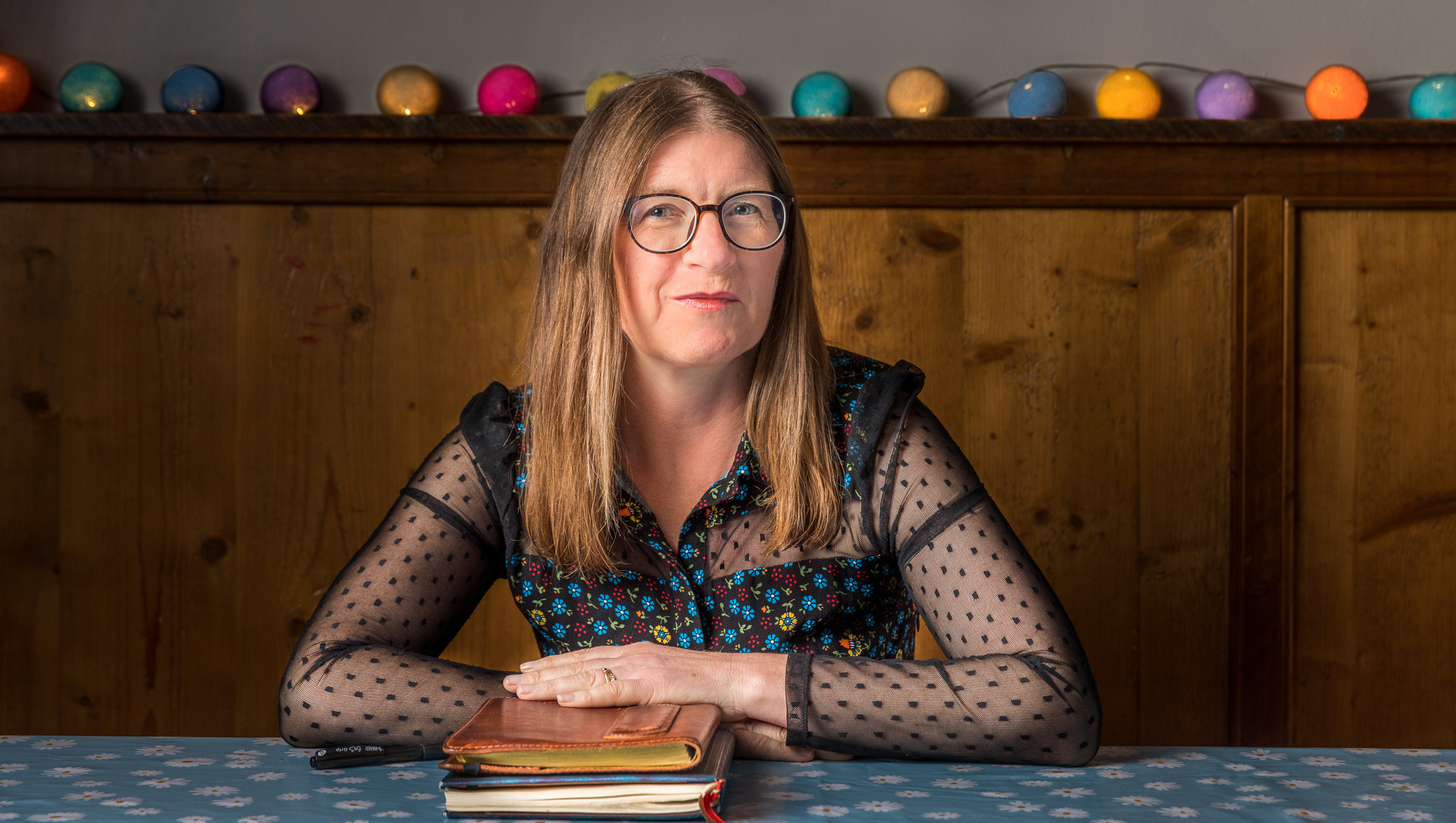
Loretta Kennedy, at home in Glanmire, spent six weeks in hospital. Picture: David Creedon
Cork woman Loretta Kennedy was thriving in 2024 when she first started experiencing “banging headaches”. She had sold her business, Mama Bear Foods, to Ballymaloe Foods and started a coaching business.
“I just kept having these really bad headaches,” she recalls. “I joked, saying if I ever wrote a book, it would be called, ‘I’ve Got a Banging Headache’.
“But I was busy, and I put the headaches down to caffeine withdrawal or needing to get outside more.”
Then, during a visit to her mother in Mayo in late 2024, the mother-of-three experienced a seizure: “My mother was with me when I had the seizure and she called an ambulance. At the hospital, they did some tests, and I was referred for a follow-up in Cork when I returned home.”
In Cork University Hospital, Kennedy had an MRI, which revealed a large tumour on the left hemisphere of her brain. The tumour was identified as a neurocytoma. Further tests showed that it was benign. Kennedy was scheduled for surgery to have it removed on October 30, 2024.
She recalls feeling shocked and emotionally disoriented. “All of a sudden, I’m in this situation where things are far outside my control.”
In all, Kennedy spent six weeks in hospital.
Her long hospital stay dominated family life — her husband and three children, who were aged 12, 15, and 18 at the time, were regular visitors, and it almost felt like their “lives were in limbo”.
“They were really affected by what happened,” she says.
For Kennedy, who is fiercely independent, not being able to earn an income while she was in hospital was upsetting: “I’ve always worked. I’ve never been financially dependent on my husband. I’m a trauma-trained money coach, which involves helping people identify and heal emotional trauma associated with money. In that role I spent so much time talking about how important it is to be financially resourced. And then for me, all of that was gone in the blink of an eye.”
Her hospital stay was largely a blur for Kennedy, who only “vaguely remembers” being there. The stay was followed by “months and months” of occupational therapy, which was largely focused on daily tasks and getting her to “a point where I could get back to work”.
After her long hospital stay, Kennedy said she experienced deep fatigue and a weakness in her legs from long periods of inactivity while in a hospital bed: “I had lost a lot of strength in my legs, so I enrolled in a yoga class to try and recover some leg strength.”
She is now at a comfortable stage in her recovery and has returned to work: “I’m working in a non-profit, working with women who are starting their own business.”
She has also revived her coaching business and is seeing clients.
Things are also busy at home: “My eldest is doing her Leaving Cert this year; my middle girl is doing her Junior Cert, and my youngest started first year.”
Though her life has largely returned to normal, one side effect of the surgery has persisted: “I’m not dreaming anymore. I haven’t had any dreams in a year and a half. Before my tumour, I had very elaborate, very vivid dreams. I would have always written down my dreams, I have journals filled with them. My doctors have said my dreams should come back, but they can’t tell when that might happen.”
A seizure like the one experienced by Kennedy can be a common symptom of brain tumours.
Dr Seamus Looby, neuroradiologist at Beaumont Hospital, says, “They’re not something to ignore, but it’s worth pointing out that for the vast majority of people who have seizures, their scans will be normal.
“In general, the symptoms of a brain tumour are non-specific, but we would say if you have persistent symptoms like a headache, that would be worth checking out,” he says.
“There are over 100 different types of brain tumours. These range from meningiomas, which are mainly benign, to high-grade malignant tumours such as glioblastomas.”
Location is hugely significant when dealing with brain tumours, he says. “There are parts of the brain that we call ‘eloquent’, and that’s a part of the brain that houses an important function like vision, hearing or the primary motor centre. If you have a tumour in an eloquent part of the brain, while surgery is still possible, there is the potential for more complications.”
The brain has an “extraordinary ability” to adapt, he says: “We might have patients who are not able to speak, or have weakness after the surgery, but then over time, that lost function comes back. Of course, for some people that doesn't happen but in the majority of patients, function does come back with physiotherapy, occupational therapy and rehabilitation.”
Today, Kennedy is philosophical about her experience: “If this is the worst thing that ever happens to me, then let that be it. I’m still alive. The tumour was benign. I didn’t need loads of treatment. I was very, very lucky. I have been able to get back to my life again.”

CONNECT WITH US TODAY



Be the first to know the latest news and updates