I tried sea and sauna therapy in Cork for the first time — here's what happened
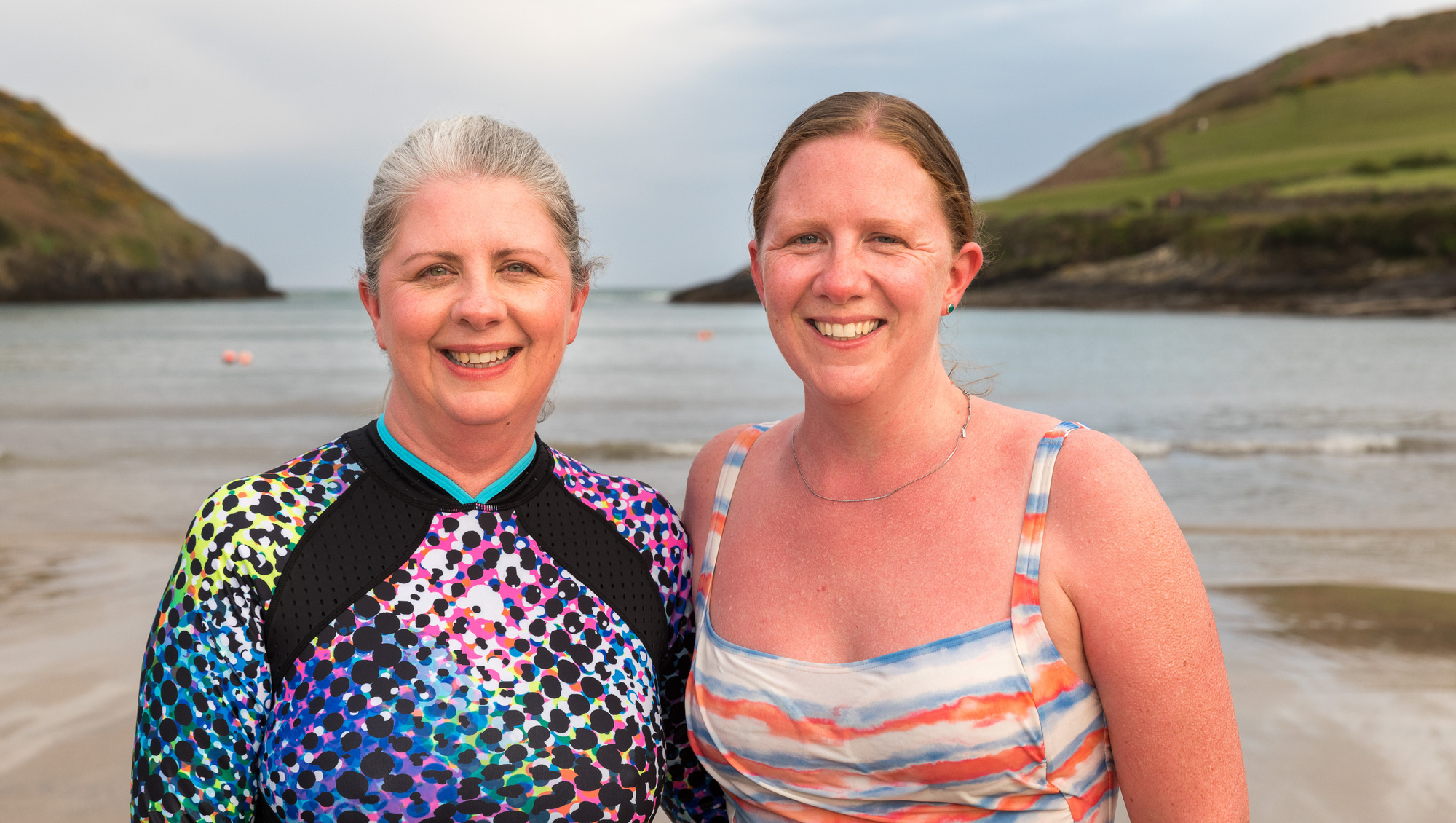
Deirdre McArdle and her sister Ciara Tattan taking a cold plunge in the sea after their sauna at Roberts Cove, Co. Cork.
It's a beautiful evening in Robert’s Cove, Co Cork. At 7pm, the sun is still high, there’s a light breeze, and the tide is in. People mill around, running in and out of the sea, and race past me to get into the sauna, perched at the beach entrance.
I have no prior experience to go on, other than a decades-old memory of swimming in the too-cold sea in Portmagee, Kerry. I shiver, even though I’m fully dressed.
“Start with the heat,” says Sara Perslow, owner of Swede Sauna. “And make sure to come well-hydrated and drink loads of water in between your sauna and your dip. ”
Perslow is originally from Sweden, but says, “I’m half Irish, at this stage, as I’ve been here since 1999.”
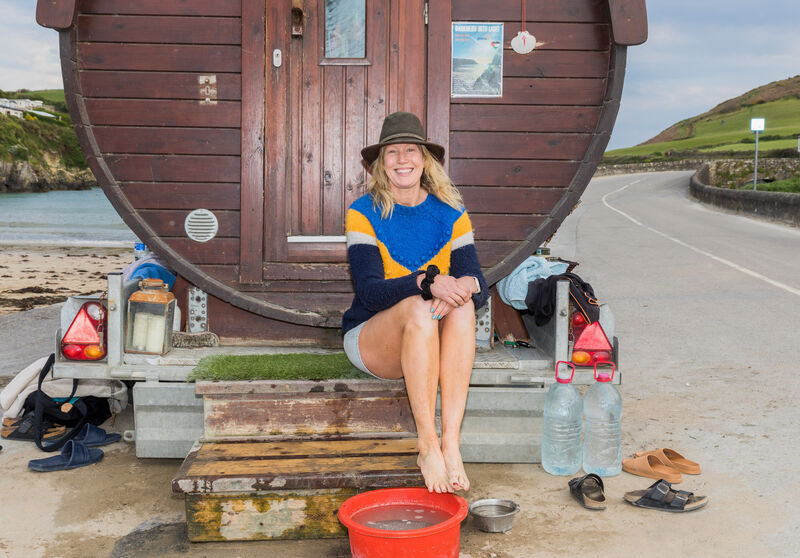
She radiates calm and welcomes everyone by name and shares a joke with regulars. In this small village outside Carrigaline, she has helped create a wellness community.
Saunas are popping up all over the Irish coast.
There are 240 independent saunas, the vast majority started in the past five years. Sauna owners require a licence and insurance, and rules about where the sauna can be located vary by local council.
Perslow set up her sauna in May 2022.
Previously, she had worked in the pharmaceutical industry. She says: “I was burned out and needed a career change. I had started using saunas and found them extremely helpful for my own mental health.
“For me, the peace of mind you experience after a sea-and-sauna session is unique; it’s so calming and mood-enhancing.”
Four years later, Perslow says, “I love my job”.
Meeting her for the first time, I am instantly impressed by her vibrancy. She looks the picture of health and is attentive to my sister, Ciara, and me as we nervously get ourselves ready.
Ciara has never combined sea swimming and a sauna either and is as apprehensive as I am. But Perslow reassures us. “You’ll love it; you’ll feel so invigorated. Now make sure you get into the heat quickly; don’t hang around outside in the cold.”
This 10,000-year-old communal cleansing ritual continues to this day. So much so that in 2020, sauna culture was designated a UNESCO Intangible Cultural Heritage, because it emphasises relaxation and connection with nature.
Ireland has a sauna history, too. In the 1600s, hundreds of ‘sweathouses’ dotted the Irish countryside.
Inside stone igloo structures, turf fires were lit, around which people sat, sweating out colds and fevers, and relieving arthritic pain. Eventually, though, these sweathouses became less popular and died out entirely by the 1900s. Today, their remnants can be found in townlands across the country.
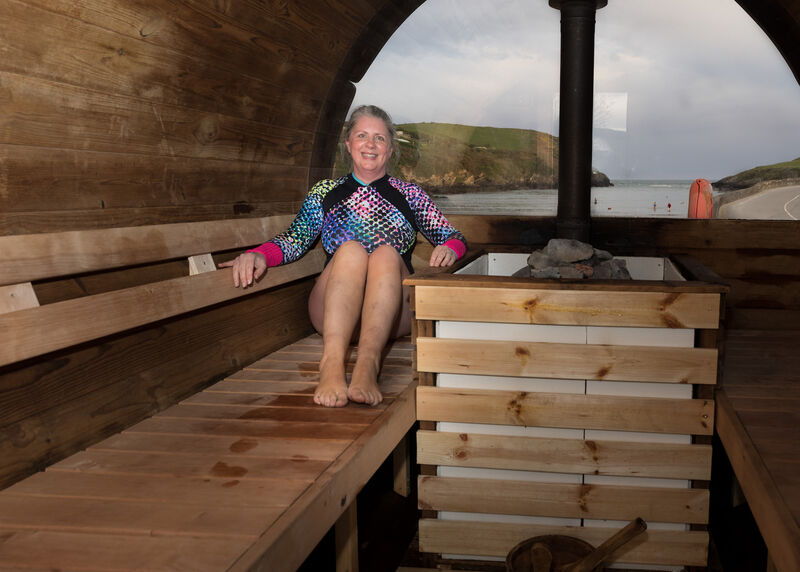
My sister and I strip down to our swimsuits and step into the wooden, barrel-shaped sauna. A full glass wall overlooks the sea.
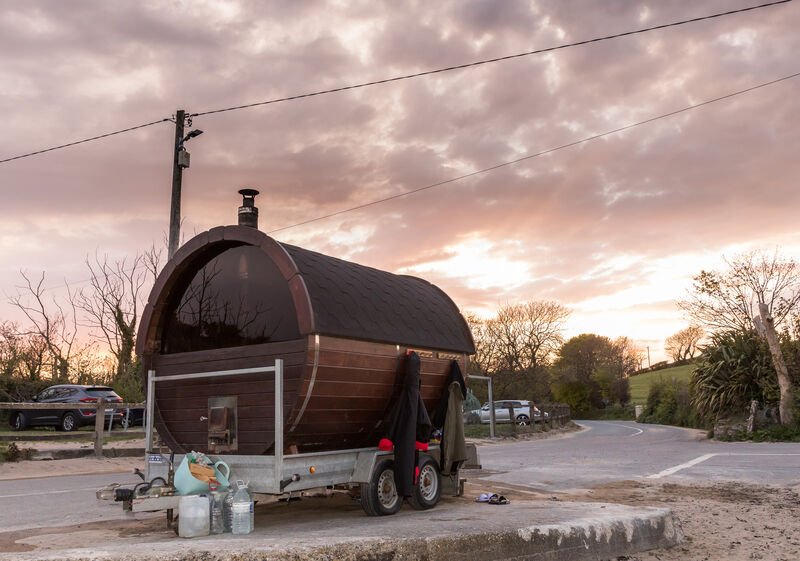
Perslow powers her sauna with kiln-dried birch, and the temperature is set to a tropical 90-100 °C. It’s not long before we start to sweat.
With the chat flowing — we are not alone; it’s a little like being in a pub —we soon forget the dry heat and enjoy the banter.
The conversation is as much a part of the sea-and-sauna experience as the heat and the cold swim.
A series of British studies highlights that weekly sauna use is associated with a stronger sense of belonging. The studies have kick-started a debate in Britain about saunas as a way to combat loneliness.
Here in Robert’s Cove, the sauna customers are a range of ages, from their 20s to their 60s, in a mix of couples and people on their own. All are enjoying each other’s company and encouraging one another to go to the sea for a swim.
They welcome newbies like my sister and me and fill us in on sauna etiquette.
They say: “When you’re leaving, get out quickly and shut the door behind you;" “The middle seats are the ‘coolest’. Right up by the stones are the hottest”; “Ten to 15 minutes is the usual, but listen to your body. Don’t stay longer than what feels comfortable for you in the sauna, and that goes for the sea dipping, too.”
The advice will prove to be useful.
We stay in the sauna for 10 minutes; the heat is dry and intense, but it’s pleasant rather than uncomfortable. Then, it is time for a dip.
With well-wishes echoing in our ears, we make our way quickly and decisively down the beach, thankful that the tide is in.
“Keep going, don’t stop” is the advice, so we do just that.
Once we get to waist high, we drop down. The ice-cold shock is sudden, and the breath is pushed out of our bodies.
We calm our breathing using the Wim Hoff technique of 30–40 deep breaths. After the last exhale, you hold your breath as long as you can, then take one last inhale and hold for 15 seconds.
The technique steadies our breathing, which had become frantic when we hit the cold.
“There’ll be pain, but you get used to it,” someone had said in the sauna. And they are right. We stay in the sea for five minutes and then make our way back to the blessed heat of the sauna.
We repeat the cold/hot process three more times. The third sea dip is glorious; our bodies must have acclimatised to the cold. Perslow had advised us to “finish on the cold”, so we have one more sauna and a final dip, making it a hot-cold quartet.
A final cold shock also helps close your pores, which the sauna heat had opened, and reduces any redness or puffiness.
Perslow says: “Finishing on cold also boosts the adrenaline and endorphins, giving you a natural high, and means you end the session feeling refreshed and alert.
“However, for later evening sessions, I usually end with a bit of heat for that drowsy feeling.”
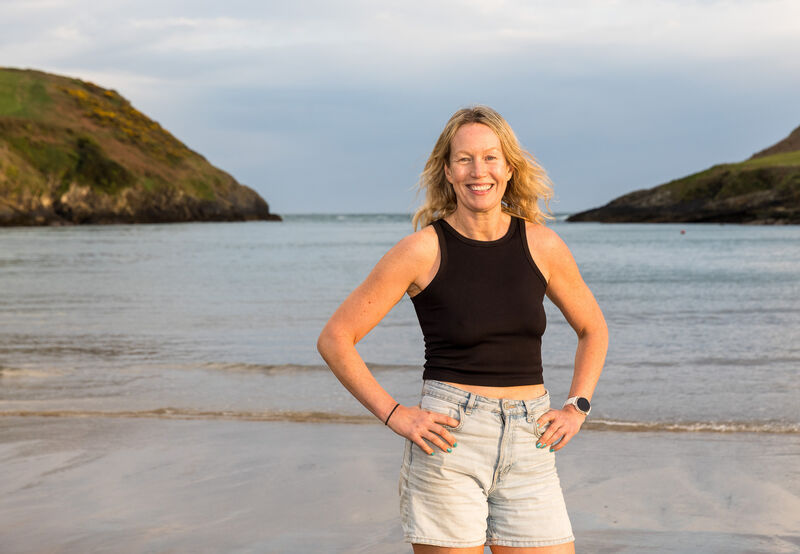
By the end of the hour, we are both buzzing. The mix of heat and cold alternately makes you energised and exhausted.
“You’ll sleep well tonight,” says Perslow. I can report that we did indeed.
Aside from the soporific effects, there are many other benefits to exposing your body to heat and cold, called contrast therapy. According to a study in the Journal of Cardiopulmonary Rehabilitation and Prevention, the body’s cardiovascular system is boosted because heat dilates your blood vessels, while cold constricts them. Together, these enhance your circulation.
The immune system also benefits from regular hot-and-cold sessions. “For me, it’s been transformative. I haven’t had a cold in the four years I’ve been doing this,” says Perslow.
The combination of cold water and heat can also boost your mood, according to a 2023 study. The sauna heat releases endorphins, relaxes muscles, and reduces stress, while the cold water boosts the body’s alertness and resilience.
Seaside saunas have large windows overlooking the beach and the water because staring at the sea is soothing and rejuvenating.
Anyone who visits the sea regularly will probably be familiar with the natural high you can get from simply being by the water and outdoors.
One of Perslow’s regulars tells us that she visits Swede Sauna regularly during the winter, often doing the sea-and-sauna experience under a full moon. “It’s just magical,” she says.
The buzz of my first experience of sea and sauna stayed with me for a few days.
A niggling hip pain felt looser, and my mind felt calmer. Could this be the natural therapy I’ve been searching for?
One thing is certain: I can see how this practice could become compelling. I’m already planning my next visit.
-
Shared sauna sessions. Costs €15 for 45 minutes. -
Shared sauna sessions. Costs €20 for one hour. -
Shared sessions. Costs €20 for one hour. -
Sauna and ice bath. Costs €20 for 45 minutes. -
Shared sauna sessions. Costs €20 for one hour. -
Shared sauna session. Costs €10 for 30 minutes. -
Shared and private sessions. Costs from €15 -
Shared and private sessions. Cost from €10. -
Shared sessions. Costs €20 for one hour. -
Shared sessions. Costs from €13.95 -
Sauna and cold plunge. Costs from €15 for 45 minutes. -
Private and social sauna sessions. Costs from €20 for one hour.


CONNECT WITH US TODAY



Be the first to know the latest news and updates