Darragh Fleming: ‘My best friend’s suicide changed me forever’
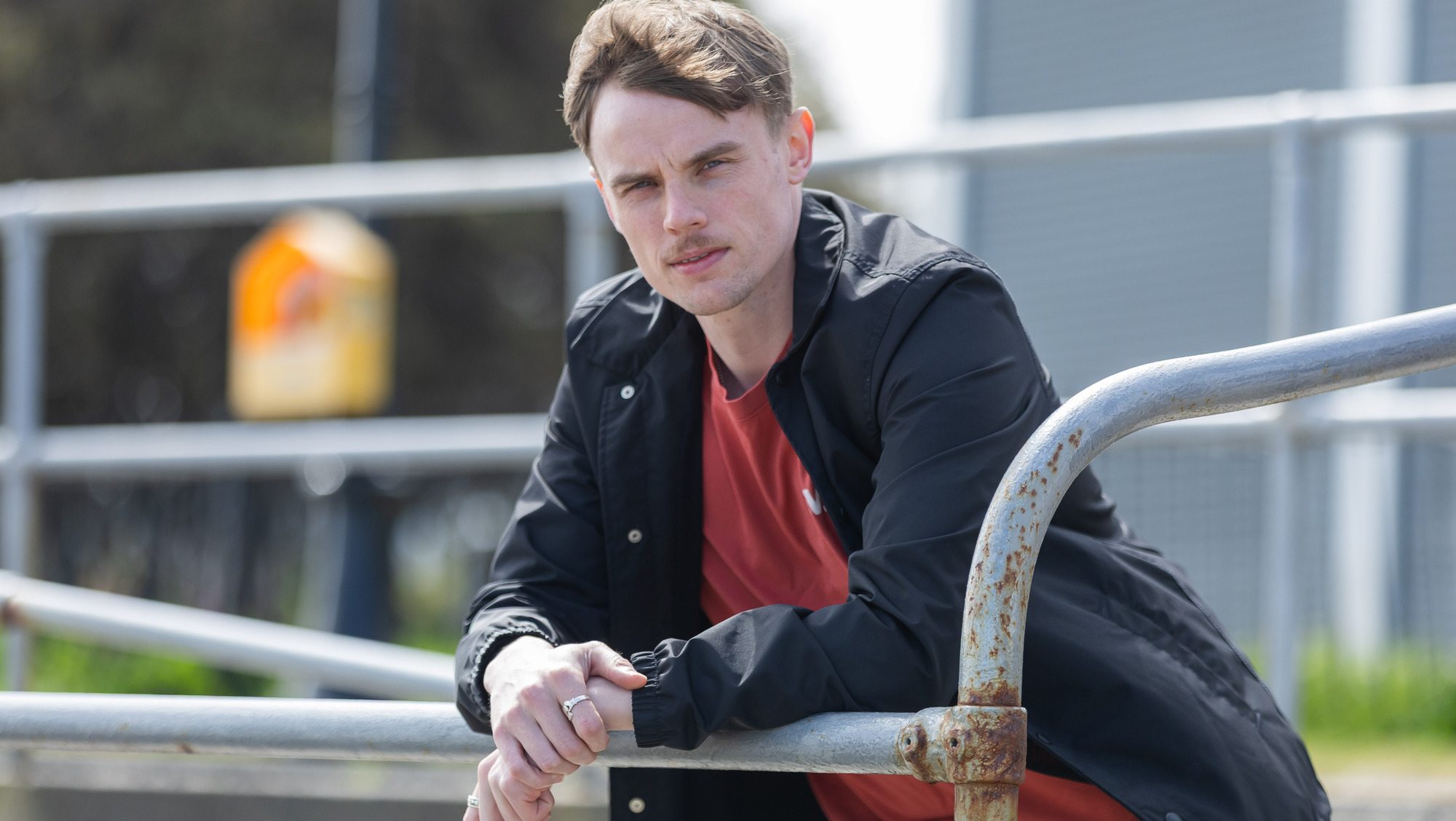
Daragh Fleming was in college when grief hit, two years after the death, spurring him to become a mental health activist
Darragh Fleming: ‘My best friend’s suicide changed me forever’

Writer Daragh Fleming encourages men to go for a walk to talk about their feelings. Picture: Gareth Chaney

Cork writer and poet Daragh Fleming was 17 when his best friend died by suicide. 

“It profoundly affected me and changed my entire life,” he says.

His work — writing and mental-health activism — is about inspiring conversation and “trying to prevent as many suicides as possible”.

“As someone who was bereaved by suicide, I knew the impact it can have on people who are left behind, and also how often people struggle in silence,” says the 31-year-old.

Fleming is an ambassador for Electric Ireland’s Share a Walk series, which aligns with the Pieta House Darkness into Light suicide-prevention campaign on May 9.

Fleming says: “I’d done the Darkness into Light walks for a good few years, and this year I came on board as an ambassador for Electric Ireland and its new programme, called Share a Walk. I really love the idea. It’s so simple, but when you invite friends and family to share a walk, that’s often when we have important, and sometimes essential, conversations. We’re walking alongside each other. I think it gives us that space to talk, and to vent, and to get things off our chest.”

It’s the “side-by-side element” that breaks down the mental barriers to talking about emotions and feelings.

Fleming says: “You can say how you’re feeling, and you don’t have to take on the pressure of being looked at. Most of the conversations I’ve had where something profound or deep has come out have been on a walk, during a run with one of my friends, or in the car.”

When his friend died, Fleming didn’t immediately understand how he felt. “There’s an aspect of not knowing what you’re feeling, and probably a bigger part, especially among men, is knowing you’re feeling some way, but denying yourself the permission to feel it.”

It wasn’t until two years later, when Fleming was studying applied psychology at University College Cork (UCC), that he read about depression and realised the text described what he was experiencing.

Buoyed by the insight, he felt he could now verbalise his feelings. UCC offered free counselling to students, so he signed up.

“The therapy absolutely helped, but what was most interesting was when I made the decision to sign up for counselling, I told my family about what had been going on with me, and suddenly it was all out in the open. I didn’t have to pretend or hide anymore. That gave me such a sense of relief, because I was like, ‘Right, I’m not OK, but at least I have taken the steps to get better’.”

Putting weight on the page

Alongside the counselling, Fleming began journalling and writing poetry. This act of writing things down took the thoughts out of his head and onto paper.

Expressing how he was feeling to friends and family, and to himself, allowed Fleming to move forward. “It took a lot of weight off. For me, my shoulders just dropped, and I thought I can finally stop holding on to this and let it go.”

With the rise of the so-called manosphere, it is arguably a difficult time to be a man who expresses his emotions. But Fleming points to “trailblazers” like Niall Breslin (Bressie) and Blindboy, who use their platforms to discuss mental health and the power of being open with your emotions.

We need to include Fleming among these trailblazers. His viral poem, If I Ever Have Boys, is a powerful reminder that vulnerability is strength, particularly among men, who may struggle to express their emotions. It’s an important message; in Ireland, men account for 75% of deaths by suicide.

“Men are socialised not to engage in emotion, and there’s this conditioned silence; we’re not meant to speak up, whether it’s about ourselves or about other people,” says Fleming.

“Emotions do come up for men. But they’re rejected, because they’re not part of the parameters that we grew up with of what it means to be a man.”

Small gestures can make a difference in helping a friend or a family member to open up, Fleming says. “It can start among your own friends. It can start with, ‘Hey, man, you’ve been quiet lately. Is there anything going on?’ Conversations like this change things. If there’s one man in every group of men doing that work, that will change a lot, because every group will have this voice of like, ‘Oh, yeah, maybe we should talk about these things’.”

Being the one to share first is often a good starting point, says Fleming. “If I’m out with a friend for a walk, and it’s a friend that I’m thinking might be going through something, I always share first. I might say, ‘I wasn’t in good form this week, or I couldn’t sleep’ and I’m telling them these things to signal that, ‘Hey, we can talk about these things’.”

Daragh Fleming on Sandymount Beach, Dublin Picture: Gareth Chaney

Around 500 people die by suicide in Ireland every year. “Behind every one of those deaths there are families, friends, colleagues, classmates, and whole communities affected,” says Emma Dolan, Pieta’s director of clinical services.

Each year, more than 6,000 people receive support through Pieta House therapy services.

The non-profit provides 40,000 hours of free therapy, and its 24/7 Crisis Helpline receives more than 100,000 calls and texts.

“But I think it’s really important to say that those aren’t just statistics,” says Dolan. “Every call, every text, and every therapy session is a person who has taken a really brave step and reached out.

“Sometimes, people come to us feeling completely overwhelmed, or frightened, or ashamed of what they’re feeling.

“Our role is to meet them with compassion, without judgement, and to help them stay safe and find a way through that moment.”

Darkness Into Light is Pieta House’s biggest annual fundraiser. “It helps keep our services free for the people who need them,” says Dolan.

Last year, around 80,000 people took part across almost 200 walks in 12 counties.

Early Saturday morning, at 4.15am, Fleming will take part in the Darkness Into Light walk in Phoenix Park, Dublin. “I’m really looking forward to it,” he says.

In 2025, Darkness Into Light raised around €4m. Dolan says: “That money helps fund very real support: €12 can fund a call to Pieta’s 24-hour crisis helpline, €45 can help provide a crisis counselling session, and €100 can cover a first therapy session with a Pieta professional.”

“When people register, donate, volunteer, and take part, they are helping Pieta be there for someone who may need us, not just on the morning of the walk, but every day and night of the year.”

More in this section

Lifestyle

Newsletter

Eat better, live well and stay inspired with the Irish Examiner’s food, health, entertainment, travel and lifestyle coverage. Delivered to your inbox every Friday morning.

Cookie Policy Privacy Policy Brand Safety FAQ Help Contact Us Terms and Conditions

© Examiner Echo Group Limited