Skin cancer: When the doctor said 'unfortunately' I knew it was bad news
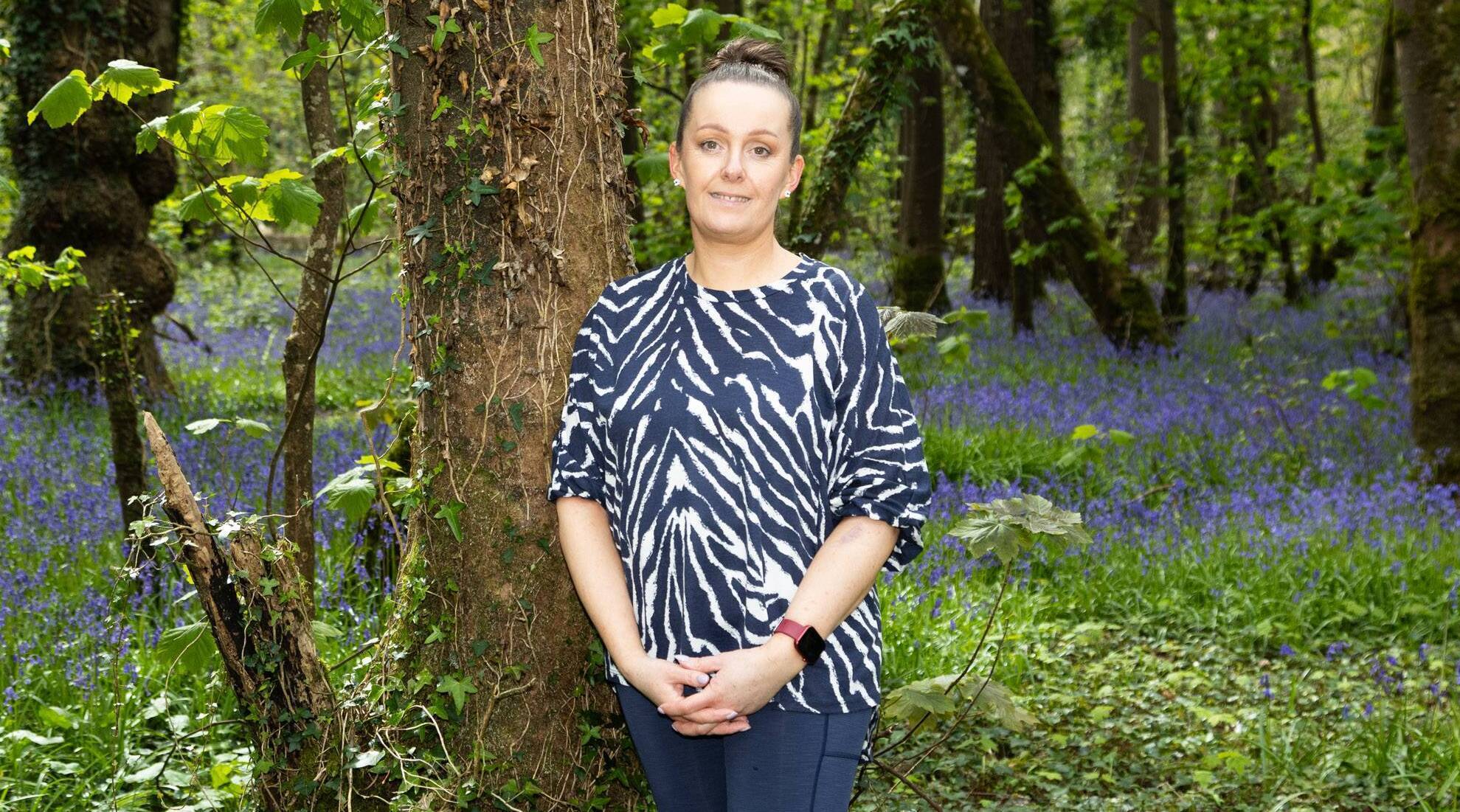
Fiona White at Charleville Estate, Tullamore, Co. Offaly. Picture: Ger Rogers Photography
When one day in the staff canteen, a colleague asked special needs assistant Fiona White “will you promise me you’ll get that checked out?”, the 49-year-old mum of two didn’t pay much heed to what she thought was simply a freckle on her left forearm.
When two other colleagues later urged her to get it checked, Tullamore-based White visited her GP, “just to get them off my back”.
Describing it as a “freckle” that was not uniform in shape or colour, she says: “I’d say I had it since I was a child, possibly a teenager, and it probably was smaller. I can’t say at what point it started to change.
“At times, it looked like it was scaling over, with white patches on it.”
The GP sought a second opinion from another doctor in the practice and both agreed White needed referral to a dermatologist. She attended Tallaght Hospital in early May 2025.
“When I got there, they said, ‘we’re getting rid of that today — sooner rather than later is better with this’,” she recalled. “I still didn’t think anything of it, just that I was going to get a little chunk out of my arm. I was more worried about getting time off work — my son was just about to head to America — so I was thinking this is happening at a bad time.”
The biopsy results arrived at the end of May.
“I was still so oblivious,” says White, who recalls the doctor beginning his report with the word ‘unfortunately’. “As soon as he said that, I knew it was something, it was bad, it wasn’t just a freckle.”
White was diagnosed with melanoma — stage 1B, no ulceration: “Stage one was good, it was just on the skin. ‘No ulceration’ meant it hadn’t spread elsewhere, as far as they could see. But because it was 1B, it was on the cusp of the next stage.”
White’s melanoma was 0.88mm on the Breslow scale — which describes how deeply the melanoma has penetrated the skin.
“They explained that for anything over 1mm, they offer sentinel lymph node biopsy and mine was quite close to that,” she says. “They asked ‘would you rather walk out of here and not know it has possibly spread’ or ‘would you rather know it definitely hasn’t?’
“For me, it was a no-brainer.”
In mid-June, White underwent a wide local excision of the mole and a lymph node biopsy and was told all the cancer had been removed. She now regularly attends dermatology check-ups and ultrasounds: “Everything has been good so far, thank God, but it has taken me a long time to digest that I actually had skin cancer.
“I guess I was just in disbelief. In my mind, as an adult, I’d done everything in my power to be careful in the sun — I never thought I’d be a candidate for skin cancer.”

Describing herself as “a child of the 1970s and ‘80s”, she knows sun care was not a priority back then: “As a child and teenager, I got badly sunburned. The last time I had a very bad sunburn was when I was 15, I was in the gaeltacht for a few weeks. I can’t remember if I was wearing sunscreen; it was around 1992. I was burned from my knees down, my shoulders, my arms, and some of my back.
“I had to have cold hot water bottles under my ankles because they were swollen due to the sunburn”
Emphasising how careful she has been in the sun in adulthood, she says: “The skin cancer must have stemmed from childhood burns and the one at 15. I never thought childhood sunburn could creep up on you in later life like that.”
White says her skin never tans: “I’ll burn, blister, peel and go back to being white again.”
She briefly used sunbeds in her early 30s “to get a little colour” but soon stopped: “I did two-minute sessions to begin with, then went up to four minutes, but I burned on that, so I didn’t go back.”
Now she has to manage anxiety around the sun: “I like the sun. I know it’s not the enemy — we need vitamin D, but I don’t like the heat. My anxiety is because of what I’ve been through, and I’m more likely to get a recurrence of skin cancer, having had it already.
“I don’t sunbathe. I avoid going out in the hottest part of the day, 11am-3pm, in summer when I’m not working. I don’t really expose my skin. If I wear a T-shirt, I’ll also put on a cardigan — and I’ll put SPF 50 on my arms. I wear a hat, sunglasses, lip SPF.”
Never someone to go on a sun holiday, White says: “If I go somewhere, I’d rather go somewhere cold.”
Skin cancer is Ireland’s most commonly diagnosed cancer, with 11,500 cases diagnosed annually. The National Cancer Registry expects the population with skin cancer to double by 2040, says Amy Nolan, former oncology nurse and Irish Cancer Society’s director of clinical affairs.
The Irish Cancer Society’s ‘Skin Smart’ campaign, which runs through May, aims to highlight not just melanoma but non-melanoma skin cancers: Basal cell carcinoma, the most common skin cancer, and squamous cell carcinoma, the second most common.
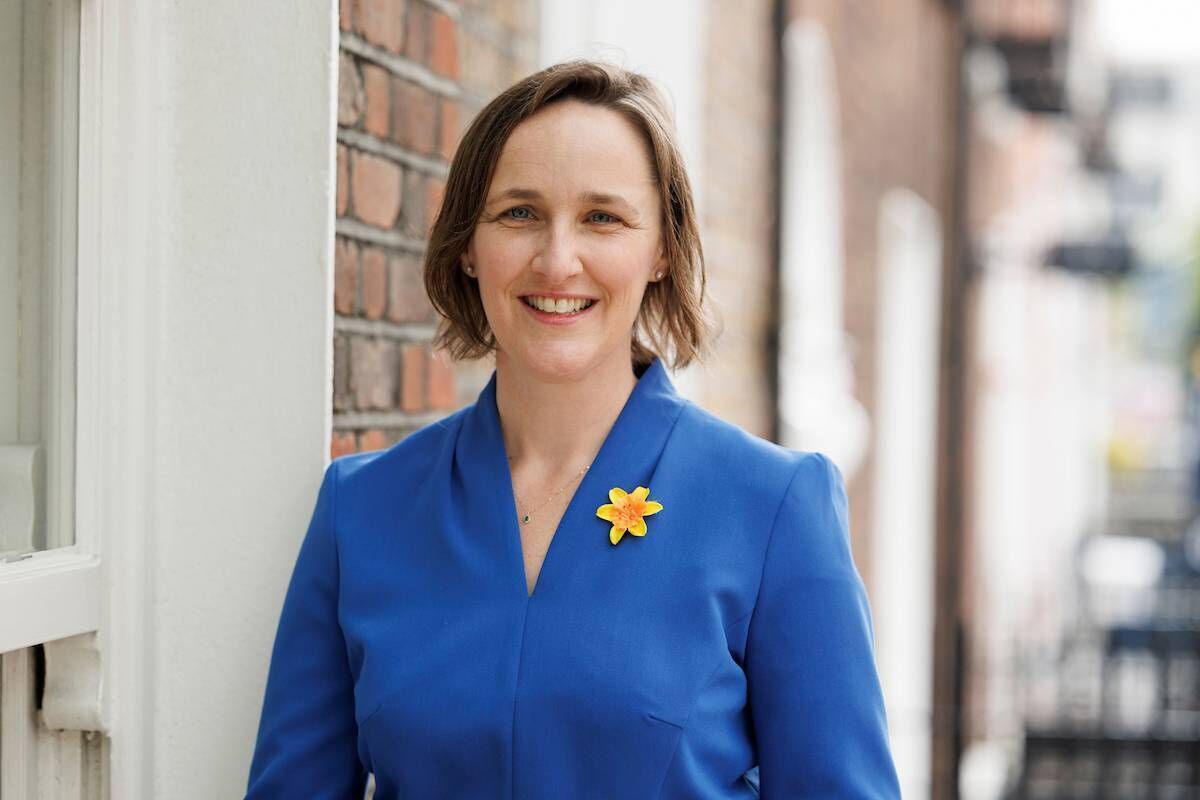
Nolan says: “Basal cell and squamous cell carcinomas are related to sun exposure. We see them in the older population who may not have been as cautious about sun-care as younger people today.”
She says non-melanoma cancers are generally easier to treat — “nine out of 10 patients will survive over five years” — while melanoma, which over 1,200 people are diagnosed with annually in Ireland, is the most serious due to its ability to spread.
“Melanoma can be difficult to find. Sometimes, for example, people present with a lump in the groin and they don’t know where it started,” she says.
Nolan says — like any cancer — if diagnosed early, treatment is easier, less invasive, and more effective.
About 270 people die of skin cancer in Ireland every year. With the arrival of immunotherapies, which stimulate the patient’s own immune system to recognise and kill the cancer cell, treatment is now much better tolerated.
“People are surviving longer because of these drugs,” says Nolan. “Treatments have advanced so much over the past 15 years. In 2010, ipilimumab became one of the first immunotherapies to show survival benefits in advanced melanoma.
“Newer checkpoint inhibitor combinations have since pushed long-term survival far higher, with major trial data showing 52% melanoma specific survival at 10 years for patients receiving nivolumab plus ipilimumab.”
She says chemotherapy is now used later in melanoma treatment if immunotherapy has not been effective.
For non-melanoma cases, surgery is the first line of treatment, she says, adding: “After the cancer is removed, patients receive a special topical chemotherapy cream.”
- A small lump,
- Flat red spot,
- Firm red lump,
- Lump or spot that is tender to the touch,
- Ulcer that will not heal,
- Lump with scaly or horny top,
- Rough scaly patches,
- New or changing mole.
“Any change in a mole or freckle, or if a mole disappears, is something to go to the GP about,” says Nolan.
She warns against sunbed use: “If you use a sunbed even one time, your risk of melanoma goes up by almost 30%. If you’re under 35 when you use a sunbed, your risk goes up by almost 75%.”
on clothing that covers your skin, such as long sleeves, collared t-shirts.
on broad-spectrum (UVA/UVB) sunscreen on exposed areas, using factor 30+ for adults and 50+ for children. Reapply regularly. No sunscreen can provide 100% protection; it should be used alongside other protective measures, such as clothing and shade.
on a wide-brimmed hat. Protect your face, ears, and neck.
shade, especially if outdoors between 11am and 3pm, and always use a sunshade on a child’s buggy.
on sunglasses to protect your eyes.
- Anyone with concerns about their skin health should contact the Irish Cancer Society’s support line on freephone 1800 200 700, or visit cancer.ie for information on causes, signs, and symptoms of skin cancer. To protect your skin from the sun, see: cancer.ie/cancer-prevention/sun-and-sunbeds
CONNECT WITH US TODAY



Be the first to know the latest news and updates