Brian Reidy: Feeding cows now that grass growth has improved
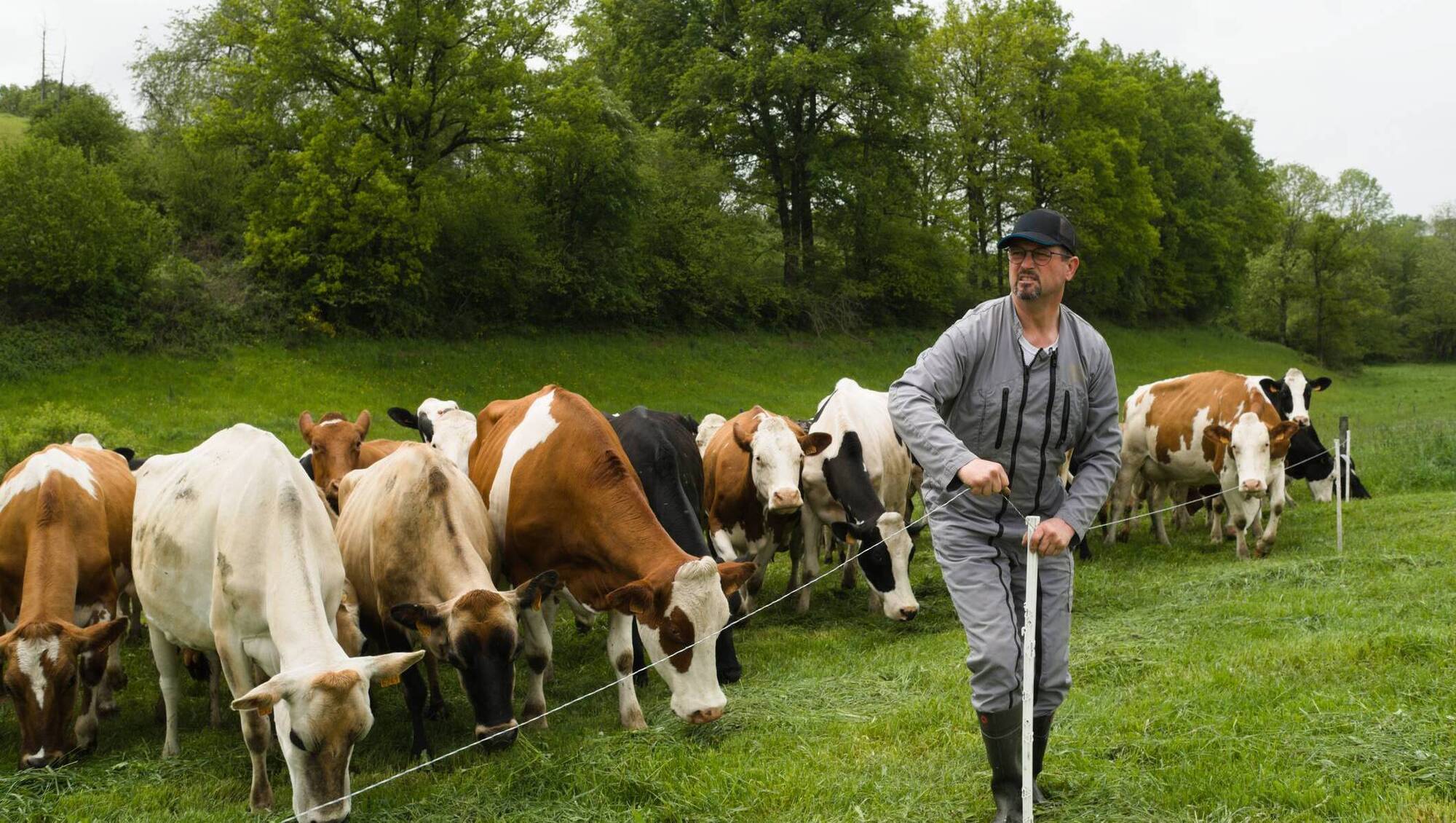
Grass is the major forage for dairy herds in Ireland, and ruminant nutritionist Brian Reidy says we need to make the most of this great growth.
Grass growth really has exploded around the country over the last three weeks, when we finally got some of the missing ingredients in the form of heat and sunshine.
Growth rates of 100kg DM/day were not unheard of in the past two weeks. As I write, a wet week is forecast ahead, but ground can usually take it as we head for the longest day of the year.
In recent weeks, as seems to be the norm at this stage every year, we have seen yield and quality drops being reported around the country. This is in most parts due to the biology of the grass being offered, along with an overestimation of what the available grass is capable of producing on a consistent basis. Below, I will cover some very basic principles that all dairy producers should consider before they drop feeding after the recent poor growth of April and the first half of May.
As mentioned above, most have seen a significant increase in grass growth recently. With this comes the question of how much supplementation cows need to maintain performance while also giving an economically viable response. Every farm will be different in this regard. What you need to consider is what is realistic to achieve from grazed grass alone. Is it 21-23litres/day plus maintenance, or is more actually achievable? Should supplementation decisions be based on average yield, or should you feed above the average if you are flat-rate feeding? Is feeding to yield an option for you, and where do you set your base? Remember, this should be different for cows and heifers. Are you going to continue to buffer feed due to a high stocking rate or a higher-yielding herd? Are you simply impressed with how well your herd is performing with the additional feed required to get you through the grass deficit and wondering what to do now to maintain current yield and solid performance? All this while still remembering that fertility performance is not yet 100% locked down and a nutritional shock should be avoided.
The ruminant has a unique ability to thrive on a multitude of diets, ranging from 100% grass and conserved forage to only cereal by-products and concentrates. However, grass (usually grazed) is the major forage for dairy herds in Ireland, and we all agree that it is the cheapest source of feed, so its potential should be maximised. However, it is also accepted that there are limitations to grass for higher-yielding dairy cows, largely because of reduced control and consistency of feeding.
With a rapid increase in growth, there soon follows a surplus. Many will need to bale sooner rather than later to keep appropriate-quality grass in front of cows.
One of the difficulties when relying on grass totally is that its composition varies widely with season, species and management. This can be seen from the last few weeks, where quality has varied dramatically. I have tested grass ranging from 14% to 24% dry matter, 10.8 to 12.2 ME and 14% to 26% protein. Although grass composition can vary widely, there are important trends related to grass maturity. Young, immature grass comprises mainly leaf with little, if any, stem, so that cell contents typically make up less than 60% of total dry matter, with cell walls (measured as NDF) often about 40%.
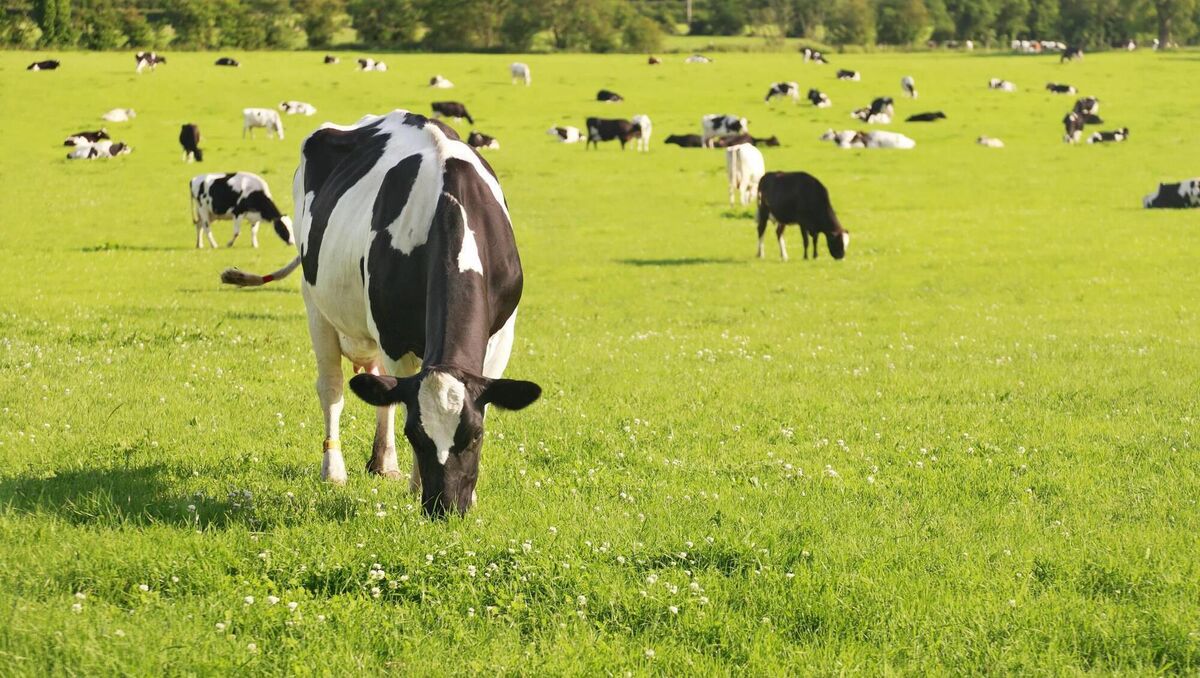
Crude protein content is also typically high at this time at approximately 25% of dry matter. However, in mature (headed) grass, cell wall content (NDF%) increases to over 60% and cell contents decrease to 40% or less. Crude protein content typically drops to under 20% of DM. The 14% protein grass I tested was from reseeded tillage ground that had been growing grain exclusively for more than 25 years and has little to no organic matter in the soil, along with major trace element deficiencies, making it almost impossible for the plant to access the nitrogen and sulphur applied.
Well-managed, leafy grazed grass would be expected to be of high digestibility with a high energy content, along with low fibre and high crude protein contents. However, there are known to be seasonal differences. Another factor in May/June grass is its seasonally high level of CLA. These are fatty acids which tend to coat the fibre and reduce the cow's ability to digest that fibre, often resulting in low or crashing butterfats.
Mineral composition of grass can also vary widely. In Ireland, for moderate milk yields of 20-25litres/cow/day, major mineral requirements (with the important exception of magnesium) can usually be met from grass alone. However, it is usually advisable to supplement with trace minerals, especially selenium, copper and iodine, while higher-yielding cows will justify additional mineral supplementation.
Although grass composition is undoubtedly important, the level of grass intake achieved by the cow is likely to be even more crucial in respect of overall levels of milk production achieved. It is known that a range of factors affect feed intake.
ACTUAL intake = POTENTIAL intake – feed constraints – environmental constraints.
Potential intake is determined by the bodyweight of the cow, as well as the actual level of milk production, while feed constraints include grass availability, quality and contamination, along with possible effects due to supplementary feeding. Environmental constraints include weather and daylength, both of which affect the amount of time animals will, or are able to, graze freely.
Grass dry matter intakes of between 16kg and 18kg/cow/day, often equivalent to in excess of 100kg fresh grass/cow/day, can be achieved under well-managed rotational grazing and this is capable of supporting milk yields of 25-30litres/cow/day. However, it is evident that, in practice, such levels of intake and milk production will only be achieved in good grazing conditions and not every day for a relatively short period during spring and early summer.
Finally, supplementary feeding will also affect grass intakes, and there are consequences to this. The level and type of supplementary feeding to cows at pasture should be determined according to grass quality and the estimated potential intake of grass, as well as target milk production and the herd's genetic potential. Grass quality and levels of intake vary widely, but best estimates are needed according to the local situation.
A practical difficulty in ration formulation for cows at grass is that the level and type of supplementary feed can affect grass intake, but a potential grass intake is needed to allow a sensible decision to be taken on the amount and type of supplement to be fed. If supplementary feeding is excessive, cows tend to graze less and thus the potential of grass will not be maximised. If the intake achieved from grass is too low, milk production will be reduced or body condition loss may be increased, which may well lead to fertility problems known to be associated with excessive body tissue loss. Milk protein dropping or remaining low is a tell-tale sign that cows are not consuming sufficient energy on a daily basis.
This dilemma is often recognised as a real obstacle to providing sound, economic feeding advice for grazing dairy cows.
Conventional advice regarding supplementary feeding at pasture is that it is justified either to improve animal performance over and above that which can be produced from pasture alone and give an economic response, or to maintain performance during grass shortages. This seems to be a sensible position, but there is also a widely held view that supplements complementary to plentiful, leafy grass can also be justified in many situations.
In any practical guidelines to feeding dairy cows, you must consider that it is important to optimise the utilisation of grazed grass. From the review of factors affecting grass DM intake, it is evident that intakes consistently in excess of 16-17kg DM/day are relatively uncommon, and milk yield expectations from grass alone should not be greater than 25-26litres/day. This means that the achievement of higher yields necessitates the use of supplementary feeds and the reliance on grazed grass is consequently reduced.
- Brian Reidy is an independent ruminant nutritionist at Premier Farm Nutrition. His column features in the every Thursday.