Paula Hynes: From Maparasha to Aherla - without education dreams diminish quickly
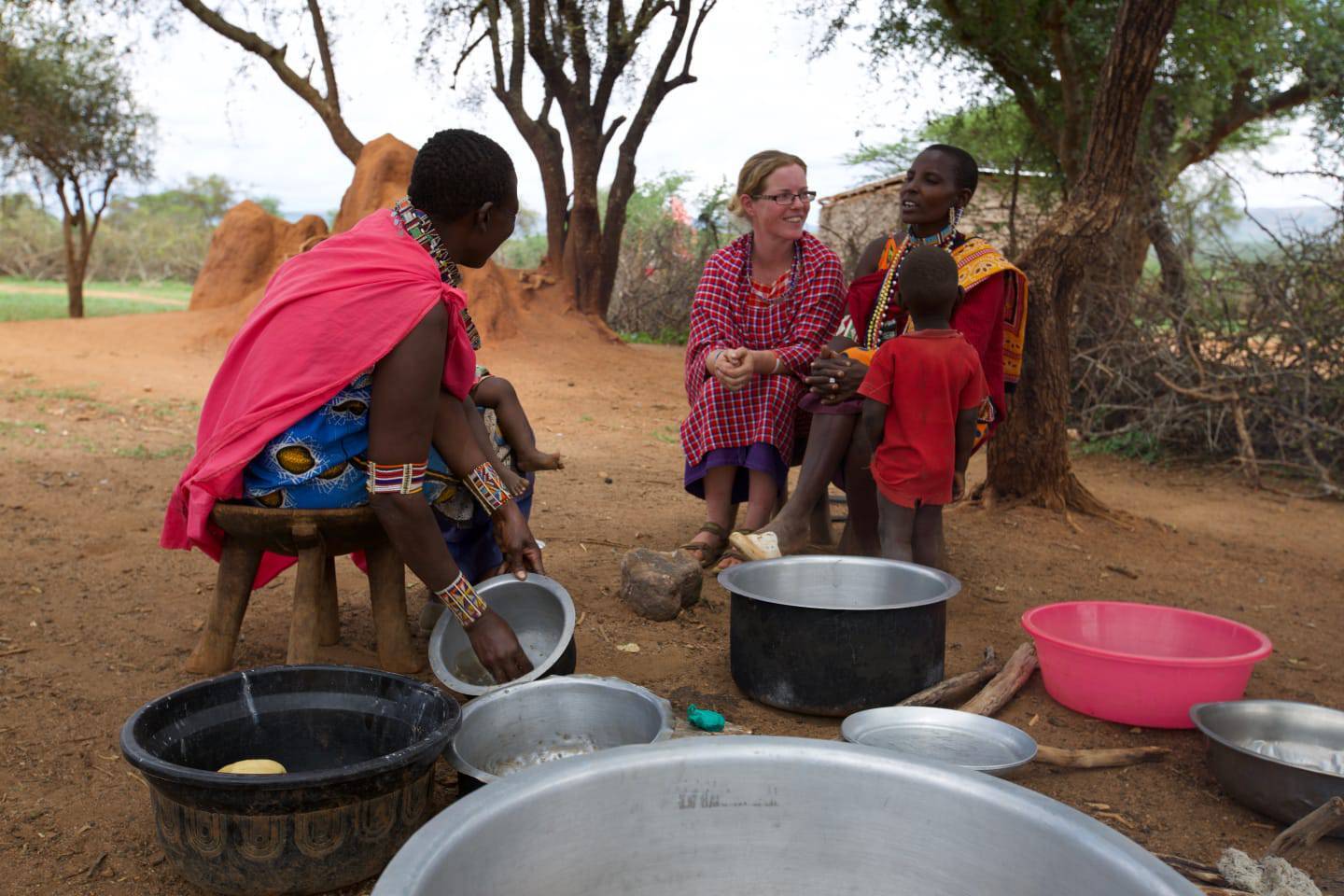
Paula Hynes pictured in Kenya in November 2017

It’s hard to believe we’re now five years on from the start of my Hardest Harvest journey where I got to spend three amazing weeks living with a Maasai tribe 140 km south of Nairobi, deep in sub–Saharan Africa.
I was both nervous and excited at the prospect, but I always believe when an opportunity presents itself, you have to grab it with both hands. So when I found out that cows are sacred to the Maasai, I knew that we would get on famously!
My arrival was celebrated with the women singing a traditional song to welcome me to their Bohma, a choral echo that connected with my heart forever, which was followed by an introduction to William Keloi, son of the village chief and my trusted translator.
Southern Kenya is a harsh barren landscape, far from the productive grazing platform we have for our dairy herd.
William explained the Maasai are nomadic and the cows are taken great distances every day to graze due to the extreme drought.
My days were filled with working alongside the women, trekking for water, and gathering firewood for cooking meals.
As my bond grew with the women, they decided it was time they helped me build my own mud hut which became a phenomenal team task.
I often wondered what the men actually did all day, however, as my connection grew with the community, I was invited to go hunting with the men as well as herding the livestock, a first for any woman and a great honour for me.
Education is not compulsory in Kenya; the poorer have fewer opportunities, the youth have dreams of a better life but without education those dreams quickly diminish, leaving a life of hardship ahead.
William was lucky in that he was in his final year of secondary school, multilingual, with a determination that had seen him achieve top grades, but he faced an educational cul-de-sac due to the economic constraints of the community.
William's passion for life stuck with me and on returning home I chatted with Pete and we both agreed the best opportunity to change one’s life is through education.
College fees are much cheaper in Kenya, and with William having the chance to attend university, we decided to help him on that journey.
I have remained in contact with my Maasai community, taking Pete to Kenya in 2018, where he was quickly named “the Irish chief” - however, he was fast to inform them that our farm was ruled by a Queen!
And I think that gave them a greater understanding of my determination not to fail on my first visit.
Watching William’s education progress over the years, it gave me great pleasure last week to see him graduate with a bachelor's degree in arts, education and social science. A career in teaching lies ahead for him and hopefully, he will inspire even more young ones to follow their dreams.
The Kenyan drought continues, the worst drought on record that they have experienced, and the celebration of seeing William graduate was replaced by heartache.
When I spoke with him on the phone today and he told me that the drought and hunger is devastating them in Maparasha, “most of our livestock are gone, meals are scarce – somedays none”.
It’s a sentiment that is echoed across the region with another small dairy farmer we know, having lost his entire herd due to high cost and non-availability of feed.
French president Emmanuel Macron warned leaders earlier this year that African countries face catastrophic famines due to the situation in Ukraine, words echoed by President Higgins in August as have the UN.
Currently, 23 million people face extreme hunger across Africa so it somewhat infuriates me when I hear the narrative in so many developed countries that we must reduce food production to reduce emissions.
A global reduction in food production combined with a growing world population will increase the price of food on the world market and as we have seen this year, poorer countries cannot compete when prices are high.
It goes without saying that we must all play a part in reducing emissions, on our farm we are making every effort and I firmly believe in embracing science in order to meet the 2030 targets.
If the discussion is to continue around reducing food production, and reducing dairy output in Ireland in order to save the world from climate change, is policymakers' failure to invest in science, doing so at the expense of those who fight to keep food on their table?