Bluetongue: 44 further suspected cases in Co Down
Bluetongue: 44 further suspected cases in Co Down

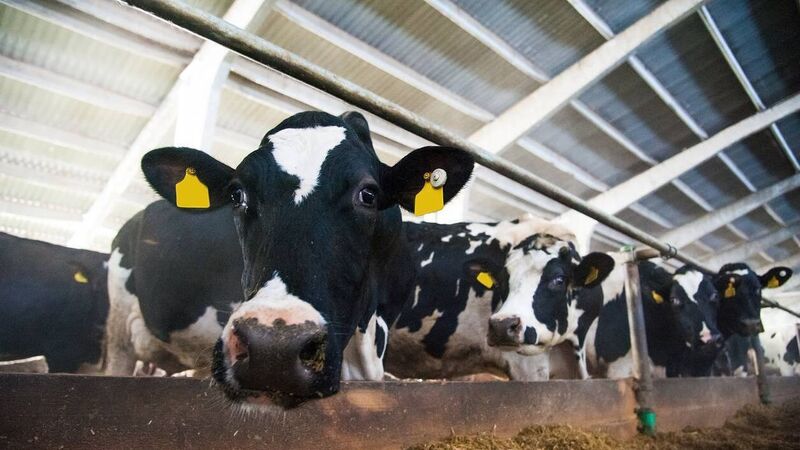
While Bluetongue does not have any effect on human health or food safety, it is nevertheless a non-contagious, insect-borne, viral disease that affects ruminants, such as cattle, sheep, goats, deer, llamas and alpacas. File picture.

A further 44 cattle are suspected to have Bluetongue, the preliminary results of testing carried out by DAERA on a Co Down herd have revealed.

The testing was conducted on the farm at Clandeboye Estate, where two suspected cases of Bluetongue virus were recently identified and confirmed as BTV-3.


Northern Ireland Minister Andrew Muir expressed disappointment in the preliminary results of the tests from a holding near Bangor and has confirmed plans are in place for further testing on other farms in the 20km Temporary Control Zone (TCZ) that was introduced on Saturday, November 29.

While Bluetongue does not have any effect on human health or food safety, it is nevertheless a non-contagious, insect-borne, viral disease that affects ruminants, such as cattle, sheep, goats, deer, llamas and alpacas.

Mr Muir said his Department was focused on containing the spread of the virus.
“The results of this preliminary testing are undoubtedly a blow for the owners and staff on the farm, which operates to the highest biosecurity standards, and our thoughts are with them at this time. It is also hugely disappointing for the agri-food sector, which up until now has enjoyed Bluetongue-free status in Northern Ireland," he said.

“It is important that I reiterate that Bluetongue poses no threat to public health nor to food safety. It is spread by midges, and recent surveillance has identified active midges in the locality. However, given the impact on farm animals, it is a threat we must take seriously.

“Due to the implications for farming throughout this island, I have spoken to my Irish Government counterpart, Martin Heydon, today and have briefed him on what we have learned so far and the measures we are taking. DAERA has also engaged the Ulster Farmers Union and the wider industry, and my officials are in constant contact with their counterparts in the Republic of Ireland, UK Government, and the Scottish and Welsh governments.”

Bluetongue is primarily transmitted through biting midges and affects cattle and sheep as well as goats, deer, llamas and alpacas. Biting midges are most active from April to November and the potential for spread depends on climatic conditions and wind patterns, with lower temperatures significantly reducing the risk.

Northern Ireland Chief Veterinary Officer Brian Dooher added: “While the affected farm remains restricted, the Temporary Control Zone will also remain in place to limit any possible spread to or from other holdings. The focus of DAERA vets is now on surveillance testing of herds within the 20km Temporary Control Zone to ascertain if there has been further infection in livestock outside the holding.

“As that testing takes place, it is essential that farmers continue to work closely with DAERA in the coming days, as we try to understand if further spread has occurred.

“Farmers in the Temporary Control Zone should familiarise themselves with the restrictions that have been introduced - the details of which are available on the Bluetongue pages of the DAERA website - and they should stick rigidly to the measures in place. Farmers should be extra vigilant for any signs of the virus in their flocks or herds."

x

More in this section

Farming

Newsletter

Keep up-to-date with all the latest developments in Farming with our weekly newsletter.

Cookie Policy Privacy Policy Brand Safety FAQ Help Contact Us Terms and Conditions

© Examiner Echo Group Limited