Support for guns is not surprising in today’s world
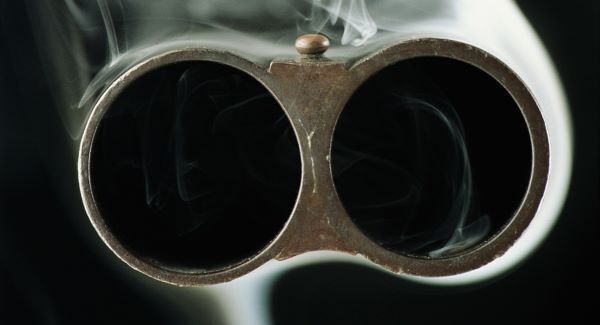
THE first thing to say is that I don’t own a gun and would be very cautious about ever urging ownership of a firearm as a possible remedy to the fears that undoubtedly exist in rural areas around security.
Support for guns is not surprising in today’s world

But the terrible reality is that we know there are criminals who specialise in targeting elderly and vulnerable people in the countryside.

They attack by day or night to terrorise and inflict savage injuries on people who are usually unable to defend themselves and who — coming from a more innocent age — are actually slow to realise the dangers around and develop the kind of security-consciousness now required.

In that context, it’s understandable that people will feel they have the perfect right to defend themselves with a legally held firearm, if necessary, and they will want that right — within reason — to be recognised by the State.

The broader point here arises from the feeling widespread in swathes of rural Ireland that the State — our State — is slowly disengaging from people’s lives.

In too many parts of the country, the Garda station is gone, the post office is gone, the local school is gone — or is threatened — the district veterinary office is gone — or is threatened. All around, rural Ireland can see services being dismantled. That’s not paranoia; it’s a demonstrable fact.

That’s the context in which farmers feel insecure and begin to think: “If the nearest Garda station is 15 miles away and the robbers come to my house at midnight, what happens to my family?”

The answer that many are coming to is that they might need a firearm. Against the background I’ve just described, nobody should be surprised.

The party-by-party breakdown is not surprising and, to a degree, would tally with traditional patterns of how farmers vote. A degree of surprise will be felt at the kind of strong approval expressed by respondents towards Agriculture Minister Simon Coveney.

The figures are undeniably impressive and I’m sure will greatly please the minister himself. We note as well that Deputies Ó Cuív and Ferris also receive generally positive responses. The real surprise in what has been an extremely interesting first day of survey results is the responses to the question of the issues that would influence farmers’ votes.

The first thing to note is that while most identified agricultural policies as the most important issue, social issues such as the cost of living, unemployment, austerity, and emigration feature strongly.

This puts paid to the stereotype that the decisive factor in swaying farmers’ votes was exclusively whether a party was going to act in terms of benefiting farmers. That’s just not correct and this survey proves that almost half the farm respondents cited more broad social and economic factors as key issues.

That, in turn, says that farmers are much more “plugged into” the broader issues and much less sectoral than the cliché has it.

ICMSA is also now certain that the old idea of farmers and farm interests as being a monolithic whole is now completely disproved. Farmers are just as diverse in their concerns and just as bothered by national social concerns as every other sector of society.

This mightn’t suit those who preferred to present farmers as one indivisible block for whom they spoke — but it is undeniably the fact. Farm families are in no way insulated from the problems affecting other families and the concerns of suburban Dublin and Cork are to a huge degree the concerns of rural Cavan or Mayo.

We see the exactly same phenomenon at work when we look at the technology question — a determination on the part of farm families not to be left behind in terms of acquisition and familiarity with technology.

Again, this won’t come as any surprise to those of us working in organisations like ICMSA on behalf of farm families. But the fact that over 70% of those surveyed have broadband will come as a rude surprise to those who have dawdled in terms of rolling out broadband on the basis that rural areas and farmers weren’t that interested in the latest technology.

On the question of whether we have too many politicians and whether they’re overpaid and effective, it is enough to note that 97% either strongly agreed or agreed.

Absolutely nothing comes easy in farming and that figure shows very clearly that farmers now demand a much leaner political class with a far greater level of focus and demonstrable competence than was the case in the past.

If politicians have the right to ask everyone else to do more with less than we all — not just farmers — have an equal right to ask the same of them.

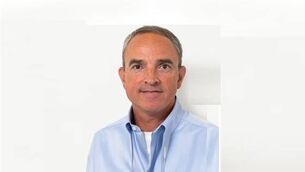
* John Comer is president of the ICMSA

x

More in this section

Farming

Newsletter

Stay ahead of the season. Sign up for insights, expert advice and stories shaping Irish agriculture.

Cookie Policy Privacy Policy Brand Safety FAQ Help Contact Us Terms and Conditions

© Examiner Echo Group Limited