Screening for brain tumours should be routine for under 50s, says neurosurgeon

Donncha O'Brien is clinical director at the national neurosciences centre at Beaumont Hospital. Picture: Moya Nolan
Screening for brain tumours should be routine for under 50s because early detection can mean people live longer, a leading Irish neurosurgeon has said.
People diagnosed with advanced stage four glioblastoma tumours can have as little as two years to live, even with immediate surgery.
Sylvia Mehigan, a Cork woman going through treatment, said: “I live every day as it comes and that’s it. I’m going to fight as far as I can.”
She attended an event this week at Trinity College Dublin (TCD) discussing cutting-edge Irish research with global implications.
“I had a seizure on January 6, out of nowhere,” she said. “A friend of mine found me in my house and called an ambulance.”
Brain surgery followed within weeks.
She was awake for part of the surgery so the team could monitor any impact on her speech.
“I remember most of it, not all of it,” she said.
“Going through it, I remember crying, but I was fine, I was not in pain. I recovered really well from the surgery.”
She worked at TCD and University College Dublin before this, so she is very aware of the grim statistics around this disease.
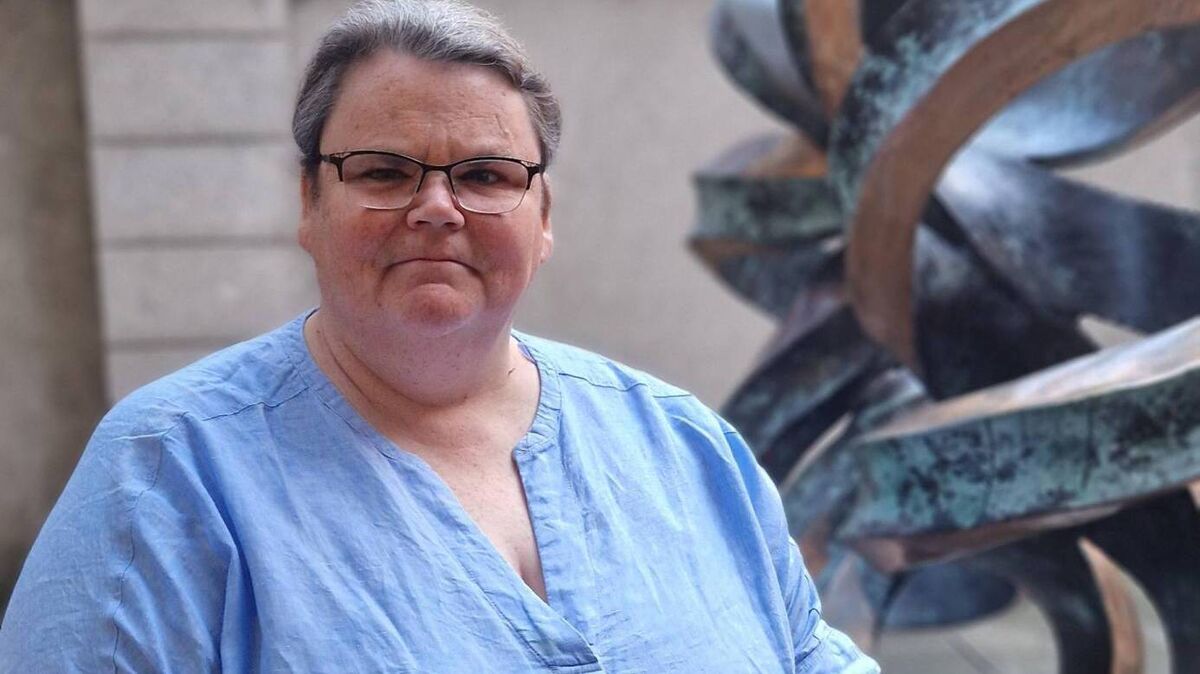
“But I plan to be here longer; it’s an average, that’s what my consultant said. Everyone’s different,” she said.
Donncha O’Brien is clinical director at the national neurosciences centre at Beaumont Hospital.
“There is an argument that everyone should have a scan, those under 50,” said Prof O’Brien.
This is based on “strong evidence”, he said, when a low-grade tumour is fully removed during surgery from the brain, then “you can stop it progressing”.
These tumours can have no visible symptoms.
Low-grade tumours grow more slowly than high-grade ones.
He called for “an open debate” around access to MRIs for routine screening, saying “this certainly should be up for discussion”.
This is not international policy, he said, but “there are massive benefits to finding it early”.
Prof O’Brien spoke to the during the event.
Read More
During his presentation on treatment, he said how research is key to future treatment for this “truly malignant process”.
There is no cure, but he said “neurosurgery has made great strides” in care.
“It’s the most common primary brain tumour in adults; in Ireland there are 120 cases per year and rising,” he said.
Matthew Campbell is head of the department of genetics at the Smurfit Institute of Genetics, TCD.
He and Prof O’Brien are working on a study with 64 glioblastoma patients.
This is looking at how blood vessels in the brain respond to the tumour and how the blood-brain barrier is disrupted. It will also aim to develop new forms of therapy.
When they asked patients to take part, “no-one said no”, said Prof Campbell.
“Remember, for a cancer it only takes one cancer cell to remain to propagate the disease again,” he said of the challenges.
“We talk about glioblastoma as an infiltrative disease and a whole-brain disease.
“So even though you can see the tumour and you take out as much as possible, you are looking at whole brain disease.”
Martina Hennessy is the director of the Wellcome-HRB clinical research facility at St James’s Hospital.
Prof Hennessy spoke about an “exciting” new clinical trial the three speakers are developing.
This LiFT-GMB trial will look at how to insert a change into the Stupp standard of care for brain tumours and make treatment more effective.
They plan to trial a stimulant already used to treat ADHD called lisdexamfetamine combined with other medication.
“Our study will never replace Stupp,” said Prof Hennessy
It is instead asking whether adding lisdexamfetamine can safely modify drug delivery within this treatment pathway.
The idea arose from a study Prof Campbell was involved with in England using methamphetamines.
However, Prof Hennessy noted that the gardaí might object to them using methamphetamines with patients, so they opted for lisdexamfetamine instead.
They hope to see this study underway “within 12 months”, Prof Campbell said.


CONNECT WITH US TODAY



Be the first to know the latest news and updates