Alan Healy: The Cork Docklands project must balance vision with viability
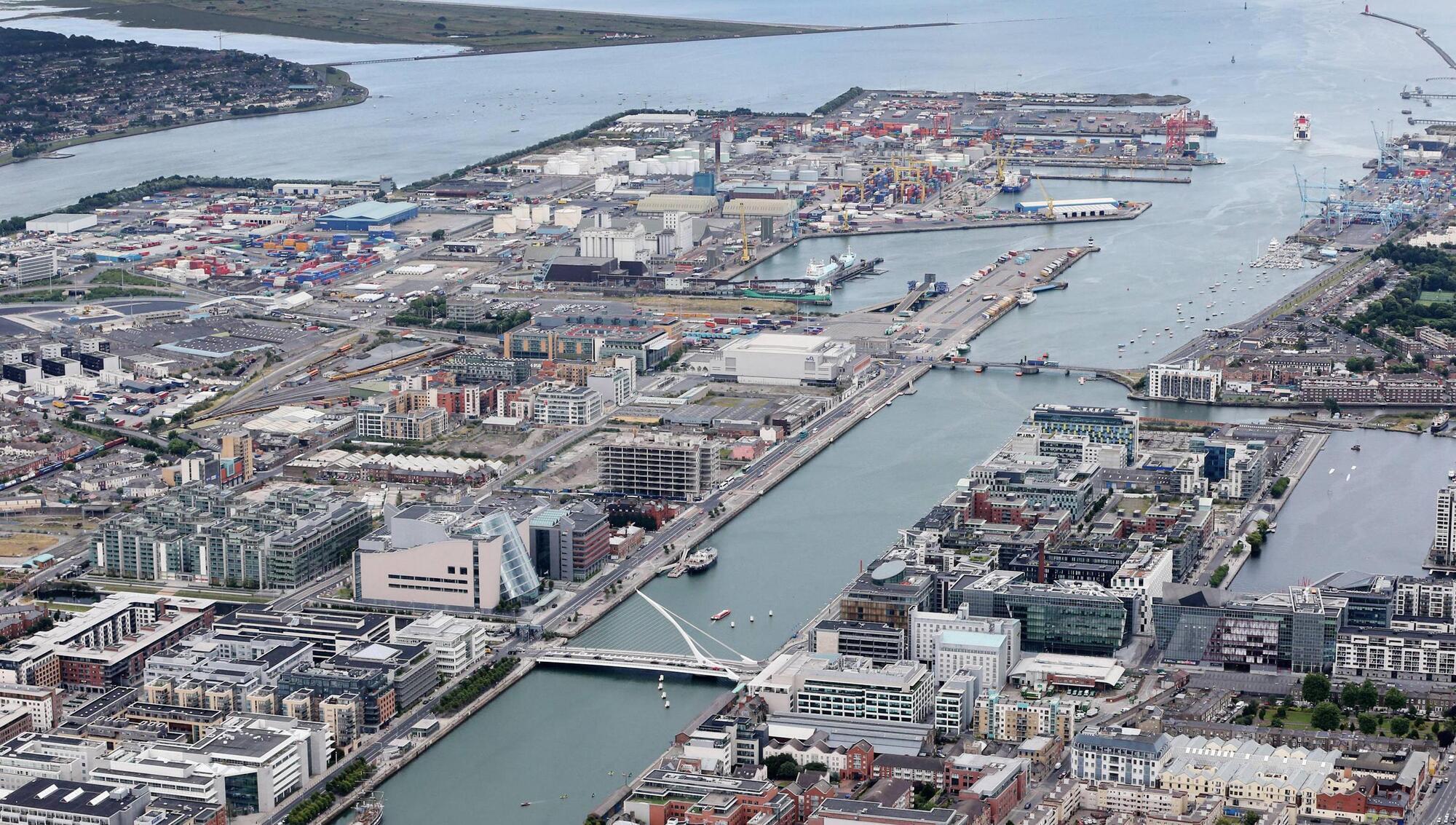
The Dublin docklands project was an economic success but has also had its critics.
Significant milestones have been reached in recent months on the redevelopment of Cork's South Docks.
Work has commenced on more than 100 homes next to the former Odlums building on Kennedy Quay by O'Callaghan Properties. Major works continue at the Docklands' eastern edge by Glenveagh to deliver 227 apartments in the first phase, while closer to the city centre, John Cleary Developments is building 217 homes.
The three developments give a sense that real progress is being made. Ultimately, Cork's South Docks is expected to deliver up to 10,000 new homes, tens of thousands of jobs, 420,000 square feet of office space, new pedestrian and cycling bridges across the Lee, a Canal Walk Linear Park and Sports Centre, restored heritage buildings and a future Luas connection across the Lee, transforming what is currently a largely commercial and industrial area into a new urban quarter.
The overall project is not unique. As cities develop, the very port operations which drove their initial expansion often move elsewhere, and key industries are transferred to new locations, freeing up land in the city for redevelopment. Liverpool, Bilbao, Hamburg and Marseille, virtually all major European cities have completed similar projects.
On the other side of the River Lee, Cork has seen the benefits of the North Docks regeneration delivering new office developments, a hotel and a soon-to-be completed residential apartment block all dotted around Kent Station.
Dublin's dockland redevelopment ramped up in the mid-90s, with the development authority driving the project being wound up 10 years ago. By most measures, that project was an economic success, delivering 40,000 jobs, 11,000 new homes and the IFSC. A genuine transformation of what had been one of the most derelict stretches of the capital.
There is much that the Cork project has learned from the Dublin project. While an economic success, it has been criticised for its relatively low social housing levels, with insufficient homes for middle-income workers. There was also criticism of a lack of cultural spaces and venues. Dublin's current planning policy itself is now explicitly trying to address some of these issues, requiring mixed uses, social/community infrastructure and space for cultural, creative and artistic purposes in large developments.
The capital's docklands project has shown how an economic regeneration strategy could transform an area, but also exposed the difficulty of creating and maintaining mixed communities, cultural spaces and diverse neighbourhoods alongside that commercial success.
Cork has big ambitions for its docklands evidenced by the variation to Cork's City Development Plan adopted last year that explicitly names cultural, amenity and green infrastructure as requirements for the South Docks alongside residential and commercial uses.
However, even the best-drafted plans can struggle when they meet a housing crisis or a cautious hospitality market.
In February, planning permission was granted to remove ground-floor commercial units at the Kennedy Quay development for more residential apartments. The developer's reasoning was explicit, and not unreasonable. The changes "make far more efficient use of strategic urban regeneration land in the midst of a housing crisis than the permitted use." A previous amendment to the same project saw the removal of a planned cinema, also for more apartments.
This week, plans were lodged to change the permitted bar/restaurant into office space at the former railway terminus building, part of the Railyard development on the former Sextand bar site. Estate agents Savills said they contacted 14 operators. None were willing to commit, citing the early-stage commercial environment in the Docklands, fit-out costs estimated at €5m to €6m, and a Cork hospitality market under broader pressure.
These decisions are a useful reminder that urban regeneration is never simply a matter of deciding what we would like to see built. A masterplan is not a guarantee. It must flex and adapt as economic conditions shift and markets mature. Café-bars do not open in areas without footfall, cinemas do not get built without operators, and hospitality units do not fill themselves. No developer builds a loss-making amenity, and a financially unviable Docklands serves nobody.
The ambition behind Cork's South Docks is real, and its planning framework is more conscious than earlier docklands projects of the need for homes, employment, culture, public space and community infrastructure. But the test of the plan will be what is built, occupied and operated.
Ambition and reality have to travel together.


CONNECT WITH US TODAY



Be the first to know the latest news and updates