Michael Fingleton: The banker who built, and broke, Irish Nationwide
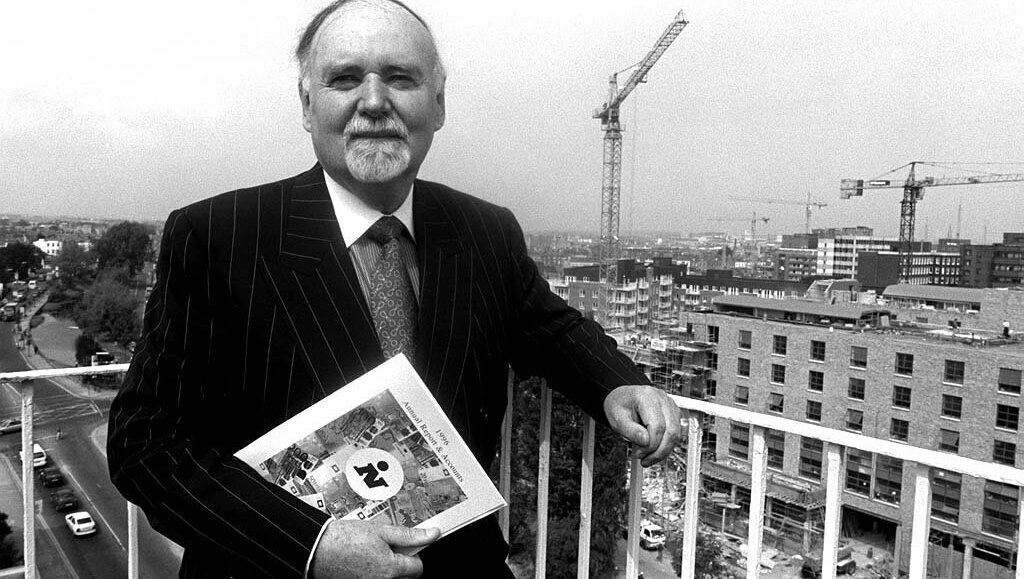
Michael Fingleton at the official opening of Irish Nationwide's new headquarters in 1997. Archive picture: Jason Clarke
For almost four decades, Michael Fingleton was one of the most recognisable figures in Irish finance, having built a tiny lender with a single branch into a property-fuelled powerhouse with a peak balance sheet of €16bn. He ultimately presided over its collapse, costing the taxpayer €5.4bn.
In the final years of the property boom, he oversaw a huge rise in Irish Nationwide’s loan book, more than doubling development and commercial loans. When those loans were eventually transferred to Nama, the agency judged that only about 16% of an €8.7bn book was likely to be repaid.
He was born in Tubbercurry, Co Sligo, in 1938, the son of a garda. After boarding school, he joined a seminary before leaving to pursue a career in business.
He served as chairman of the aid agency Concern before joining what was then called the Irish Industrial Benefit Building Society in 1972, having previously worked with Allied Irish Finance, the Dairy Disposal Company, and Westinghouse.
When he joined, the firm had assets of just £2m. In his first year, it earned £12,000 in profits. Mr Fingleton soon secured a change of name to Irish Nationwide.
Read More
He was, in the words of one profile, “one step ahead of the pack”, commercially adventurous, quick to swallow rivals such as Irish Mutual, and adept at winning publicity. In the early years he cultivated the media assiduously, and many journalists received Irish Nationwide loans at a time when mortgages were strictly rationed.

As it grew, he was accused of running Irish Nationwide as a personal fiefdom, a characterisation borne out repeatedly once the institution fell apart. A former loan supervisor told an Employment Appeals Tribunal that Fingleton operated the society “like a personal bank”, with special facilities for “unlimited amounts of money” for friends in media, political, and social circles.
“It was one rule for the general public and a different loan culture for people who were close friends of Mr Fingleton,” she said.
Summoned to that tribunal, he branded the claims “absolute slander and totally untrue”. “I ran the society,” he insisted, “in the best possible manner.”
Despite repeated warning signals about an overheated property market, Irish Nationwide continued to lend to developers and, along with Anglo Irish Bank, was the most exposed when property values collapsed.
In the weeks before the September 2008 bank guarantee, Fingleton assured the Department of Finance in writing that the society did not have a “seriously impaired” loan book, estimating bad debts for the year at just €100m.
However, ultimately, it was folded into the bank guarantee, nationalised, and finally shut in 2011. The bill for the taxpayer came to €5.4bn.
The State pursued him for years through a Central Bank inquiry which he fought all the way to the Court of Appeal, and through the €250m IBRC civil action first filed in 2012. That case, alleging he had negligently mismanaged the society through “speculative, risky” lending, finally reached its conclusion at the High Court in October 2025, at which point Fingleton was too ill to attend.

CONNECT WITH US TODAY



Be the first to know the latest news and updates