Fewer hands, evolving jobs: Competing in the next era of manufacturing
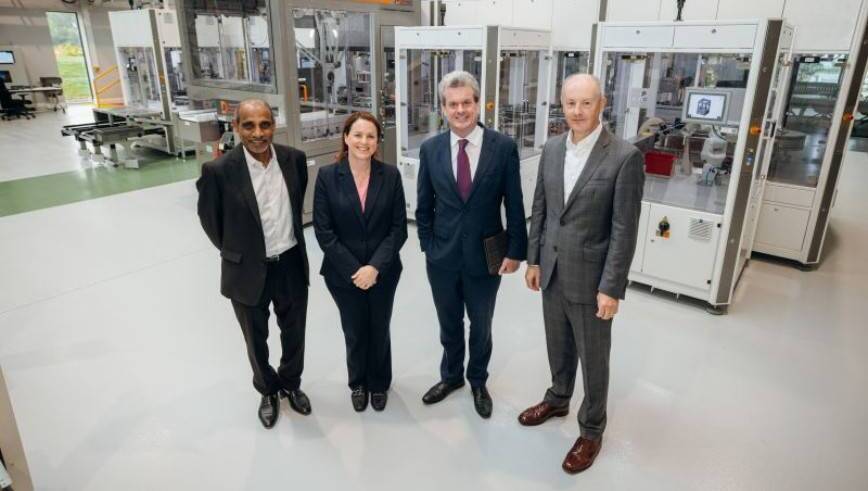
Digital Manufacturing Ireland is applying new technologies and its strong industry expertise to solve real world manufacturing challenges. Pictured are IDA Ireland chair, Feargal O'Rourke, with DMI’s chair, Lionel Alexander, fellow DMI board member Rachel Shelly, and DMI’s CEO Domhnall Carroll.
Automation will change manufacturing jobs in Ireland. Some roles will disappear. Others will require very different skills.
But for Domhnall Carroll, CEO of Digital Manufacturing Ireland (DMI), that is not the same as saying the people currently working in manufacturing will disappear with them.
As factories become increasingly automated, he believes one of the central challenges for manufacturers will be separating two questions: whether a particular job will continue to exist and whether the employee doing it today can move into a different role.
“The jobs will definitely be different,” he says.
The greater the shift towards automation, the greater the need for upskilling.
“If you're going from a low level of automation to a very high one, you will have a very big job to do in terms of upskilling for people.” In practice, Carroll says, manufacturers rarely move from a largely manual factory to a fully automated one in a single leap. Automation tends to happen over time, creating an opportunity for companies to prepare their employees for different kinds of work.
That transition is something people within DMI have witnessed over long careers in manufacturing.
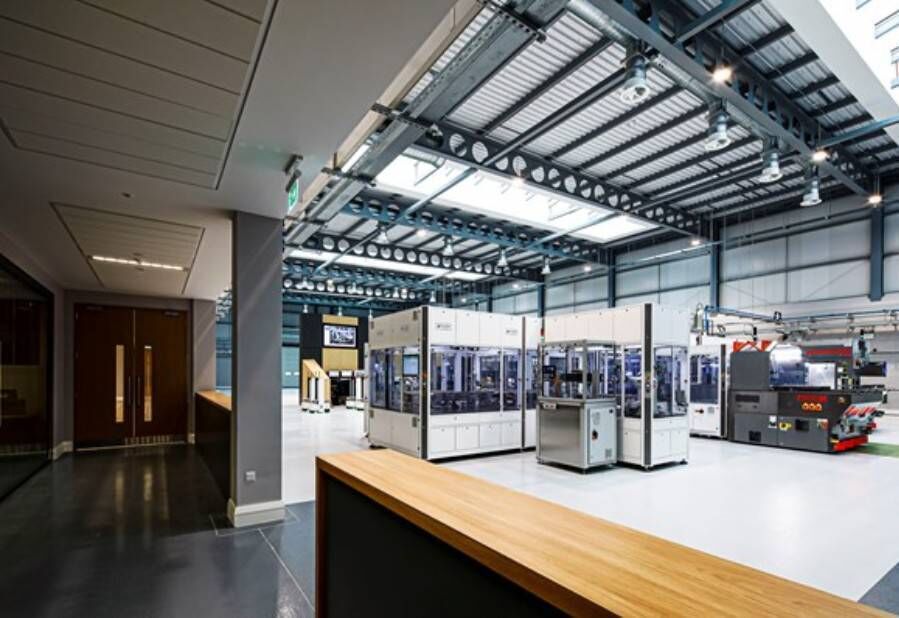
Employees who once worked directly beside machinery can find themselves moving further back from the physical production process. Instead of making something by hand, they may be monitoring equipment, programming systems, designing processes or optimising production.
Car manufacturing provides an obvious illustration.
Where production once involved large numbers of people physically working around a vehicle, highly automated plants now use robots for much of that work. But people still program those robots, design the cars and make decisions about how the manufacturing process should operate.
“The physicality of manufacturing has certainly been replaced, but the intelligence of manufacturing” remains, Carroll says.
And experience gained on the factory floor does not suddenly become redundant when a robot arrives.
The knowledge accumulated by somebody who has spent years physically making a product can be extremely valuable when deciding how that product should be manufactured in an automated environment.
For Ireland, managing that transition is only one part of a much larger competitiveness challenge.
The country has an unusual manufacturing landscape: multinational companies sit alongside indigenous manufacturers, universities, research organisations and State-backed bodies.
Carroll believes one of Ireland's less obvious advantages is simply how close everybody is.
Manufacturing clusters around areas including Sligo, Galway, Limerick, Cork, Waterford and Dublin mean people frequently know their counterparts in other companies. They may previously have worked together, competed for the same jobs or moved between employers during their careers.
That creates a connectedness which can be difficult to replicate in larger countries.
“There is something special around that Irish ecosystem from a connectedness perspective,” Carroll says.
Where several degrees of separation may exist between organisations elsewhere, Ireland's relatively small manufacturing community can make it easier for people, companies and institutions to collaborate.
That matters for innovation.
Carroll argues that some of the strongest innovation happens when manufacturing is connected all the way back to research. If products can be designed close to where they will ultimately be manufactured — with companies, universities and support organisations operating within the same ecosystem — the feedback loop becomes considerably faster.
Proximity, in other words, can become a competitive advantage.
The same is increasingly true of sustainability.
For manufacturers, Carroll argues that sustainability should not simply be regarded as an additional environmental cost. Reducing waste, lowering energy consumption and using fewer resources are also fundamental manufacturing objectives.
“You're investing in your competitiveness when you invest in sustainability,” he says.
The logic is straightforward. If part of a production run has to be scrapped or reworked, the manufacturer has already consumed raw materials, labour, energy and production time making something that cannot immediately be sold.
Reducing that waste therefore improves both environmental performance and the economics of production.
Some manufacturing processes, Carroll says, can at times have waste levels as high as 30%, although he stresses that 70% first-pass yield is an illustrative figure and would not represent world-class manufacturing.
The opportunity is to increase the proportion of products made correctly first time.
Doing so reduces the need for additional raw materials and lowers the energy, water, labour and time consumed by reworking or replacing defective output.
That is why Carroll sees sustainability and manufacturing efficiency as closely aligned rather than competing priorities.
There are broader considerations around raw materials and sourcing, but for companies making existing products today, significant gains can come from relatively fundamental improvements: reducing energy intensity, waste, rework and water consumption.
Supply-chain resilience is also becoming part of that calculation.
Over the longer term, Carroll says companies are recognising the need for more resilient supply chains, something that can be supported by more sustainable sourcing and more efficient use of the materials they buy.
Yet Ireland's strengths do not insulate it from the pressures reshaping global manufacturing.
In fact, one of the characteristics that helped Ireland become an international manufacturing centre also creates a significant vulnerability. Ireland manufactures for the world, not primarily for itself.
“There are very few factories here making just for Ireland,” Carroll says.
Even smaller suppliers that do not regard themselves as exporters may ultimately feed into multinational supply chains whose finished products are sold around the world. That leaves Irish manufacturing exposed to global tariffs, trade disputes, changing trade agreements and shifts in the international economy.
Ireland's small domestic market also matters.
A factory operating beside a market of tens of millions of potential customers has different supply-chain economics from one operating in a country of around five million people. It may be closer to its customers, receive feedback more quickly and have a larger domestic market capable of supporting production.
Ireland does not have that cushion.
“We're not the masters of our own destiny in a lot of things,” Carroll says.
Larger economies can stimulate domestic demand and, in turn, domestic manufacturing. Ireland needs growth in the global economy because so much of what is manufactured here ultimately depends on international demand.
Maintaining competitiveness therefore means making Ireland sufficiently attractive and capable that manufacturers continue to choose it despite those structural disadvantages.
And if Carroll had a magic wand, there are two things he would address — one immediate and one long-term.
The immediate problem is housing.
For manufacturers trying to recruit and retain people, employees need to be able to live reasonably close to where they work. Carroll describes housing and the ability to keep skilled people in Ireland as one of the most pressing problems facing companies today.
His longer-term priority is skills.
Ireland needs to continue developing an ecosystem in which both multinational and indigenous manufacturers know they can access the capabilities required for modern manufacturing.
For Carroll, that ultimately comes back to people.
“The reality is that people that are well skilled can solve pretty much any problem.” Technology will change. Factories will automate. Global competition will intensify and the jobs carried out inside manufacturing plants will evolve with them.
Ireland cannot control all of those forces.
What it can control, Carroll argues, is whether it continues to develop the skills, connections and manufacturing capability required to respond to them.
His long-term wish is to keep Ireland “well ahead on skills”.
The short-term one is considerably more basic.
“Just give them somewhere to live.”

CONNECT WITH US TODAY



Be the first to know the latest news and updates