How investment scams are costing Irish victims thousands as fraudsters play the long game
Banks, gardaí and fraud experts warn increasingly sophisticated scams are costing Irish investors hundreds of thousands of euro
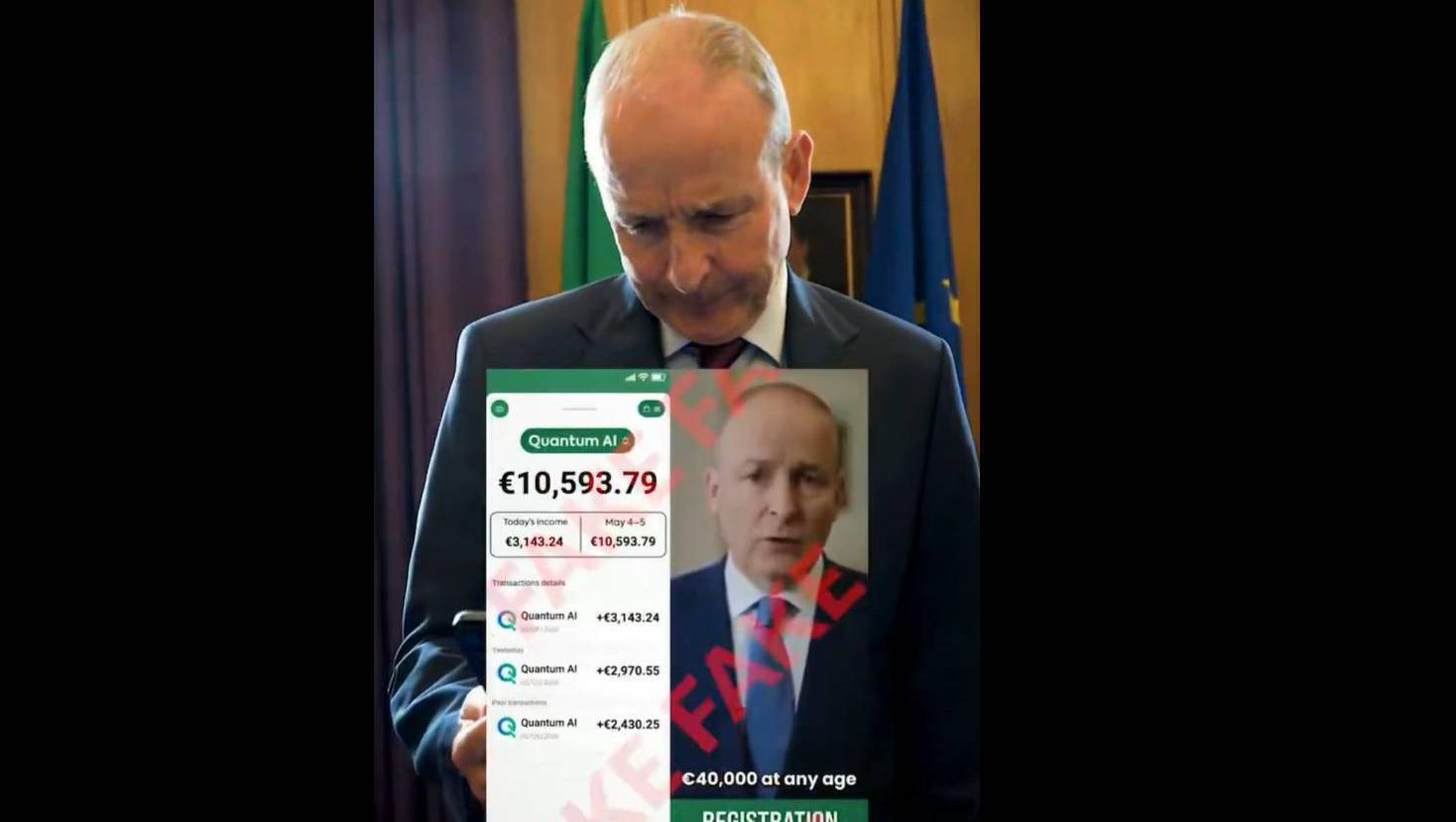
Taoiseach Michéal Martin reviews a financial scam video where his own image was used.

Taoiseach Michéal Martin reviews a financial scam video where his own image was used.

WHEN it comes to financial fraud, most of us have a tendency towards optimism bias: it couldn’t happen to me. But scammers have upped the ante, and are prepared to play the long game to reap the rewards.

On Thursday, multinational investment banking and financial services group Macquarie issued a warning that its name was being used to “fraudulently solicit payments from investors”.

Then on Friday, AIB reported a “significant increase” in investment advertisements and scam-related websites circulating online as part of its Fraud Trend update. 

There was a dramatic escalation in site takedowns, where the bank intervenes to request a fraudulent domain be removed, between January and May 2026, with 1,500 times the instances of takedowns compared with all of 2025.

”We are seeing a huge increase in fake online advertisements promoting investment scams. The scale of growth this year is particularly stark and demonstrates how quickly criminals are adapting their tactics, as we’ve intervened to have thousands of websites taken down,” said AIB head of fraud intelligence Harold Perez.

Separately, the Central Bank has already issued 14 warning notices so far this month to highlight cloned, fake, or scam investment firms targeting Irish consumers.

Investment scams targeting Irish victims have resulted in personal losses of up to €600,000, using intricate schemes which can run for over a year. Financial fraud experts expect the quality and quantity of scams to continue to rise.

Investment fraudsters are criminals, but they are pros. 'It’s worth taking their time for people to fall for them.'

Last week, Taoiseach Micheál Martin was the latest to “star” in a scam ad published on social media, and had to perform a double take at the impressive similarities of their doppelganger. In the scam, the bogus Taoiseach guaranteed investors an immediate €1,000 profit on €250 “or I’ll personally refund you €10,000”.

It was clearly too good to be true. But other financial frauds targeting Ireland are harder to spot. There’s no plea for money; there’s no barely credible quick returns; in some cases, they don’t even chase you: you contact them.

Financial frauds can be played out for weeks and months, according to Niamh Davenport, head of financial crime with the Banking and Payments Federation Ireland (BPFI).

The key to many of the latest wave of scams is that it is the victim who makes the initial contact with the perpetrator. Scam ads can appear on social media pages or search engines, or through messaging recommendations. The fraudsters don’t initially target specifics and can create fake ads and websites, which appear on social media and disappear almost as quickly.

“At the beginning, it’s likely the victim has gone to look for an investment opportunity and the ad popped up. The scammers will ask you to fill in your info and they’ll get back to you,” explains Ms Davenport.

“It’s a layered approach. You’ll get an email; you might even get a glossy brochure posted out to you. It’s back-and-forth contact.”

Ms Davenport says that six-figure losses are “not uncommon”, and that after initially finding a target, investment fraudsters don’t need to rush.

“There’s no urgency for these scams. It’s not like you have to pay in an hour. Fraudsters can take their time,” said Ms Davenport.

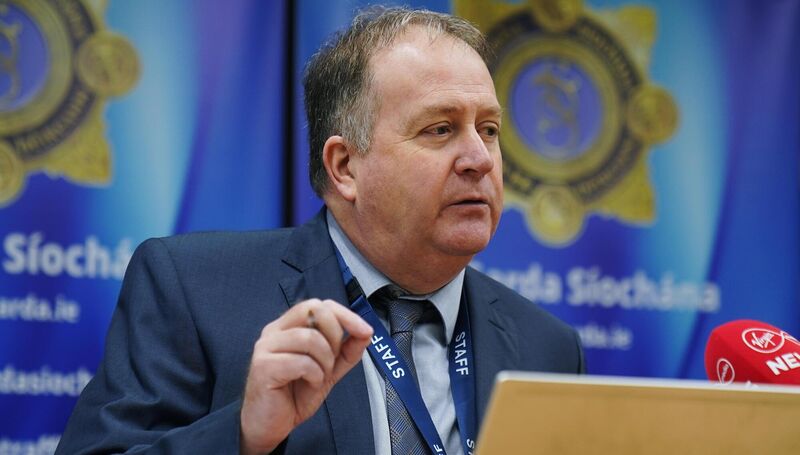
Common investment scams can promise shares, bonds, cryptocurrencies, pensions, and overseas land. Detective Superintendent Michael Cryan of the Garda National Economic Crime Bureau said reports of investment fraud in Ireland rose by over 20% in 2025 compared to 2024, with over €20m in losses.

“This upwards trend is continuing into 2026,” said Det Supt Cryan.

It’s a lucrative global industry. “We would suspect that most investment frauds are coming from so-called scam centres. They used to be called ‘boiler rooms’. They were originally based in Asia, but more are being found in Europe, Africa, and the Middle East. They are huge operations.

“We are currently liaising with one EU country regarding their takedown, and data retrieved shows Irish victims.”

Cost of living crisis fuels surge

The life stage of over-50s makes this age group a common target for fraudsters. Many people in the over-50s bracket are thinking about retirement on the horizon. Some are looking at maximising life savings. Others could have a lump sum arriving and be considering somewhere to invest wisely.

“People are definitely more tempted because of the cost-of-living crisis. We hear people saying: ‘I’ve been saving my whole life — I wanted to make sure I had enough for retirement,” said Ms Davenport.

“In these cases, people don’t have their ‘antenna’ on to spot the scam. The scams don’t land on our lap — people are actively looking for an opportunity to invest. And the returns on offer on the most intricate scams are not necessarily too good to be true — just slightly better. Nothing outrageous, steady and secure, just maybe 1% or 2% better than investors have seen elsewhere.”

“We are seeing people who are tech savvy getting caught because so much time and effort goes into these scams, and the elaborate details involved. There’s no ‘pressure’ being put on. Sometimes, the scam can take up to a year,” said Ms Davenport.

“Fraudsters can clone websites, or online profiles of real people on LinkedIn. So even if you do you homework, you can still get caught.”

Detective Superintendent Michael Cryan of the Garda National Economic Crime Bureau. 

Last week, Tánaiste and finance minister Simon Harris and justice minister Jim O’Callaghan launched the National Risk Assessment 2026 and its Priority Actions Implementation Plan, evaluating the threats and vulnerabilities in Ireland on money laundering, terrorist financing, and proliferation financing.

Prepared by the Department of Finance, it noted the “significant increase” in reported investment fraud in Ireland, having jumped by 219% between 2019 and 2022, and rising since.

The drawn-out nature of investment scams, from planning to execution, before it is revealed as a fraud, adds to the difficulties.

“There is usually a lag of a year or so before these are reported,” said Det Supt Cryan. “Victims don’t realise the investment is bogus and their money is stolen. The lag makes investigations difficult, as it can be more difficult to gather evidence.”

Despite increasing awareness and focus on investment scams, the high potential returns involved, the low detection rates, and the global nature of the fraud — with multiple jurisdictions, often involving thousands of victims worldwide — will likely see the wave of investment scams in Ireland growing. Some share victims’ contacts for revictimisation.

“There’s really no borders when it comes to financial crime. Some are homegrown, but it’s the quality of these scams which is changing,” said Ms Davenport.

“These are criminals, but they are pros. It’s worth taking their time for people to fall for them.”

There has been a surge in AI-generated online adverts promoting bogus State-backed investment schemes, according to FraudSMART, the fraud awareness initiative led by BPFI with Age Action Ireland. FraudSMART is rolling out an awareness campaign nationally.

FraudSMART recommends independently researching any potential investment opportunity, verifying investment claims with a third-party legal or financial professional, as well as checking the Central Bank Consumer Hub, and using the www.scamchecker.ie website.

Catherine McGuigan of Age Friendly Ireland called the impact of frauds on victims “life-changing”.

“It is so important to pause, take time to check, and speak to someone you trust before responding to any unexpected offer,” she said.

“People should not feel embarrassed if they are caught out. These scams are designed to appear genuine and can be very difficult to spot, which is why any of us can fall victim.”

AIB fraud security chief says taking take time to verify any investment opportunity could save thousands of euro and urged customers to seek independent advice before transferring funds

“If an investment opportunity seems too good to be true, it likely is.”

It’s not like you have to pay in an hour. Fraudsters can take their time.

More in this section

The Business Hub

Newsletter

News and analysis on business, money and jobs from Munster and beyond by our expert team of business writers.

Cookie Policy Privacy Policy Brand Safety FAQ Help Contact Us Terms and Conditions

© Examiner Echo Group Limited