Alan Healy: Scotland's World Cup run shows what Ireland's hospitality sector is missing
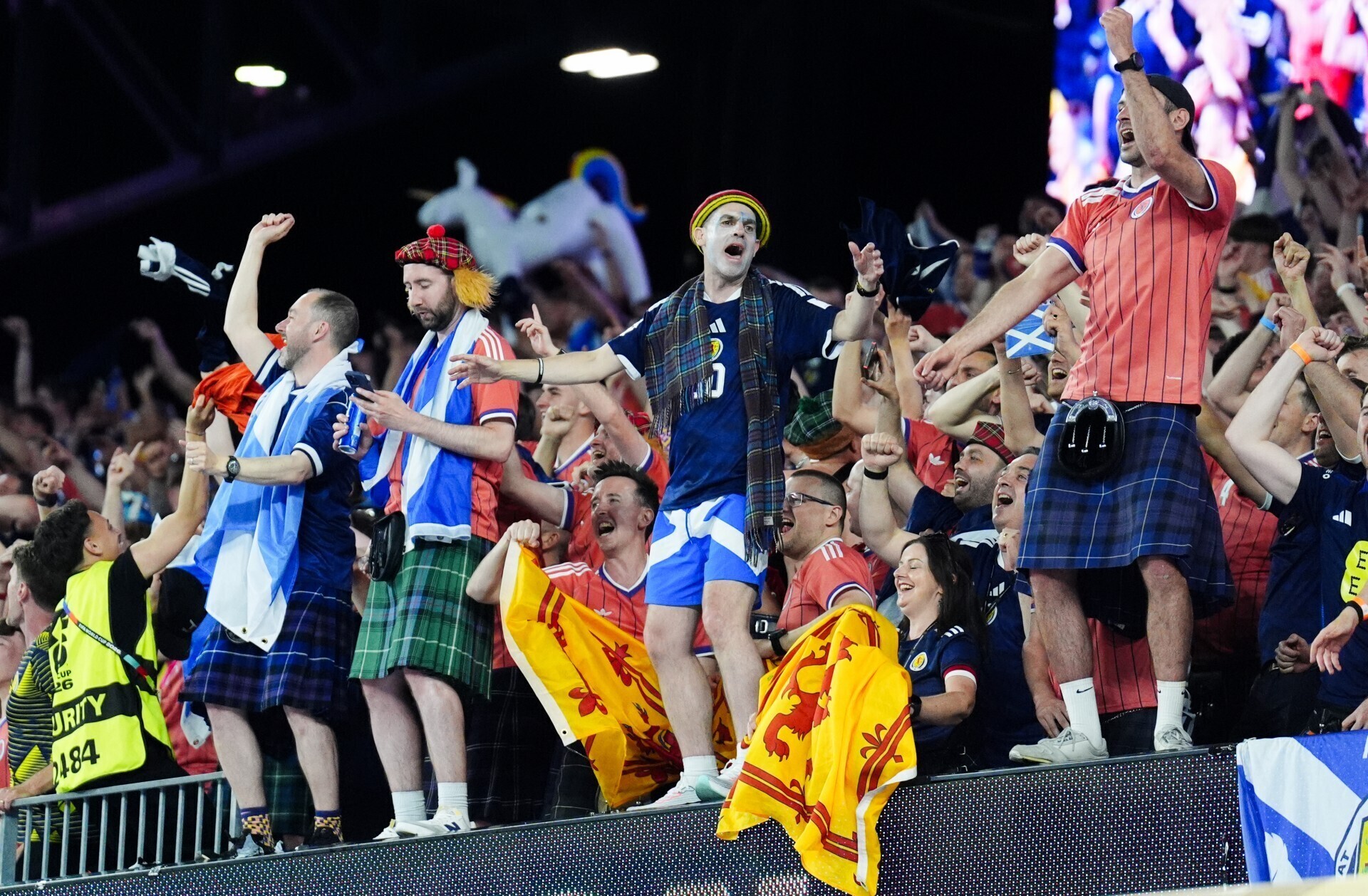
Scotland fans at the World Cup match against Haiti at the Boston Stadium. Their domestic pub trade saw a £1.9m boost during the match. Picture: Andrew Milligan/PA Wire.
The celebratory World Cup scenes we are seeing each evening across the US, Mexico and Canada bring an obvious case of FOMO for Irish fans.
We would have been right at home in New Jersey, Vancouver, Miami or Guadalajara. No doubt our travelling supporters would be praised for bringing their good-natured vibes along with hopes and dreams to host cities.
It was not to be however, and the title of 'Best Fans in the World' is being fought out by the Scots and the Norwegians.
But there is another reason why we should feel forlorn about another missed tournament for the men's team. The feel-good factor of a major competition brings tangible benefits to the domestic economy, boosting pub sales, supporting travel agents and increasing general consumption.
That economic kick will not happen this summer, which is a pity for so many reasons, one of which is that Ireland's pub and hospitality trade could really do with it.
We last appeared in a World Cup in 2002, and since then, Ireland has lost 2,200 pubs, more than a quarter of the total licensed premises, and the decrease continues each year as our drinking habits change.
Read More
A recent Vintners survey heard 41% of publicans say trading is worse this year than a year ago. Rural, non-food pubs are particularly exposed.
The food-led side isn't faring much better. CSO Labour Force Survey data shows hospitality employment fell from 186,500 to 169,600 between Q1 2025 and Q1 2026. Restaurants are also closing at a rate of 50 to 60 per month, according to the RAI.
The sector is eagerly anticipating the return of the 9% VAT rate on July 1, but in the run-up, a summer of village, town and city pubs filled on big match nights would have done wonders for the sector.
Just how much of a boost could World Cup qualification have delivered? Our Celtic twin, Scotland, is a good comparison with our similar populations and pub cultures. Their first World Cup appearance in almost 30 years is set to generate a tangible spending boost alongside the feel-good nature of their qualification.
UKHospitality Scotland said it expects pubs and bars to see a 40% rise in year-on-year sales growth. That forecast is based on the 38% rise the sector witnessed when Scotland took part in Euro 2024 in Germany.
"It will be a much-needed boost for our pubs and bars, which continue to grapple with cost challenges," Leon Thompson of UKHospitality said, a comment that could easily apply to Ireland's hospitality sector.
The Scottish Beer and Pub Association (SBPA) has already reported a positive upswing from Scotland's first game, early on Saturday, when they beat Haiti. The Association said at least 380,000 extra pints were served, worth around £1.9m. Scotland's match against Morocco tonight kicks off at a more reasonable 11pm and is expected to see a £2.6m boost in pub sales.
Retailers like Tesco and Asda are also preparing for a rise in food and snacks sales across Scotland and England based on fans watching games. Overall, the World Cup is expected to deliver a £7.6bn boost to the British economy.
But outside of the direct economic benefit, the feel-good factor of World Cup participation cannot be discounted. We have seen it repeatedly, most recently in 2023, when the Women's team qualified for the finals in Australia and New Zealand or in the recent Rugby World Cups, where Ireland have entered as favourites. The collective optimism gives an overall boost to the national mood.
What economic value can be placed on such optimism is difficult to calculate.
Many have contended that the unprecedented positivity that engulfed Ireland in the 1990s due to World Cup qualification and then a string of Eurovision wins created the national confidence and belief that laid the foundations of the Celtic Tiger economy that would for another decade.
Ireland qualifying for the current tournament was never going to spur a repeat of Italia 90. The plucky underdog title this time around belongs to the Cape Verdes and Curacaos of this world. But our participation would have given the domestic economy a healthy boost.
It does look like World Cup 20206 will deliver for Irish pubs, but just the ones located in Boston, Toronto, or Mexico City.
For a country whose current economic prosperity is reliant on the hugely valuable, if soulless, tech and pharma multinational sectors, a four-week spell of highs and lows across the North American continent could have delivered a well-timed shot in the arm for the nation's purse and psyche.
CONNECT WITH US TODAY



Be the first to know the latest news and updates