Why DCC, PTSB, Irish Ferries and Flutter are at the centre of a summer reshaping corporate Ireland
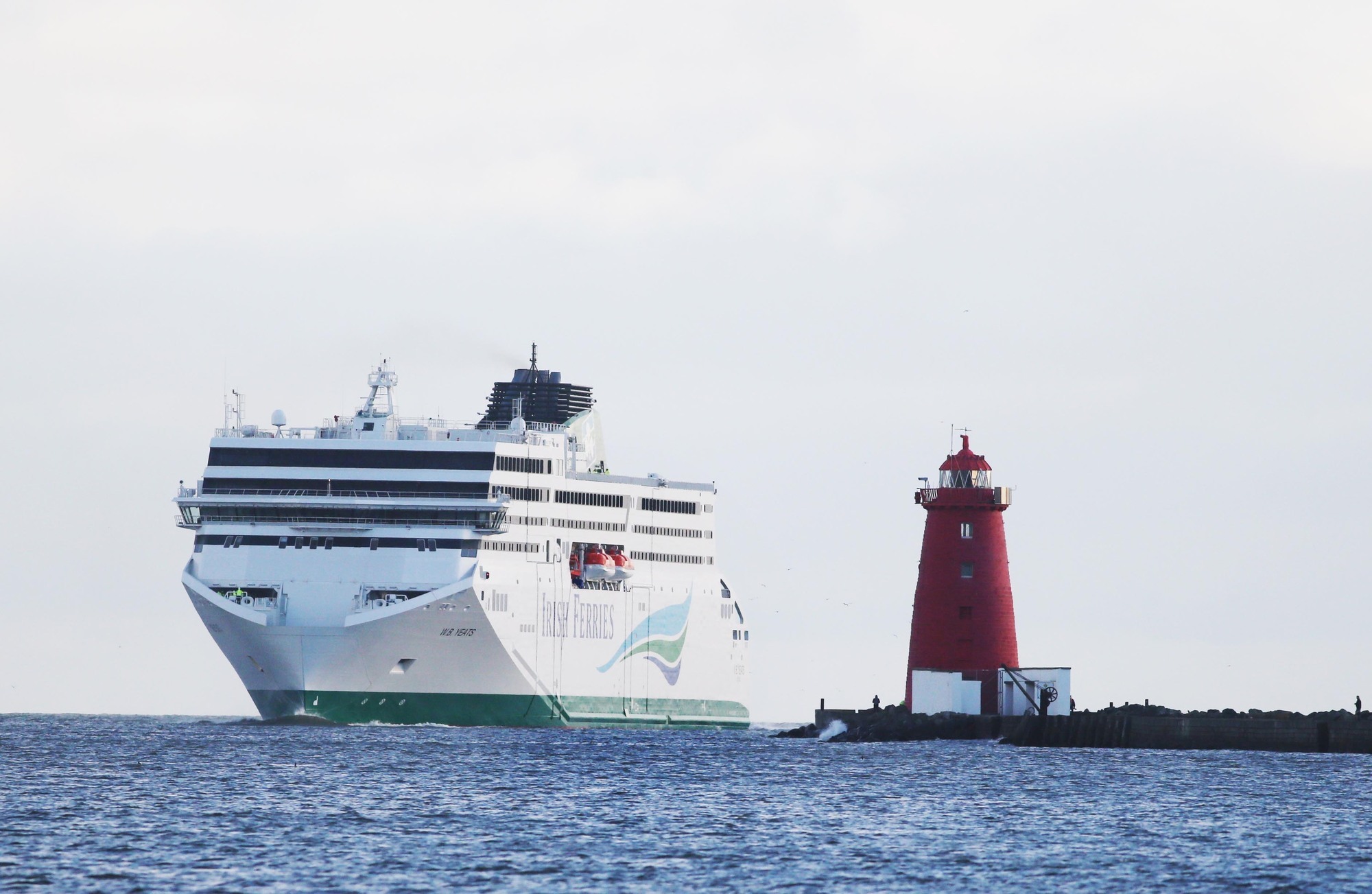
ICG's Irish Ferries operates on the arteries between Ireland and Britain, Britain and France, and Ireland and France. Picture: Leon Farrell
Large Irish companies have been bought, gone private, or been moved off the stock market this summer.
In late July, in a single week, the energy group DCC agree an €8bn takeover by the US private-equity firms KKR and Energy Capital Partners. Hours later, Irish Continental Group, the owner of Irish Ferries, confirmed a €1.2bn management buyout to take itself private. Three days after that, PTSB shareholders voted to sell the bank to Austria's BAWAG for €1.6bn, ending the State's ownership of the pillar banks it rescued in the 2008 crash.
The three deals were the biggest in a series that shook up Ireland Inc. In June, Paddy Power owner Flutter, still headquartered in Dublin, said it would cancel its London stock listing. The same month, Fin — the Dublin-founded software firm long known as Intercom — agreed a $3.6bn (€3.1bn) sale to the US giant Salesforce.
William Fry's latest M&A review counted 524 mergers and acquisitions in Ireland last year, with US and UK investors behind more than two-thirds of the inbound acquisitions.
The move by Flutter followed the Irish-headquartered building-materials group CRH, which completed a switch to a New York-only listing this year, having left Euronext Dublin in 2023.
The pace of deals may accelerate as the regulatory backdrop in Ireland loosens. From July 1, the turnover threshold above which a deal must be notified to the Competition and Consumer Protection Commission (CCPC) rose from €60m to €100m, with the individual-business test lifting from €10m to €15m. That means a swathe of mid-sized transactions no longer need clearance.
The change was billed as a cut in red tape, and the CCPC itself pushed for it. Commission member Geoffrey Gray said that notifications had doubled since 2019, from 47 to nearly a hundred, driven partly by inflation dragging ever-smaller deals over the old ceiling.
Late last month, the Dublin-headquartered energy group agreed a £5.75bn (€7.68bn) takeover by a consortium of the US private-equity houses KKR and Energy Capital Partners. The business — with a 50-year heritage, 9,500 staff across Europe and North America, and operations in 11 countries — agreed to be taken private.
DCC had rejected the consortium's opening £4.95bn (€5.77bn) approach as undervaluing the company, forcing KKR and Energy Capital back to the table with an improved offer in June, which was then improved again. The final terms provide £65.25 (€76) a share in cash, a proposed final dividend, and a potential top-up of up to £1.25 (€1.45) a share, if DCC can sell its Nexora technology unit for at least $800m (€691m).
For the year to the end of March 2026, DCC reported revenues of £15.42bn (€18bn) and a modest rise in operating profit, having spent the previous few years slimming down to a more focused energy business. Its chair framed the deal as a chance for shareholders to "crystallise value in cash" at a premium to the historical share price, and expressed confidence that the new owners would be "strong stewards" of the company's heritage.

That is the language of a board that believes it got a good price, and it may well have. But the substance is hard to miss: A company that sells and distributes energy to homes, businesses, and transport fleets across Europe — trading in Ireland through its Certa forecourts — is moving from the public market in to private-equity ownership, its future strategy set by investors in New York rather than by the discipline of a public share price.
If DCC shows foreign capital buying in, Irish Continental Group shows the other route off the market: Management buying the company from its own shareholders. On the same day the DCC deal was agreed, ICG confirmed it had agreed a €1.2bn buyout that would take the Dublin-listed group private, and its shares promptly surged more than 26%.
The vehicle behind the deal, Bluefin Bidco, is ultimately owned by four members of ICG's senior management — including long-serving chief executive Eamonn Rothwell — who between them hold about 23.7% of the company. Shareholders are being offered €8 a share, a 28.2% premium to the closing price the previous Friday, and the independent board unanimously backed it as delivering "compelling value".
What makes ICG significant is not the size of the cheque, but the strategic weight of what is being taken off the public market. ICG's Irish Ferries operates on the arteries between Ireland and Britain, Britain and France, and Ireland and France, while its container and terminal arm runs Dublin Ferryport Terminal and Belfast Container Terminal and the Eucon brand. It is a piece of national logistics infrastructure that is being delisted in to private ownership.
Management buyouts are often the cleanest answer to a succession question, and a premium of nearly 30% is a real return for holders.
The resounding PTSB vote closed a chapter that had been open since the crash. On July 30, shareholders that were gathered in Dublin approved the sale of the bank to the Austrian group BAWAG for €1.6bn, at €2.97 a share, a 26% premium in an all-cash deal that the Government, still holding 57% of the bank, backed strongly.
Financially, it hands the State around €931m and completes its withdrawal from the three pillar banks that the taxpayers rescued during the financial crisis, following the State's exit from Bank of Ireland in 2022 and AIB last year. Symbolically, it moves a domestic retail bank in to foreign ownership, although BAWAG was not a stranger, having already owned the Irish mortgage provider MoCo.
The meeting was not entirely smooth. At least one shareholder complained that the price was too cheap and asked why the board was willing to let the bank go for so little. Chair Julie O'Neill did not dispute that some would feel value was being left on the table, but was blunt about the constraint: The only deliverable value, she said, is what the market is willing to pay, and the BAWAG offer was "the highest deliverable offer". Chief executive Eamonn Crowley made the same point from another angle: Other bidders had the chance to come in after BAWAG's offer landed, and did not. For the State, it is a clean end to a long and painful ownership. For the Irish banking market, it is one less domestically owned lender.
Flutter's departure is different in kind. Nobody bought the Paddy Power and Betfair owner. It has, instead, made the decision to depart the London Stock Exchange, confirming in June that it would cancel its London shares on August 3. Headquartered in Dublin, the world's largest online betting company, valued at around £15bn (€17.38bn), pointed to thin trading in its London stock and to the cost and regulatory burden of maintaining the listing.
Flutter had already shifted its primary listing to New York in 2024, chasing the growth of its FanDuel business in a US market that was loosening online-betting rules. Its London-quoted shares had lost roughly half their value over the year, amid fears that the rise of US prediction-market platforms, such as Kalshi, could disrupt traditional bookmaking. For 2025, the group reported revenue up 17% to $16.4bn (€14bn), though that came in below its own forecast.

It is the clearest local example of a wider flight of Irish and UK firms to public markets to New York. The same current that carried CRH to a US-only listing and Wise across the Atlantic in May. The pool of large, publicly traded companies anchored here keeps draining, whether through takeover or relocation.
The Fin deal is the summer's marquee technology exit. In June, the Dublin-founded company — long known as Intercom, before a rebranding weeks earlier to the name of its AI product— agreed to be acquired by Salesforce in a $3.6bn (€3.1bn) deal.
Intercom was, for years, the poster child of Irish software. Founded in 2011 by Eoghan McCabe, Des Traynor, Ciarán Lee, and David Barrett, it reached unicorn status and a €1bn valuation in 2018, becoming one of the largest home-grown private tech firms the country had produced. Its rebranding to Fin reflected a hard pivot in to AI in the wake of ChatGPT, building automated "customer agents" that resolve queries across chat, email, phone, and messaging. The company posted record revenues of €246m in 2024, and still employs around 1,400 people across offices that include Dublin.
The founders have dressed the sale as a springboard rather than an ending. Mr McCabe, who will stay on as chief executive, with Mr Traynor continuing to lead R&D, framed the deal as a way to reach far more customers, far faster, than Fin could alone.
A company established and grown by Irish founders scales to global relevance and is then absorbed by a much larger, US strategic buyer. Its intellectual property, its brand, and its upside are now part of a San Francisco balance sheet.
Beyond the headline deals, the same current ran through the wider economy. In manufacturing, Nestlé agreed to sell its former Wyeth infant-formula plant in Askeaton, Co Limerick — shut in 2023 with the loss of 542 jobs — to the US pharmaceutical supplier Pfanstiehl, a case where a foreign buyer is breathing new life in to a site everyone had feared was dead.
Property and infrastructure told the same story. The UK giant Hammerson bought out the remaining half of Dublin's Ilac Shopping Centre to take full control, while selling other central Dublin holdings to Transport Infrastructure Ireland for the Metrolink project. In Cork, the Australian financial heavyweight Macquarie attached itself to a €150m bid in the long-running contest to build the city's events centre.
For balance, the traffic was not entirely one-way. The summer's boldest bid saw a consortium backed by the Irish aviation executives Peter Bellew and Mark Breen, through the US fund Castlelake, agree in principle to take over EasyJet in a deal valuing the airline at up to €6.4bn. That was before Apollo circled to gatecrash with a larger offer.
The large marquee deals come against a backdrop of ongoing consolidation across Ireland among small- to mid-size financial and insurance firms. Many of the regional businesses are being snapped up by multinational giants.