ECB officials see communication as toughest challenge in July
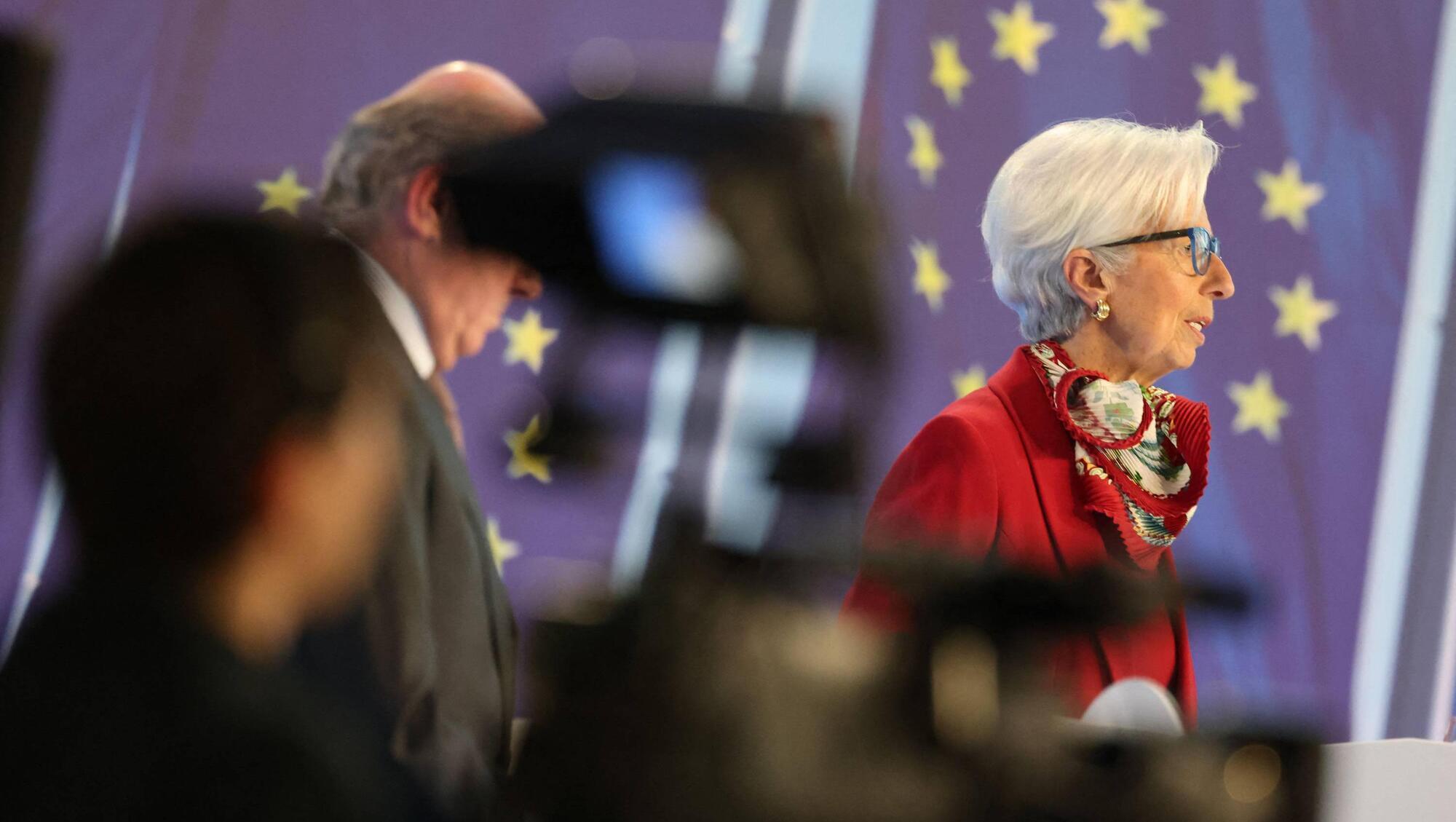
During its yearlong hiking campaign, the ECB has not left financial markets wondering too much about what’s coming next. Picture: Daniel Roland/AFP via Getty Images
European Central Bank officials are anxious to strike the correct tone in describing their intentions after next week’s planned increase in interest rates, according to people familiar with their thinking.
Governing Council members consider communication about what will happen after the July 27 move their biggest challenge, said the people, who asked not to be identified because the discussions are private.
With policymakers from across the spectrum insisting the outcome of the following meeting — in September — remains open, the task will be to avoid strong signals of either another hike or a pause.
An ECB spokesperson declined to comment.
The concern highlights how delicately the ECB must tread as it concludes the most forceful bout of monetary tightening the 20-nation euro zone has ever seen.
While investors had been betting on two more quarter-point rate increases to quell inflation — bringing the deposit rate to a 4% peak — recent remarks by officials have prompted some backpedaling. The latest came Tuesday, when the traditionally hawkish Klaas Knot told Bloomberg that action beyond July “would at most be a possibility but by no means a certainty.”
During its yearlong hiking campaign, the ECB hasn’t left financial markets wondering too much about what’s coming next. Even in March, as Credit Suisse became mired in the banking woes that began in the US, President Christine Lagarde said there would be “more ground to cover” if the episode did not upend the economic outlook.
Such conditional language could be one way of keeping all options on the table for September. The Federal Reserve, whose rate cycle is also nearing its end, may offer an alternative.
It said in June that “in determining the extent of additional policy firming that may be appropriate to return inflation to 2% over time”, it will take into account past tightening, transmission lags, and economic and financial developments.
The ECB’s latest policy statement is clear in highlighting that officials aren’t done yet, saying borrowing costs “will be brought” to sufficiently restrictive levels and kept there “for as long as necessary” to ensure inflation returns to 2% in a timely way.
Consensus within the Governing Council for any firm signal appears unlikely next week as some warn of the stickiness of underlying price pressures while others fret about the economy after its winter recession.
With two more months of inflation data, a reading of second-quarter gross domestic product and updated economic projections through 2025 all due before the September gathering, officials have been increasingly reluctant to speculate on its outcome.
“We have to hike next time and I expect another 25 basis-point hike for the July meeting,” Bundesbank President Joachim Nagel told Bloomberg on Monday. “For the September meeting, we will see what the data will tell us.”

CONNECT WITH US TODAY



Be the first to know the latest news and updates