Vinted is making charity shops trendy — but makes sourcing quality clothes more difficult
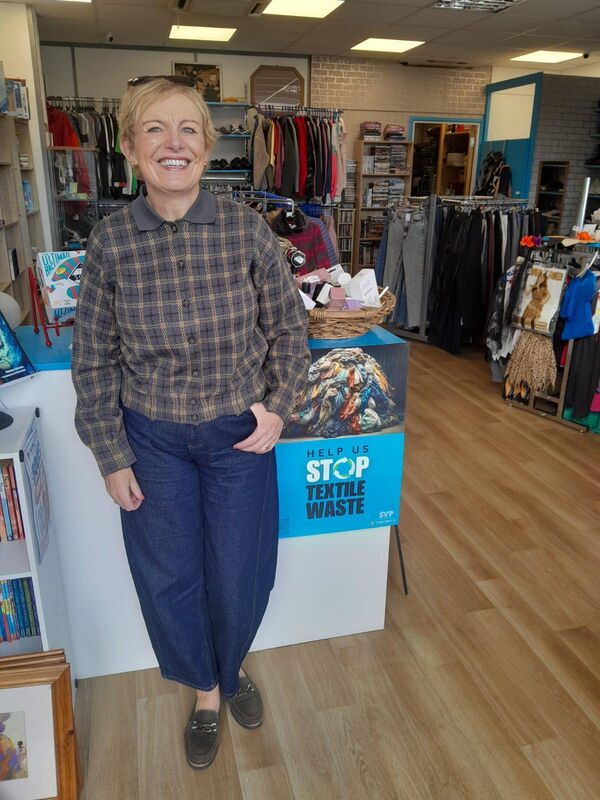
'We definitely are losing out on some good quality stuff because that's going through the Vinted channels,' said Suzanne McNamara of SVP.
Over the past couple of years online reselling platforms such as Vinted have made “charity shopping kind of trendy” but the sourcing of good quality clothes to sell in the stores has become a “lot more difficult for us”, Suzanne McNamara of St Vincent de Paul (SVP) has said.
Charity shops, such as those run by SVP, Oxfam Ireland, Vision Ireland, Enable Ireland, rely on donations to stock their shelves and to raise money for their causes. As such, online retail platforms such as Vinted may seem like a direct competitor to them.
However, those working in the organisation are less concerned about these platforms and are more worried about the high volume of cheap fast fashion items that often gets donated.
Ms McNamara is the regional retail manager for SVP Southwest where she oversees 20 textile charity shops.
She and her store managers do not object to Vinted or anything like it because it encourages sustainability adding that over “the past couple of years it has actually made charity shopping kind of trendy”.
"And because of that the sourcing of good quality clothes has become a lot more difficult for us,” she said.
Vinted was founded in Lithuania in 2008. It launched in Ireland in 2024 and since then it has increasingly grown in popularity. In 2025, An Post, which handles many parcel deliveries for the platform, reported an 3.5% increase in e-commerce parcel revenue growth during 2025.
In addition to Vinted, there are numerous other avenues available to people looking to resell their stuff online from Whatnot, to Facebook Marketplace, as well as eBay.
Read More
Last month, Vinted announced that it was connecting Irish customers to two more countries, Belgium and Luxembourg. Previously, the Irish market was just connected to France.
However, the issue for Ms McNamara is the volume of donations. Across the 20 stores she oversees, they have to send 2.5m garments to recycling every year because they are not worth much.
Ms McNamara added that the worth of these textile items — what the industry calls ‘rag’ — that they send to be recycled has decreased. She said: “The value of rag has diminished, because there’s so much of it.
“We might get 6c for the rag that we’re going to sell to our recycling partner,” and she added that smaller stores are having to turn down donations for various reasons, such as costs of collecting, sorting, as well as potential health-and-safety issues.
Ms McNamara said: “If we get in a bag of Shein clothes, people don’t want to buy those second-hand, because they’re cheap anyway. So they’re coming in looking for good quality, but we’re finding it more difficult to get those pieces now.”
It’s more work to source stock that is good enough to sell.
Charity shops do have costs on top of everything else, such as commercial rates, as well as rent.
Supply chain and business development manager with Oxfam Ireland, Mark Sweeney, said the rise of “ultra-fast fashion” is what is causing the problem.
Mr Sweeney said: “It’s not necessarily that we see less donations because people are selling on Vinted.
“There’s no evidence to support that at all. It’s all anecdotal.
"There is an argument to be put forth to say that, you know, the rise in popularity of platforms like Vinted, those kinds of resale platforms, encourage more people to try to buy second-hand.”
On the donation side, Mr Sweeney, who is also the chairman of Charity Retail Ireland, said, “There’s no real evidence to say that people who sell on Vinted were donating those items to charity shops in the first place.
“They are people who have looked at their wardrobe and went: ‘I can sell this now’. They wouldn’t have necessarily looked at their wardrobe and went: ‘Oh, I can donate this’.”
Mr Sweeney said that quantity has gone up, but quality has gone down. He said that when they receive items that were made by these ultra-fast fashion outlets, which are very cheap, there is no resale value.
“When quantity goes up and quality goes down, it makes the work to find the quality pieces a little bit harder. We have to do a lot more sorting, a lot more handling.
“There’s a lot more man-hours that go into that kind of work,” he said.

CONNECT WITH US TODAY



Be the first to know the latest news and updates