New fiscal watchdog chief Seamus Coffey warns of challenges
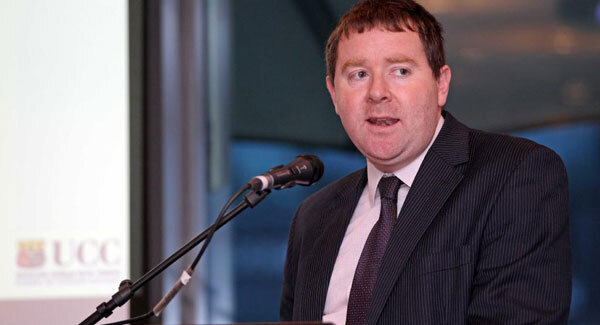
Mr Coffey said yesterday that although prospects had improved remarkably since the dark days of the economic crisis, Brexit and the sustainability of corporate tax revenues will be highly challenging.
The Limerick native, who has been a resident of Cork for over 20 years, succeeds John McHale who had chaired IFAC since the watchdog was set up five years ago.
It was established to help prevent any repetition of the conditions that brought the State close to bankruptcy and led to it requiring a bailout to avoid defaulting on its sovereign bond debt.
Mr Coffey said he aims to sustain IFAC’s reputation under Mr McHale as a watchdog never afraid to “bare its teeth” should economic conditions get out of line.
The IFAC has clashed with the Government over its budget in the last two years, and last month criticised Mr Noonan’s 2017 budget for breaching EU expenditure rules.
“Economic conditions have clearly improved since IFAC was set up, but challenges remain,” Mr Coffey told the Irish Examiner.
Mr Coffey was commissioned in October by the Department of Finance to write a report about future-proofing the country’s corporate tax regime.
The ESRI’s Martina Lawless has also been appointed to the watchdog, and the OECD’s Sebastian Barnes has been reappointed.
Separately, one of the most senior civil servants at the Department of Public Expenditure in an email said some of the economic analysis carried out by IFAC lacked “basic coherence”.
In correspondence obtained under the Freedom of Information Act, William Beausang, the assistant secretary at the department, said IFAC had ignored offers to work directly with officials. The email was sent just before IFAC issued its pre-budget statement warning the package was close to “prudent” limits.
Mr Beausang wrote to both Thomas Conefrey, the watchdog’s chief economist, and Mr McHale saying it was “disappointing” they had not made more contact.
Mr Beausang said he wanted “open dialogue”.
Mr Conefrey replied: “We regret if there has been a misunderstanding on the nature of the dialogue you envisaged. We continue to have a very fruitful engagement with your department at a technical level and hope that this continues.”
Mr Beausang responded by asking for increased discussions between IFAC.












