AI datacentres set to drive 70% rise in carbon emissions by 2030, IEA warns

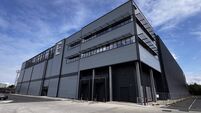
The Paris-based agency found that the industry's rapid growth means AI datacentres will consume an additional 350 terawatt-hours of electricity annually within four years. File picture
The world's datacentres are on course to produce 70% more carbon emissions by 2030 as the US and China turn to fossil fuels to power their artificial intelligence (AI) expansion, according to the world's energy watchdog.
The International Energy Agency (IEA) warned that datacentres will consume twice as much electricity by 2030 as they do today, with the global expansion of AI accounting for three-quarters of the increase.
The Paris-based agency found that the industry's rapid growth means AI datacentres will consume an additional 350 terawatt-hours of electricity annually within four years.
Its influential annual report warned that the world's energy future had become less certain following the impact of the war in the Middle East, which it described as the greatest disruption to energy markets in history.
“I don’t see any credible pathway for the energy world to return to the way it was before,” said the IEA's executive director, Fatih Birol.
Instead, the energy landscape will be reshaped by government policy decisions following the crisis, as countries respond to growing demand for energy driven by population growth, increased use of air conditioning and the booming AI economy, the IEA said.
Read More
Datacentre developers have emerged as the world's biggest corporate buyers of renewable energy to power their servers, which connect to local electricity grids.
Despite this, the report found that demand for fossil fuels is expected to grow even faster, particularly in the US and China.
By the end of the decade, around half of the electricity needed to power China's AI datacentres will come from coal-fired power plants, according to the IEA.
The remainder will come from renewable energy, with smaller contributions from nuclear reactors and very little from gas-fired plants.
In contrast, the US is expected to rely on gas to provide about 60% of the electricity required by its datacentres by 2030.
The agency said plans for about 180GW of new gas-fired power plants linked to US datacentres were in place in August this year. That is almost as much new gas-generation capacity as is currently installed across the entire European Union.
As a result of the increased use of fossil fuels to generate electricity for datacentres, emissions associated with the sector are on course to rise by 70% by 2030, the IEA said.
Demand for gas power among US datacentre developers is more than 16 times higher than in Canada, where the IEA identified plans for 11GW of gas generation to power servers.
In the rest of the world, AI developers have proposed new gas-fired power plants with a combined capacity of just 4GW, the agency said.
Renewable energy is expected to play a greater role in supplying datacentres outside the US and China.
In the EU, the IEA expects renewables to provide about 70% of the electricity needed by datacentres by 2030, followed by nuclear power and gas generation, with a very small contribution from coal.
The agency based its forecasts for the notoriously opaque industry on data showing that annual global shipments of AI servers have increased eighteen-fold since 2020.
It also used satellite imagery to track the development of 93 large-scale "AI factories" around the world.
Its analysis suggests that global datacentre capacity has increased tenfold in the past 24 months to 17GW.
Once the AI factories are completed, their combined capacity is expected to reach about 50GW, the IEA said.
The world's existing datacentre capacity, including facilities with AI-optimised servers, stands at 120GW, with 80% located in China, the US and the EU.
A further 120GW is expected to be built by the end of the decade under the IEA's central scenario, with three-quarters of that additional capacity made up of AI datacentres.

BLACK FRIDAY
Already a subscriber? Sign in

CLIMATE & SUSTAINABILITY HUB
CONNECT WITH US TODAY



Be the first to know the latest news and updates