Farmers cannot be penalised for Slievenamon wildfires, IFA says
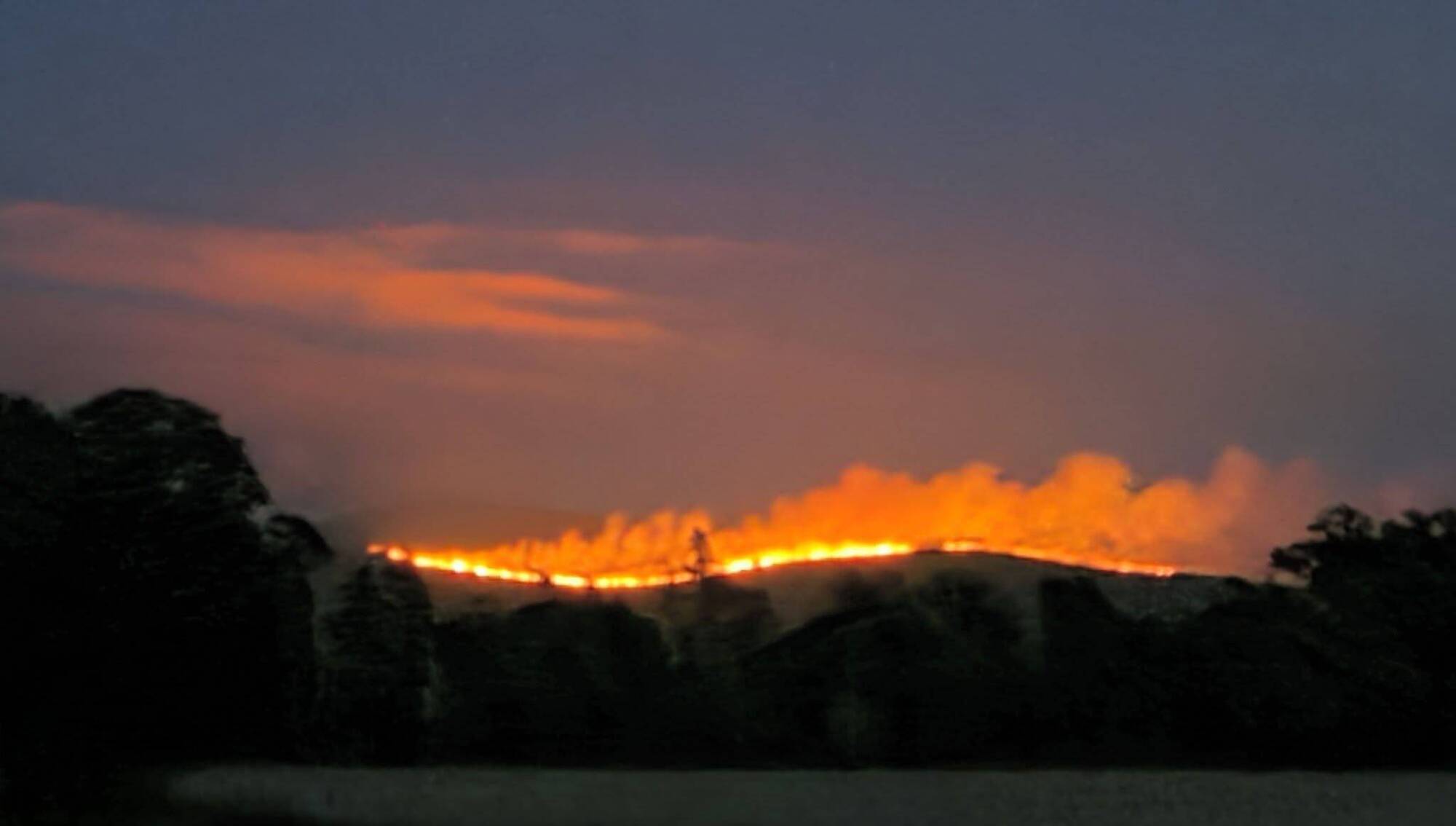
An estimated 65 hectares of Coillte forestry, including some 130,000 conifer trees between four and 10 years old, were damaged in the fires across Slievenamon in Co Tipperary last July and August. Picture: Cllr Michael Brennan on Facebook
The management of mountain areas is becoming a major issue, the Irish Farmers Association has warned.
It follows the devastating wildfires that swept across Slievenamon in Co Tipperary last July and August. IFA President Francie Gorman said there were lessons to be learned about how the mountain has been managed or not managed.
The association’s Hill Farming chair James Gallagher has also stressed that farmers who legitimately farm and manage Slievenamon cannot be held responsible or penalised for fires outside of their control.
“Farmers cannot be penalised for what happened on Slievenamon. They had no responsibility for these fires, and in many cases local farmers played an important role in helping to protect the mountain, livestock and surrounding property,” he said.
Coillte has meanwhile revealed that it spent more than €500,000 on the emergency response to the wildfires which raged on Slievenamon for eight days in July, with flare-ups continuing into August.
An estimated 65 hectares of Coillte forestry, including some 130,000 conifer trees between four and 10 years old, were damaged in the fires. Close to 1,500 hectares of mountain were burned in the outbreaks, which originated on open gorse land before spreading into the Coillte forest.
Read More
The wildfires triggered a huge emergency response by State, local authorities and community bodies, along with residents and volunteers. Smoke from the fires was detected in surrounding counties as well as in Cork City and as far away as Portugal.
Air Corps and Coillte helicopters were deployed to collect water from nearby sources with Bambi buckets to help douse the fires. Over 130,00 litres of water were dropped on inaccessible terrain in nearly 150 actions.
Shifting winds frequently altered the fire front as local farmers and agricultural contractors played heroic roles in creating firebreaks and bringing tankers of water onto the mountain to tackle the fires and protect land, livestock and property.
Coillte says its objective is to clear, re-plant and restore damaged forest areas over the coming months. This will be done in accordance with sustainable management principles to ensure the forests continue to deliver environmental, economic and community benefits into the future.
It stressed that the most effective way to protect forests, habitats, wildlife, property and communities from wildfires is through prevention, vigilance and responsible behaviour, particularly during periods of elevated risk.
While the scheme is currently closed, upland farmers outside the co-operation zones were eligible to apply for the general approach within ACRES, which offers a range of actions including commonage. Commonage generally tends to be less productive farmland but is highly beneficial from an environmental point of view as it can contain a mosaic of peatland, heath and upland grass.
Minister of state, Christopher O'Sullivan, said the NPWS did a preliminary site inspection of the privately owned Natural Heritage Area site, but no formal ecological assessment had been carried out to date. He said Ireland submitted a draft Nature Restoration Plan Template, in the format mandated by the European Union, on September 1, the deadline set out in the regulation.
This template is an early-stage, technical draft, focused mainly on setting out baseline information, available data and existing measures rather than a final programme of restoration actions or specific sites. A phased process will now commence to develop the final plan, including dialogue with the EU, together with extensive stakeholder engagement and public feedback helping to shape the final document for submission to the European Commission in 2027.
Independent Tipperary South TD, Mattie McGrath, asked the minister if he was considering the introduction of any financial support measures for farmers whose grazing lands, fencing or other agricultural assets were damaged during the wildfires.
He enquired if the minister would provide a clear assurance that farmers who were not responsible for the wildfires will not face financial penalties, payment reductions, scheme sanctions or other adverse consequences arising from the outbreaks.
Deputy McGrath also asked if the department has considered the use of native rare cattle breeds, such as Dexter, for conservation grazing on upland and mountainous areas, including Slievenamon, as a means of reducing excessive vegetation growth and mitigating wildfire risk.
Minister Collins said growing vegetation cannot be burnt between March 1 and August 31 of any given year (the closed period), on any land not yet cultivated, and he was not aware of any plans to amend this provision.
In general, land burnt during the closed season is not eligible for the purpose of payment under the Basic Income Support for Sustainability (BISS) or any other area-based scheme. Notwithstanding that lands burnt during the closed period are ineligible, it is recognised that controlled burning done at the right time of the year has a role to play in certain upland habitats, he said.

BLACK FRIDAY
Already a subscriber? Sign in

CLIMATE & SUSTAINABILITY HUB