Mike Lynch’s superyacht had unidentified vulnerability to high winds, report finds
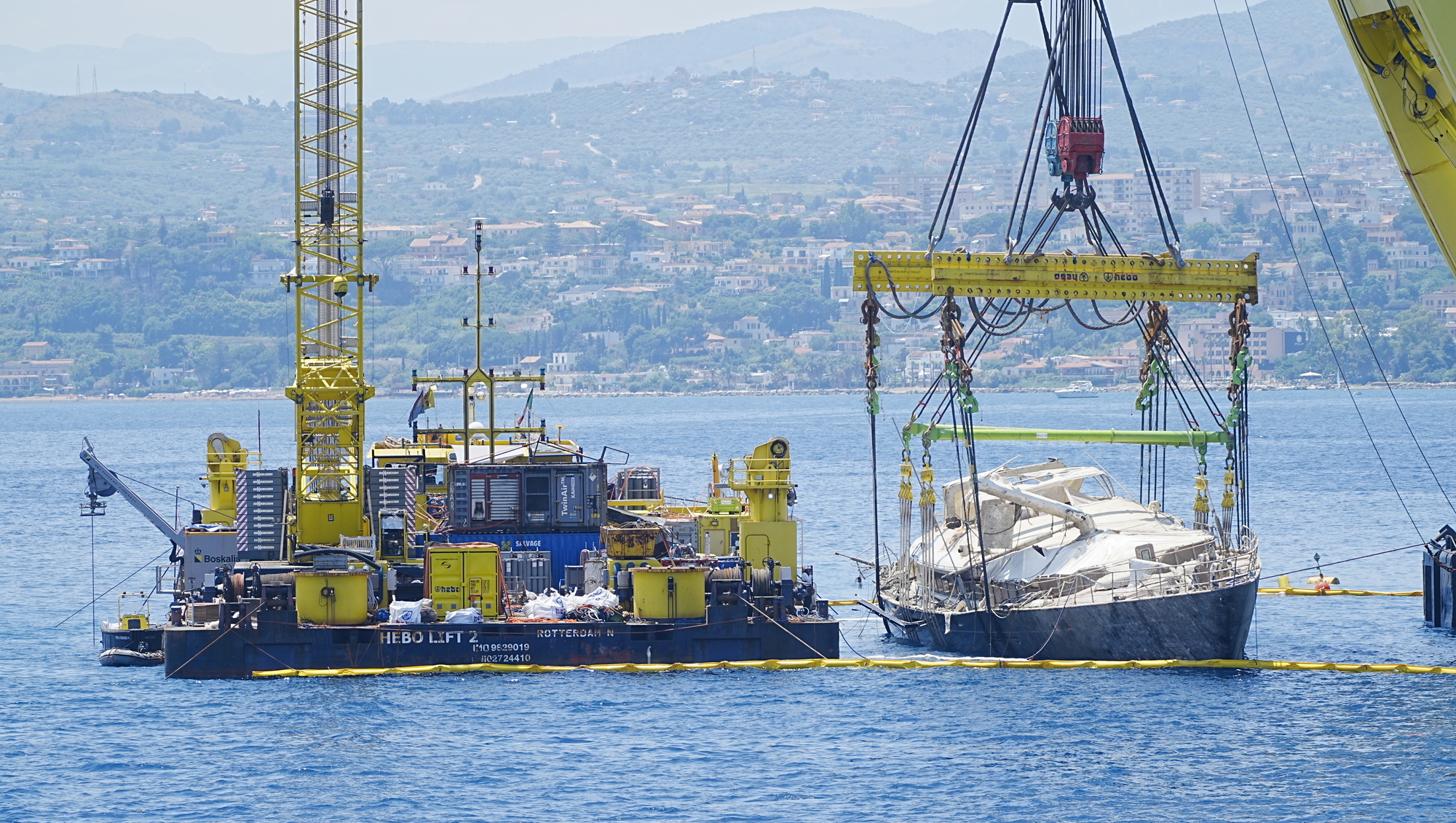
Lynch, 59, had been enjoying a voyage around Sicily with family and friends after his acquittal in a long-running fraud case regarding the sale of the technology company he founded, Autonomy, to Hewlett-Packard in 2011. (PA Image).
The superyacht Bayesian, which sank in a storm off Sicily killing seven people including Irish tech tycoon Mike Lynch and his teenage daughter, was vulnerable to knockdown but crew were not aware as it had never been assessed at anchor with its sails down, the final report from the UK’s Marine Accident Investigations Branch (MAIB) has said.
The 56-metre (184ft) vessel was anchored near the fishing port of Porticello when it sank during a violent storm shortly before dawn on 19 August 2024.
Lynch, 59, had been enjoying a voyage around Sicily with family and friends after his acquittal in a long-running fraud case regarding the sale of the technology company he founded, Autonomy, to Hewlett-Packard in 2011.
He and his 18-year-old daughter, Hannah, died, as did lawyer Chris Morvillo and his wife, Neda, banker Jonathan Bloomer and his wife, Judy, and the yacht’s chef, Recaldo Thomas.
Nine other crew members and six guests were rescued.
Read More
The MAIB final report, published on Thursday, appears to contrast with recent reports from Italy, where prosecutors have reportedly blamed errors by the crew.
The MAIB report details how the yacht was hit “by extreme winds that were not explicitly forecast” of about 70 knots (80 mph), which knocked it on to its side in less than 15 seconds. It sank 18 minutes later.
Investigators found that the yacht’s vulnerability to strong winds had never been assessed for the conditions in which it was anchored, with its sails down and its retractable centreboard raised.
The centreboard is a large underwater structure that helps a sailing vessel remain stable.
The extreme weather was most likely caused by a downburst – a powerful blast of air from a thunderstorm that hits the sea and spreads out with enormous force, the report said.
None of the life rafts on board automatically inflated or released from the vessel.
The crew managed to release one manually. Survivors were rescued by crew from a nearby yacht, the Sir Robert Baden-Powell.
Rob Loder, the chief inspector of MAIB, said: “This accident developed with extraordinary speed. In just 14 minutes, calm conditions had given way to winds of at least 68 knots, which in less than 15 seconds pushed the yacht on to its side.
“Our investigation found that Bayesian had a vulnerability to high winds that was not recognised, because the yacht had never been assessed at anchor with its sails down. The extreme winds that night were also not explicitly forecast, so the crew had no warning of the risk.”

The report conveys the desperate minutes as the Bayesian was knocked down.
Crew were alerted by sudden and severe winds of up to 30 knots at 03.55, and within two minutes the yacht listed starboard and the vessel began to drag anchor before the wind suddenly increased to about 70 knots.
“At 04.06 Bayesian violently heeled over 90 degrees to starboard, taking less than 15 seconds to do so. People, furniture and loose items fell across the deck. The generators shut down immediately and battery-supplied emergency lighting automatically turned on,” the report said.
Some guests, awoken by the listing and who had left their cabins, escaped. One couple used furniture drawers as an improvised ladder. Guests who managed to get to the flying bridge were instructed to swim away from the vessel and warned to stay clear of the mast and boom as it sank.
Passengers and crew who made it out gathered in the water, using a torch on a mobile to search for others. A crew member managed to swim back to the yacht to manually release one life raft from stowage. By 04.24 the life raft was inflated.
The investigation found that, with no sails set, Bayesian was vulnerable to knockdown in severe winds.
This vulnerability was affected by its loading condition, apparent wind angle and the position of the centreboard, but had not been identified in the originally approved stability information available to the crew.
It said information contained in guidance provided to mariners did not provide sufficient detail of the impact of possible weather conditions to support decision-making.
The weather forecast also did not indicate the risk of downbursts from the thunderstorms it predicted, it said.
Inquest proceedings in the UK are looking at the deaths of Mike and Hannah Lynch and Jonathan and Judy Bloomer, who were all British nationals.
The Maritime and Coastguard Agency is also investigating the sinking.

BLACK FRIDAY
Already a subscriber? Sign in

CONNECT WITH US TODAY



Be the first to know the latest news and updates