Talk of trade and AI eclipsed as Apec serves as backdrop for big power politics
Countries must unite in keeping trade and technology development open, Chinese President Xi Jinping has told fellow leaders attending the Asia-Pacific Economic Co-operation (Apec) summit in the skyscraper-studded financial hub of Shenzhen.
The Apec extravaganza of meetings of Pacific Rim economies has showcased China’s leadership in artificial intelligence and other 21st-century marvels.
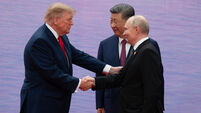
But it is being overshadowed by big power politics amid a meeting between Mr Xi, US President Donald Trump and Russian President Vladimir Putin in an unprecedented trilateral summit.
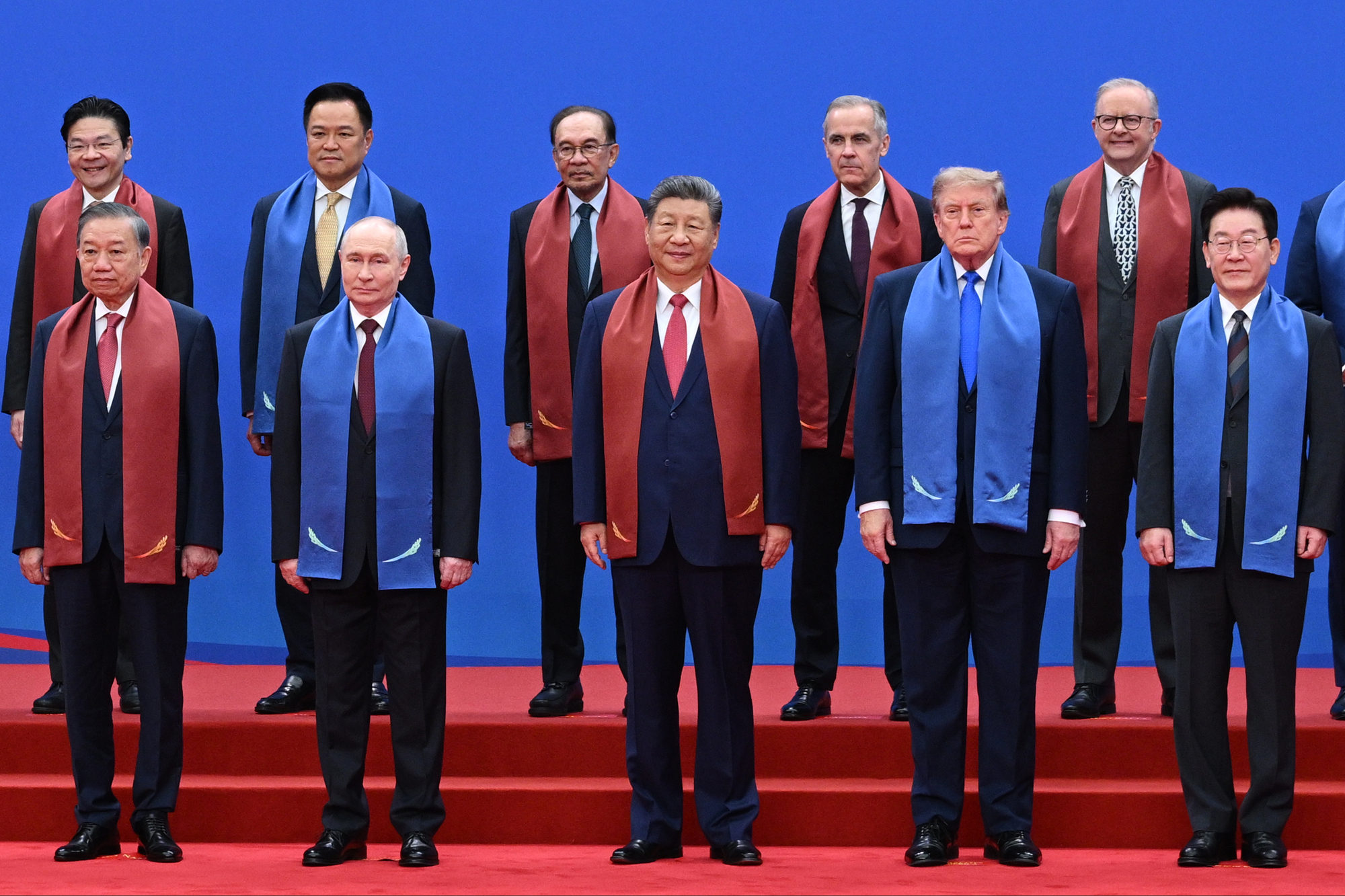
The annual Apec summit has followed the usual traditions of formal arrivals, a gala dinner, scores of bilateral meetings on the sidelines, and a formal group photo. This year, the portrait featured business attire and wide red or blue scarves draped over the leaders’ shoulders.
The venue, in China’s showcase technology hub, resplendent with its light shows and robots, has drawn somewhat more attention than usual for a grouping moving ever so slowly towards its longstanding goal of establishing a free trade zone around the Pacific Rim, while keeping its members talking through wars, trade disputes and economic crises.
The meeting between Mr Xi, Mr Trump and Mr Putin was expected to focus on a much wider array of issues, including nuclear arms and the conflicts in Ukraine and the Middle East.
In opening the closed-door leaders’ meeting, Mr Xi urged fellow leaders of the 21 Apec economies to unite behind their shared interests in open trade and technology development.
“Apec members are like passengers riding the same boat,” he said to the dozens of officials arrayed in a big circle at the lavish venue. “To weather the winds and waves of the Pacific, we should join forces and watch out for one another and strengthen the bonds of shared interests.”
Mr Putin, in his first appearance at an Apec summit in nine years, echoed Mr Xi in saying that “Apec must set a tone of unity and develop a constructive agenda for co-operation”.
In his brief remarks, Mr Trump boasted about the US economy and said that he expected to be signing more trade agreements in the near future. He asserted he has helped bring in trillions of dollars of new investment into the US and helped to create trillions in new wealth.
He also vowed to oppose “globalist” efforts to regulate or stifle AI, which he calls “super intelligence”.
Still, US efforts to restrict Chinese access to the most advanced computer chips and other components used for AI are a perennial sore point for Beijing, an issue highlighted in the recent scandal over Nvidia founder and former chief executive Jensen Huang’s relationship with a Chinese technology executive.
Mr Xi and other Asian leaders have highlighted the message that it is imperative that AI technology is fairly shared and regulated to ensure financial stability, cyber security and equitable growth.
Earlier this week, Washington tightened restrictions on remote access to such technology in a move that experts say has eliminated a significant loophole that facilitated access to billions of dollars worth of the most advanced Nvidia chips used for AI.
More broadly, AI is having a “material impact” on global growth helping to offset the impact of energy shocks from war in the Middle East, Kristalina Georgieva, managing director of the International Monetary Fund, told the Apec leaders.
The Apec region’s economies, which account for more than half of all global business activity, are growing at a 3.4% annual pace, slightly faster than global growth of 3.1%, she said. And global trade has been expanding at a rate of 4.6%, in large share thanks to the AI investment boom.
“While the energy shock will eventually dissipate, AI is forever, the most significant factor for medium-term competitiveness, productivity, and growth,” Ms Georgieva said.
“This is the fastest transformation in human history,” she added. “And to put it very simply, you snooze, you lose.”

BLACK FRIDAY
Already a subscriber? Sign in

CONNECT WITH US TODAY



Be the first to know the latest news and updates