Cop31: Ireland can help finalise preparations to mitigate harm from Atlantic's weakening currents
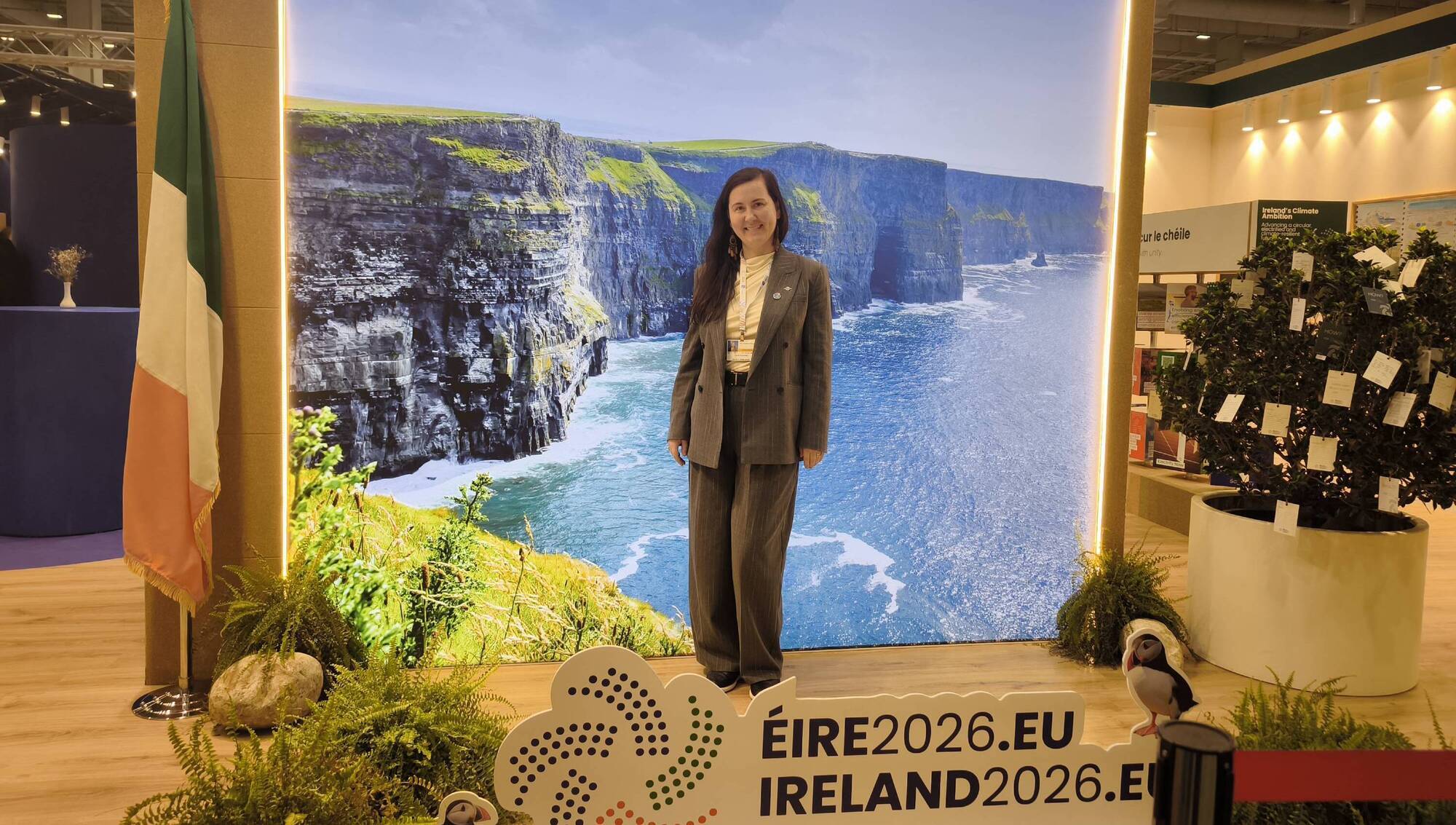
Dr Elena Kavanagh at the UN climate summit Cop31 in Turkey. 'Farming, fisheries, energy, shipping, coastal planning and insurance all make decisions meant to last for decades. Each can already take account of the risks of a weakening Atlantic.'
This week, the presidency of this year's Cop31 circulated a draft of the UN climate summit’s main decision.
Within, it names El Niño. It does not name the Atlantic Meridional Overturning Circulation, or AMOC, the system of currents that gives Ireland its mild climate. In earlier talks on climate observation, even El Niño took careful handling.
The view was expressed that links still debated in the science should be established before they enter decisions. Scientists consider the AMOC very likely to weaken this century, possibly causing droughts in Africa and sea-level rise along the US east coast; what is uncertain is how much and how fast.
For a lawyer, this is familiar ground. In its 2025 advisory opinion, the International Court of Justice (ICJ) found that states owe a stringent duty of due diligence to prevent significant harm to the climate system.
A state is judged by what it knew and what it did about it. The more serious and irreversible the possible harm, the more care is expected, and uncertainty does not pause that duty.
Read More
The court also treated international co-operation as an obligation in its own right. The Atlantic shows why: no country can watch an ocean basin alone. Much of the Atlantic observing system relies on short-term project finance, and gaps open when countries pull back.
An international assessment, AMOC in Focus, led by JPI Climate and JPI Oceans and with Irish authors from Maynooth, Galway and Met Éireann, is expected early next year.
Ireland would not be the first to plan ahead. Last year, Iceland designated the risk to the AMOC a national security concern and an “existential threat”. Ireland is well placed to get ahead too.
The language is already there. The same draft welcomes the ICJ’s advisory opinion, recognises the risk of crossing climate tipping points and notes concern about the continuity of long-term observation. As the voice of the EU, Ireland can help that language reach the final text.
The co-operation is already underway. Ireland is a member of OceanEye, the EU–Canada alliance for ocean observation, which plans to gather further support through 2028.
The planning can start now. Farming, fisheries, energy, shipping, coastal planning and insurance all make decisions meant to last for decades. Each can already take account of the risks of a weakening Atlantic.
In international law, scientific uncertainty is not a reason to wait. It is a reason to prepare.
- Dr Elena Kavanagh is an adjunct lecturer at the School of Law, University College Cork, and director of the Risk Governance Initiative (RGI), which convenes policy dialogues on the AMOC.

BLACK FRIDAY
Already a subscriber? Sign in

CLIMATE & SUSTAINABILITY HUB
CONNECT WITH US TODAY



Be the first to know the latest news and updates