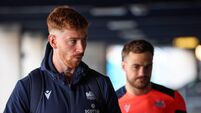
Garry Ringrose explains how players 'got out of their own way' after shaky Six Nations start
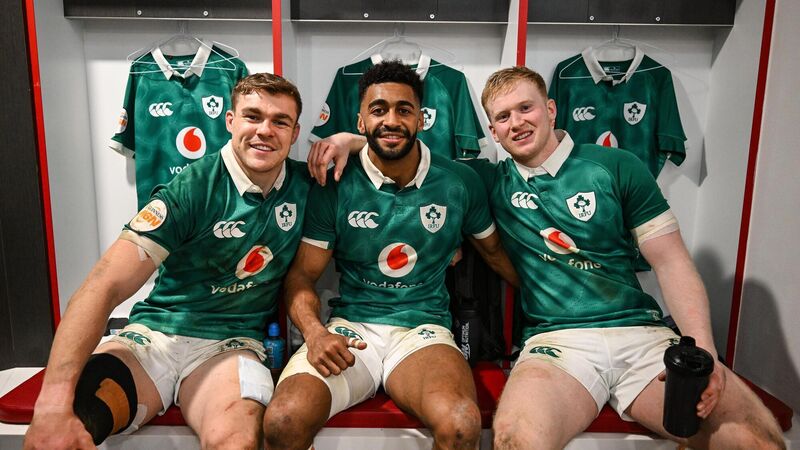
Ireland players, from left, Garry Ringrose, Robert Baloucoune, and Jamie Osborne, in the dressing room after the win over England in Twickenham. Pic: Brendan Moran/Sportsfile
Ask Andy Farrell about the key to a high-level Ireland performance of the sort that blew the doors off the England bandwagon at Twickenham and it invariably narrows down to a clarity of purpose in his players’ minds.
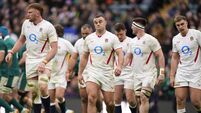
More simply put it is, in the Farrell vernacular, players “getting out of their own way”. Through the head coach’s lens, one imagines Ireland’s heads were up in the Parisian clouds and away with the fairies on the opening night of this 2026 Six Nations campaign as France roared into a 29-0 lead their visitors had no hope of recouping, eventually losing 36-14.
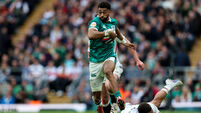
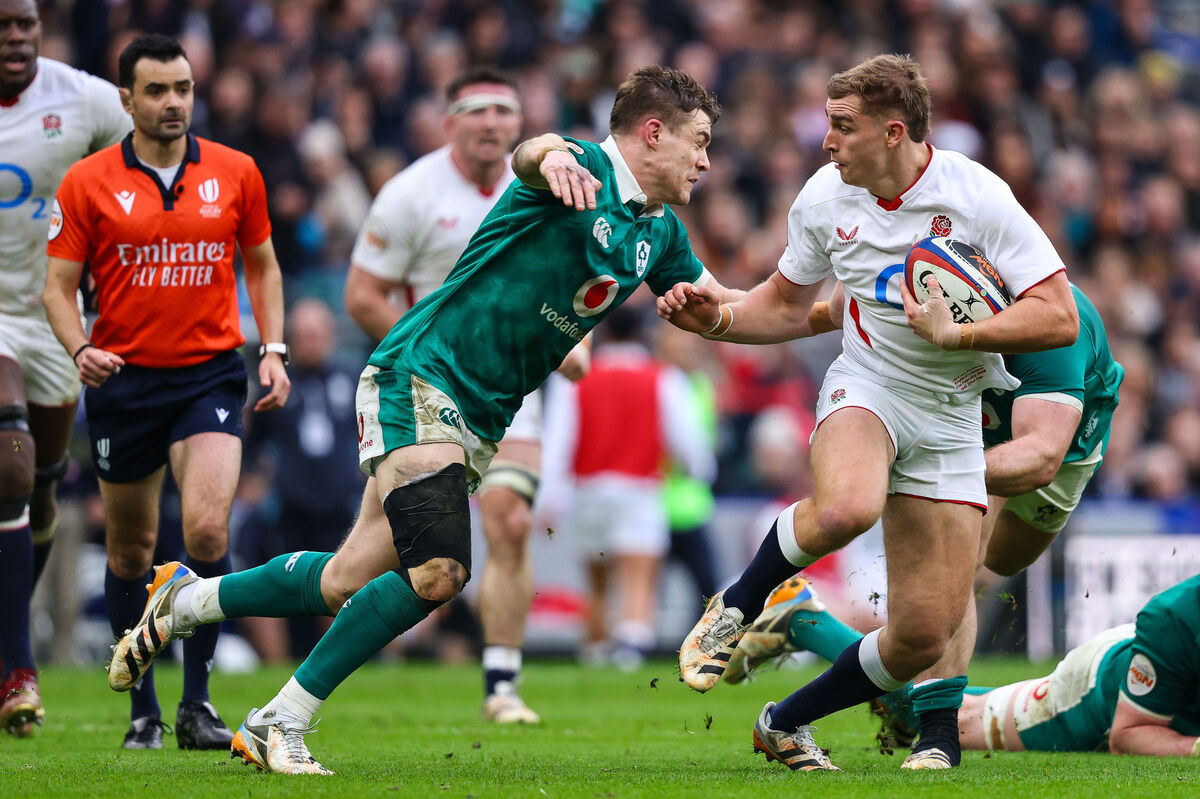
At Twickenham, however, the manner in which his team first repelled English go-forward and then dismantled Steve Borthwick’s side with five irresistible tries scored off the back of intense physicality at the gainline and slick, intelligent attack executed almost to perfection suggested the lessons from Stade de France 16 days earlier had been learned, minds had been cleared and a flow state had been reached.
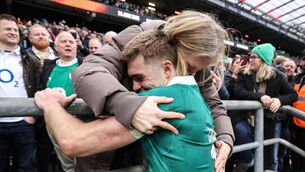
In the celebratory aftermath of Ireland’s record 42-21 win, outside centre Garry Ringrose explained what getting out of his own way actually meant to him.
“It always challenges us not to suppress ourselves, I guess,” Ringrose said. “On the biggest stage against quality opposition and pressure moments that can happen to any individual that you kind of suppress yourself.
“If you try and zoom out and think what do your family want to see, what do your friends want to see, what do your team-mates want to see, regardless of (the) good, bad or ugly that's happened.
“People only ever want to see, the ones that are proper close to you, they only ever want to see the best version of you. That's what it means to me and us. That no matter what happens result-wise, in the moment, good, bad or ugly in the game, good, bad or ugly, it’s just to challenge yourself, not to suppress yourself and grow bigger and attack the next moment.”
The 31-year-old, who earned his 72nd Test cap on Saturday, admitted that clarity was not the easiest thing to achieve in the red-hot cauldron of Six Nations rugby but credited Ireland’s renowned performance coach Gary Keegan for setting the framework during pre-match preparations to enable it to be reached.
“It's difficult, it's very difficult but that's why we have Gary Keegan that works for us and all the coaches buy in and are across the same messages. When you prepare you want things to go right, you want to deliver to your potential but that's rarely the case and that's the reality.
“Even there today, stuff goes wrong but it's to get out of your own way and not suppress yourself, that's always a challenge.
“The same can be said after France when maybe there's negative noise outside, it's the same message. Think of the people close to you, what do they want to see, don't suppress yourself and keep attacking the next moment.
“That's always the case and that's the message he consistently drives.”
With two rounds to go, starting with the visit of Wales to Dublin on Friday week and a final game at home to Scotland eight days later, a Triple Crown is still on the table alongside a potential title if defending champions France slip up in Edinburgh or against the English in Paris on March 14.
Maintaining that message during this fallow week and ahead of their closing home stand is essential if Ireland are to keep up the emotional ferocity and physical intensity they brought to the England game.
“That's the challenge and it's the beauty of the Six Nations,” Ringrose said. “Even talking to the England lads how quick things can shift in two weeks.
Read More
“We were in a tough spot after losing to France, they were in a great spot after continuing their winning ways against Wales and in two weeks the different things shift. So that's the challenge to probably front up and try and put in a performance. That's where the performance comes from.
“It's our preparation, so that'll be the focus for the next two weeks.”
Wales may have slumped to their 14th consecutive Six Nations defeat last weekend but it took a late try from Scotland in Cardiff to seal their fate and Steve Tandy’s side have shown increasing signs of life under the new head coach to suggest Ireland may have to dig deep to continue their winning ways since the French defeat. Ringrose is aware of the threat but insisted the onus was on the Ireland squad to stay focused and on task.
“It's just fickle. It's fickle how quickly things can change,” he said. “The challenge for us now, not the challenge but to enjoy (last Saturday) evening and acknowledge things this evening but then it's kind of the cliché, tomorrow it's back in the saddle, challenging our preparation, challenging ourselves in training and getting right back to the level we expected ourselves to deliver against Wales.
“Just face what's in front of us and that's a training week to get things right for what will need to be a big performance in Dublin.”
CONNECT WITH US TODAY



Be the first to know the latest news and updates