Eimear Ryan: Small acts of empathy can make world more hospitable for women
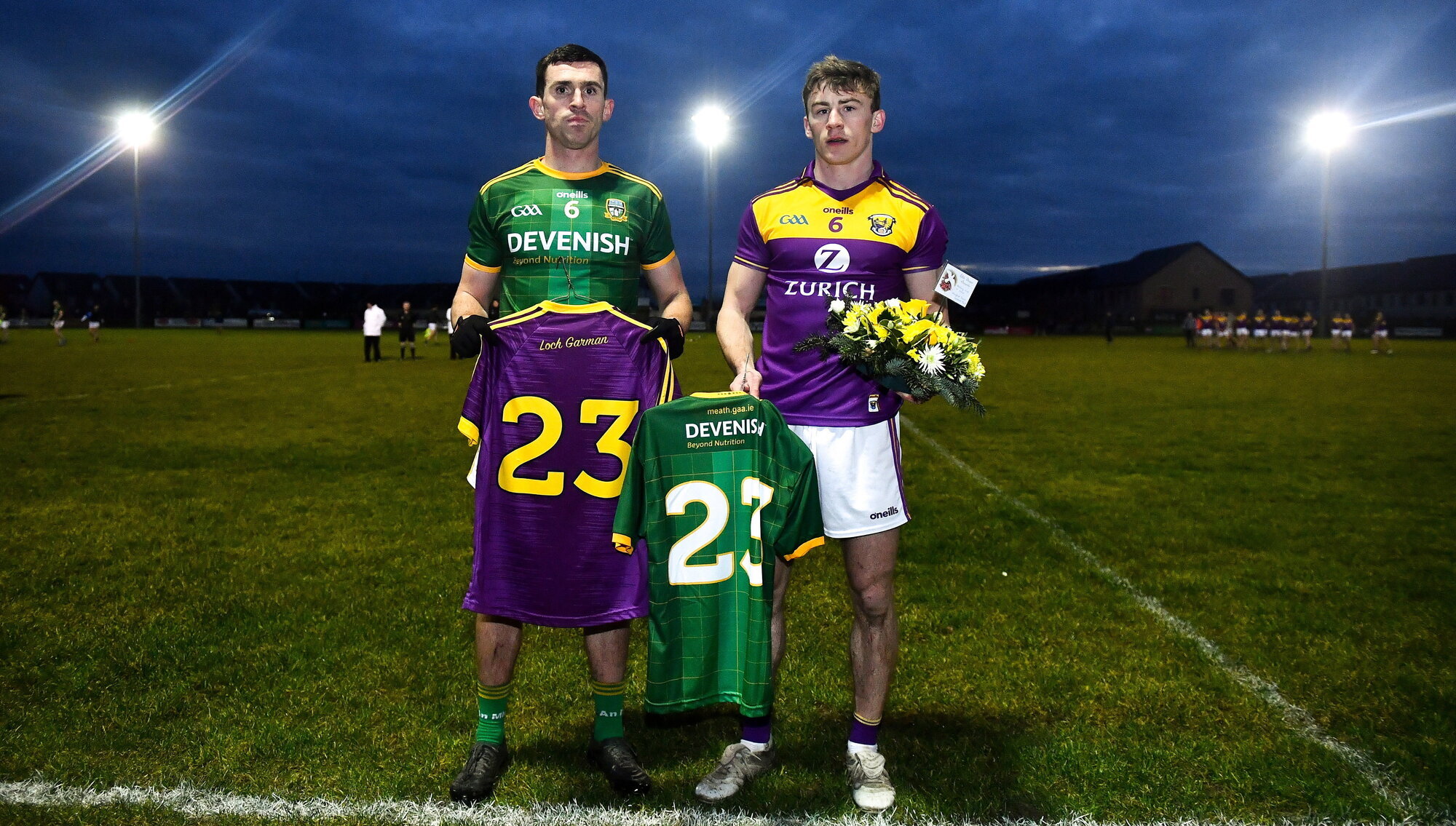
Meath captain Shane McEntee, left, and Wexford captain Martin O'Connor hold commemorative jerseys in memory to the late Ashling Murphy before the O'Byrne Cup match in Ashbourne. Picture: Ben McShane/Sportsfile

This week, it’s been hard to think about anything or anyone except Ashling Murphy. Even the bright sporting moments, such as the Barrs’ thundering, highly entertaining victory over Austin Stacks in the Munster football final, were tempered and shadowed by the sadness of Ashling’s senseless death.
Before the match, both managers extended their condolences to the Murphy family, and spoke movingly about how devastating news such as this puts sport in perspective. It has been heartening to see the wider GAA family remember and pay their respects to Ashling, camogie being one aspect of her busy and vibrant life, by holding a minute’s silence before many of last weekend’s matches.
Her death has stopped the country in its tracks. Most of us either identify directly with Ashling or have someone in our lives just like her. Women who run, in particular, have been shaken to the core. A day’s work followed by a run to clear away the cobwebs — such a routine, ordinary, unremarkable day, until it wasn’t.
The phrase ‘she was going for a run’ trended on Twitter, before being critiqued by the feminist writer Laura Bates, author of . “I know it comes from a place of grief and rage,” she wrote in a social media post. “But it doesn’t matter what they were doing. When we say ‘she was just doing this’ or ‘she was just doing that’, it suggests that the case wouldn’t have been quite so awful or tragic if she had been doing something else.”
This is true: Too often, we place our focus on the victim’s actions, rather than the murderer’s.
“She did everything right” is another phrase that is often used in these tragic cases, but not doing things “right” should never mean that you deserve to be harmed.
The past week has shown up “doing everything right” — to protect ourselves in public space — for the myth that it is. Even being fit and strong is of little help. As a woman, playing sport gives you a physical confidence, a sense of being able to handle yourself. You think: I can climb that hill, hop that wall, lift that box. You may even think that if you ever encounter the proverbial stranger in an alleyway, you might be able to knock him off balance or outrun him. We tell ourselves these myths so that we can live in the world without losing all hope and faith.
The monster myth is another comforting fable that simply doesn’t hold up anymore. This is the idea that men who commit violence against women are not men at all, but monsters. Like natural disasters, they are inevitable; our only hope is to be prepared for them, hence the societal focus on women’s actions rather than men’s. But only 10% of the murders of women in Ireland are committed by a stranger. And how often is a murderer revealed, only for a shocked community to remark on how normal and nice and upstanding he seemed?
It’s much harder to accept that male violence towards women stems from the misogynistic society we all live in. Some of this misogyny is so normalised — deemed “harmless” or “just banter” — that it’s almost invisible. Catcalling, sexist jokes, locker-room talk — all of it subtly dehumanises and others women.
Bad jokes don’t lead directly to murder, but they do contribute to a toxic sentiment that women are not as important or worthy or even as real as men.
It’s in the language of sport, too. I used to recite the Hurler’s Prayer as a kid, which contains the line: ‘May the great referee when he calls your name say ‘You hurled like a man. You played the game.’ And look, I get it. We’re talking about positive masculinity here, the qualities of courage, strength, and leadership, which we all aspire to on the pitch.
The problem is we have no female equivalent — or we do, but they’re all negative. If we aspire to hurl like men, we throw like girls, gossip like women, cry like little girls.
“You’re good for a girl,” was what I heard on the pitches of my childhood, over and over. In sport, masculinity is aspirational; femininity is to be forgiven or overlooked. We seldom elevate those traditionally feminine qualities — like cooperation, communication, and empathy — that are essential to being part of a team.
On social media, a lot of good, well-meaning men have been asking what they can do to help. Much of this you probably know already, but for what it’s worth, here are some small acts of empathy that men can undertake to make the world a bit more hospitable for women:
- Donate to Women’s Aid or your local rape crisis centre.
- Call out your buddies if they’re making sexist jokes. Some of them, unfortunately, won’t take on board criticism if it comes from a woman — but they might listen to it from you.
- Please don’t lionise sportsmen who have a history of misogyny. This sends a message to the women in your life that the harm done to them is not as important as a man’s talent. There are enough brilliant sportsmen in the world who clear this low ethical bar — give them your support instead.
- Be mindful of how you take up space, especially public space. When I cycled out to Atlantic Pond last weekend to the walk in remembrance of Ashling, I passed hordes of people walking up Centre Park Road to join the vigil. Three different men wandered out onto the cycle path in front of me, without looking. This wasn’t a big deal — I didn’t crash into anyone — but it struck me that there is an ease and even a carelessness to the way men inhabit public space, an assumption that the space will be there to receive them and does not belong to anyone else. This sense of ease is foreign to women, who have been taught to navigate public space with an overabundance of caution since childhood. So look at how you inhabit the world, especially in proximity to women. Is there a context in which you could appear threatening to her? Does she have right of way?
- Finally, please don’t be defensive. Don’t ‘not all men’ the women in your life. Not now.