Colin Sheridan: Arne Slot's firing means Liverpool has done exactly what everybody else does
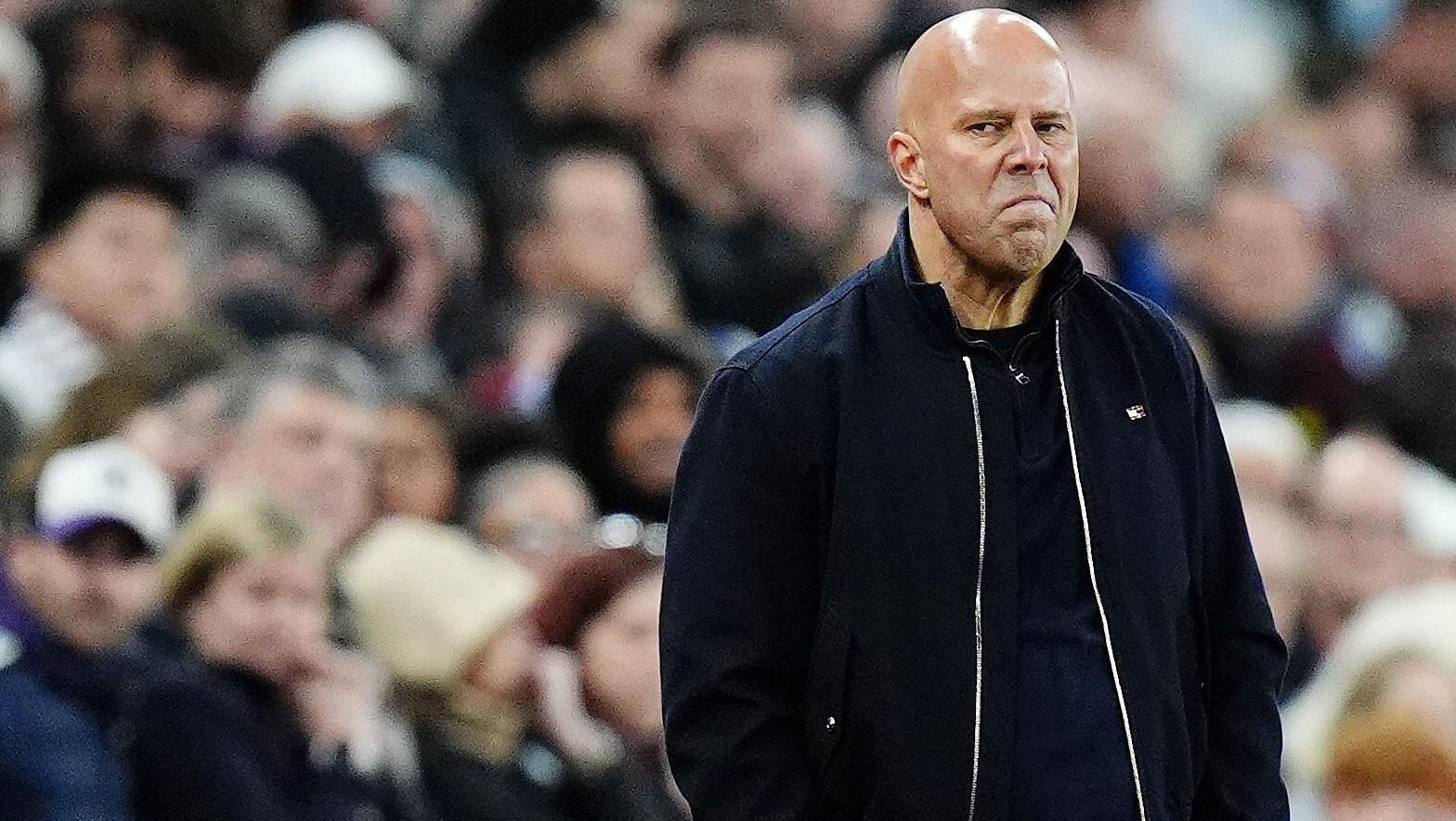
SACKED: Departing Liverpool head coach Arne Slot. Pic: Jacob King/PA Wire.

It will go down as one of the strangest managerial spells in Liverpool Football Club’s rich history. Arne Slot arrived at Anfield carrying perhaps the most impossible brief in modern football: succeeding Jürgen Klopp.
He inherited not merely a football team but a cultural phenomenon. Klopp was more than a manager — he was the club’s emotional compass, its public conscience and, for many supporters, the living embodiment of Liverpool itself.
That Slot won a Premier League in his first season against that backdrop was truly remarkable. Even more remarkable is the fact his exit — only 12 months after triumph — was so tired and unspectacular, completely in keeping with a season that unravelled spectacularly and painfully.
The obvious explanation is results. Liverpool collapsed from champions to chaos. The football became stale, confidence drained from the squad and a campaign already darkened by the tragic death of Diogo Jota drifted further into misery. Supporters turned restless. Rivals smelled weakness. The club’s hierarchy blinked. Eaten bread, soon forgotten.
But results alone rarely explain managerial sackings at elite clubs anymore. The real story is about power. Modern football managers remain the most visible figures in the sport, but they are no longer its most powerful. That authority has steadily migrated elsewhere — upwards to ownership groups and sporting directors, but perhaps most significantly sideways into dressing rooms populated by global superstars.

The moment there is even the faintest suspicion that a manager has lost the confidence of key players, his fate is effectively sealed.
Read More
Football clubs no longer ask whether a manager can recover a dressing room. They ask whether it is worth trying. The answer is almost always no. Once doubt takes hold, the calculation becomes brutally simple. Replacing one manager is easier than replacing six influential players. The economics demand it. The politics demand it. The call-in radio shows demand it. The modern football ecosystem practically guarantees it.
Liverpool's decision to dismiss Slot appears to fit neatly into that pattern. Reports emerging from Anfield have painted a picture of growing tensions between the manager and senior figures within the squad. Mohamed Salah’s public comments about wanting a return to Liverpool’s traditional 'heavy metal' football were widely interpreted as criticism of the direction Slot had taken the team.
His teammates liking and resharing his social media posts undermining Slot were as damning as any training ground bust-up. Subtle rebukes of a manager and his methods dismissed as meaningless by the players themselves — but instrumental in that they were amongst the thousand cuts that saw Slot eventually out the door.
Footballers have always grumbled about managers. Dressing-room disagreements are as old as the sport itself. What has changed is the consequence. There was a time when clubs expected players to adapt. Today clubs often expect managers to survive.
Once influential players begin questioning methods, systems or standards — whether publicly or privately — alarm bells ring immediately. Executives no longer view such tensions as part of the natural cycle of elite sport. They view them as existential threats. And so, the manager becomes expendable.
What makes Slot’s dismissal particularly striking is the club involved. Liverpool supporters have long liked to think their club operates differently from the rest of football's elite. Not necessarily better, but differently.
There was evidence for that belief. They resisted the hire-and-fire culture longer than most. They gave managers time. Bill Shankly, Bob Paisley, Joe Fagan, Kenny Dalglish and Klopp all became part of the institution rather than temporary contractors. Even difficult periods were often approached with patience rather than panic.
That self-image has survived well into the Premier League era. Yet Slot's firing punctures it. This is the same Liverpool that once prided itself on stability. The same Liverpool that mocked the revolving-door culture of Chelsea. The same Liverpool that looked across Manchester and wondered how United repeatedly convinced themselves that one more managerial change would solve everything.
Now they have done exactly what everybody else does.
They have looked at a struggling dressing room, sensed the possibility of discontent becoming something more dangerous and acted swiftly. Maybe they are right.
Perhaps the decision will prove entirely justified. Football is ultimately judged by outcomes and not sentiment. If Liverpool appoint a successor who restores performances, reconnects with supporters and challenges for major honours again, history will probably regard the decision as ruthlessly efficient.
But that does not make it any less revealing.
Because what Liverpool have demonstrated is that no club is immune from the realities of modern football.
Not even one of the game's great institutions.
The mythology suggests giant clubs shape their own destinies. The reality — as Manchester United have proven ove the last decade — is often more mundane. They react to the same pressure as everyone else. They fear the same crises. They respond to the same warning signs.
And few warning signs terrify modern football executives more than the possibility of a manager losing his dressing room.
Whether Slot had genuinely lost it is almost beside the point.
The suspicion was enough. And the fact he never sought the love that Klopp enjoyed meant he was much easier to part with. That may be the most telling detail of all.
In contemporary football, managers are no longer dismissed when they lose the dressing room. They are dismissed when people start wondering if they might.
The debate over whether Jim McGuinness deserved a suspension for his intervention in Killarney is almost beside the point. The real problem is the continuing confusion surrounding the GAA’s disciplinary system. For years, the Association has struggled to convince supporters that disciplinary matters are handled consistently, and the latest controversy has only deepened that uncertainty. It reinforces the suspicion that outcomes depend as much on personalities, profiles, and procedural technicalities as they do on the actual rules.
The issue is not just that McGuinness escaped sanction; it is that supporters are left wondering why this case is so different from others. Consider the example of Dublin manager Ger Brennan earlier this year. Brennan received a 12-week suspension following an altercation involving Galway strength and conditioning coach Cian Breathnach McGinn. The punishment survived multiple appeals, and Brennan ultimately missed a significant portion of Dublin’s championship campaign.
At the time, the GAA’s message was defiant: team officials would be held accountable, physical confrontations would not be tolerated, and rules were rules. Fast forward a few weeks, and that message feels considerably less certain. McGuinness found himself at the centre of a highly controversial incident during Donegal’s meeting with Kerry. Yet, no suspension followed because the episode was not included in the referee’s report.
Procedurally, this may be correct, as disciplinary authorities must act within the available framework. However, supporters do not view these situations as legal exercises; they experience them as matters of consistency and fairness.
From the outside, it is entirely reasonable to ask why one high-profile manager serves a lengthy suspension while another emerges untouched from an incident that generated enormous national attention. Mixed messages rarely strengthen credibility — they weaken it. The GAA asks players, managers, and supporters to respect officials and accept contentious decisions. That is a fair expectation, but respect becomes harder to maintain when confidence in the consistency of the process begins to erode.
While every disciplinary structure produces controversial outcomes and grey areas, supporters can reasonably expect clarity. They should know where the line is and trust that crossing it will result in similar consequences, regardless of who is involved. At the moment, that certainty simply does not exist. The larger problem is that the Association once again finds itself explaining why two apparently comparable situations have produced vastly different outcomes. For an organisation that depends so heavily on public trust and volunteer goodwill, this should be the GAA’s greatest concern.
As our screens and back pages are awash with so much sport, magic can be missed. The 2026 French Open has been quietly compelling, unfolding without the usual fanfare yet delivering one of the most unpredictable Grand Slams in recent memory. The shock exit of world No. 1 Jannik Sinner, followed by Novak Djokovic’s defeat, blew the men’s draw wide open and created space for fresh contenders and breakthrough stories.
Among them has been French teenager Moïse Kouamé, whose fearless run and composure on the Paris clay have made him one of the tournament’s most captivating figures. In both the men's and women's draws, young talents have seized their moment, familiar certainties have vanished, and Roland Garros has thrived on uncertainty and fresh energy. You could do worse than spend an afternoon indulging.
The World Cup begins in 11 days, which feels unfair. There should be a mandatory cooling-off period after the club season — a few quiet weeks to miss football slightly, to let anticipation build naturally. That used to be part of the joy of a major tournament. Wall charts appeared slowly. Squads were debated endlessly. Hope had time to breathe. Now the season ends on Sunday and by Wednesday somebody is asking whether England should switch to a back three against Iran. Where is the anticipation? Where is the longing? We barely have time to wash the stench of club football off before international football arrives demanding emotional commitment all over again.