English paper 2 brings surprises for Leaving Cert students
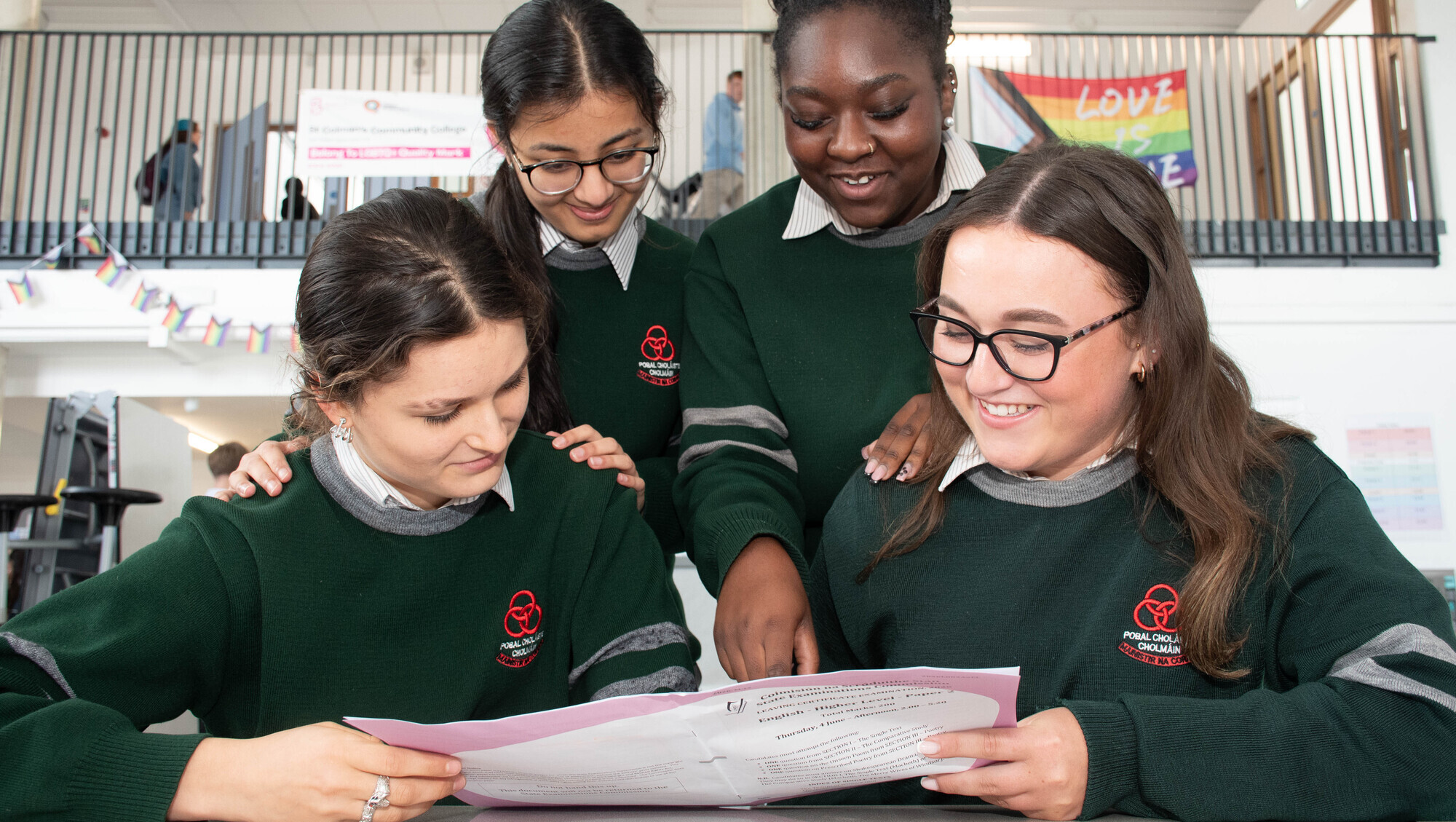
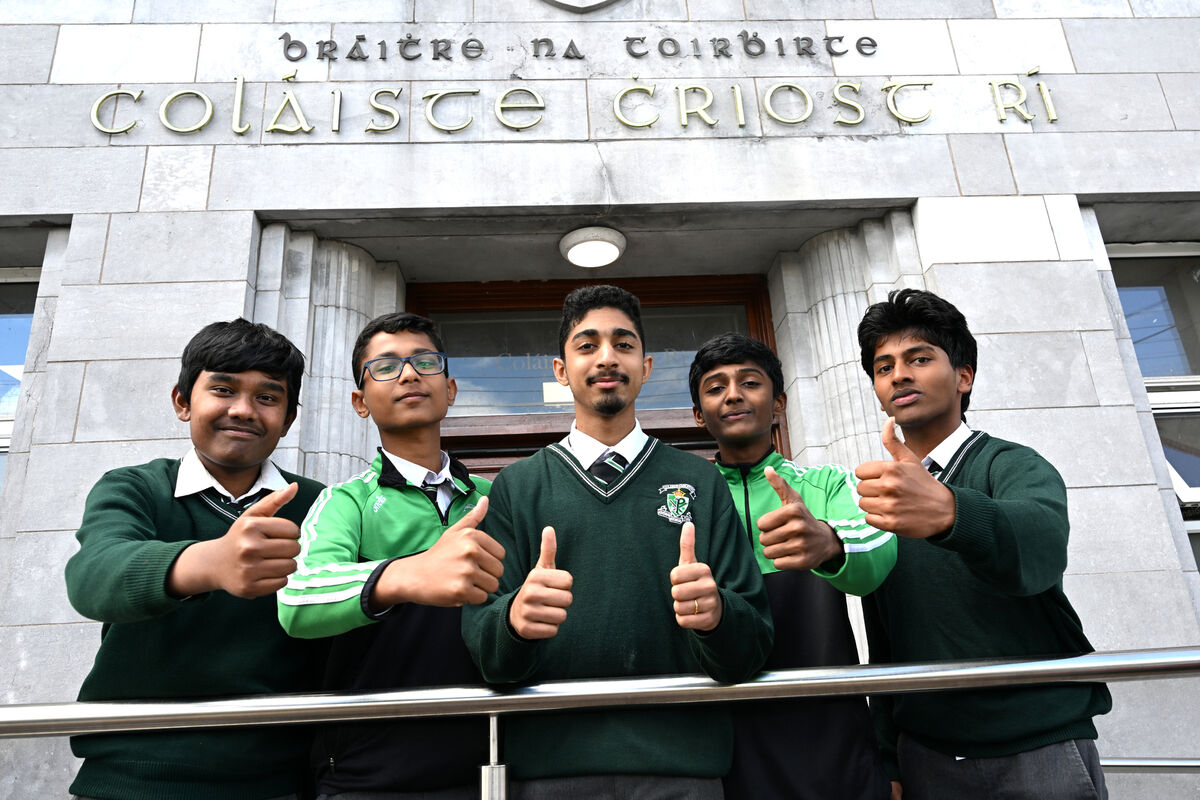
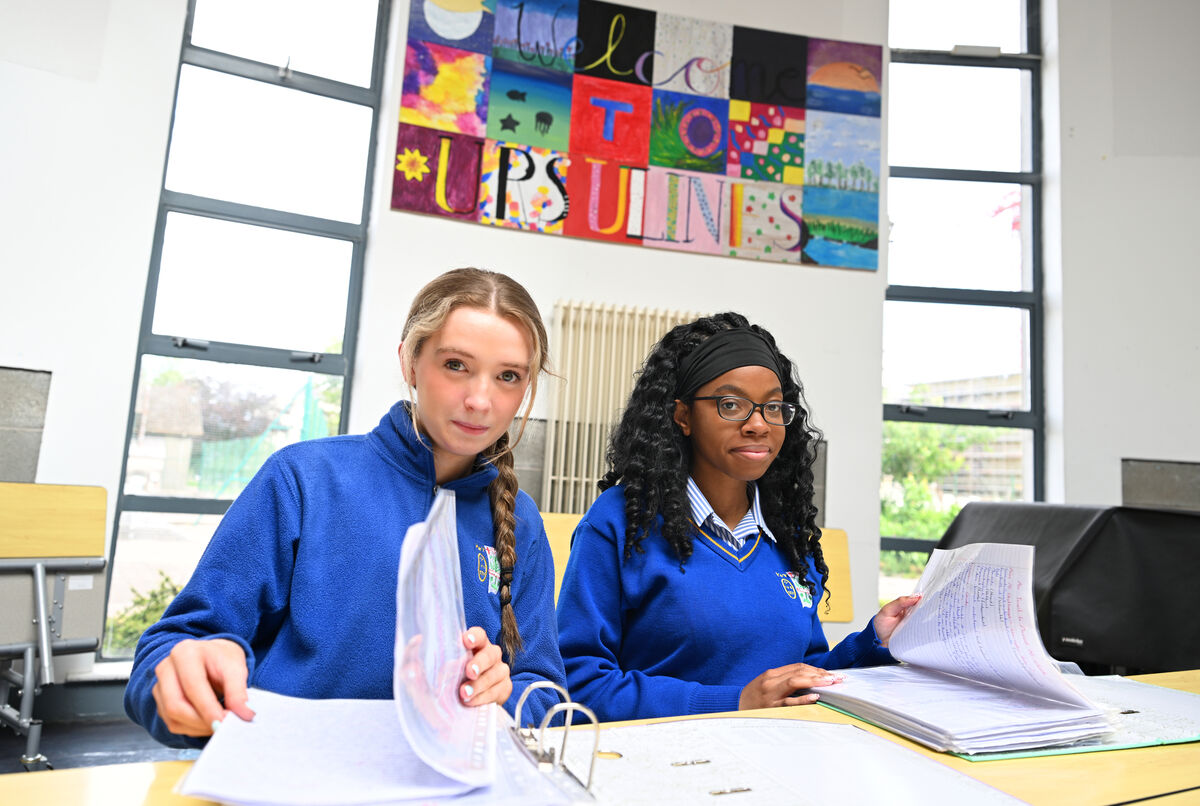
Wiktoria Gowel, Yvette Ehouman, Shravani Patil, and Aoibhinn O'Regan going through the Leaving Certificate English Paper 2 questions in St Colman's Community College, Midleton, Co Cork. Picture: Howard Crowdy
This year’s English paper 2, traditionally an exam where students “need every minute”, offered plenty to ruminate on, including a surprise or two, such as the absence of a poet hotly tipped to appear.
The 2026 State exams continued on Thursday, with Leaving Cert English paper 2, and engineering, and Junior Cert geography and Irish.
Seamus Heaney did not appear on this year’s higher level English paper 2.
“A number of students may have frozen when they saw his name absent from the paper,” said teacher at Pobalscoil Inbhear Scéine in Kenmare and Studyclix subject spokesperson, Sue O’Sullivan-Casey.
Heaney will not appear on the 2027 paper, so many teachers thought he was a strong contender to appear amongst the paper’s five poets, she said.
The poets who appeared on the paper were Bishop, Yeats, Meehan, Ní Chuilleanáin, and Donne.
The question on Paula Meehan's work may have proved tricky, Ms O’Sullivan-Casey said.“The question asked how her language helped ‘modulate’ the harshness of her observations.”
Read More
“A great many students would not have been familiar with such a word, but hopefully relied on contextual clues and discussed her use of language as a way of exploring difficult personal and societal themes.”
Likewise, students may have taken a "momentary pause" first looking at the Macbeth questions, she said.
Students were asked to discuss at least two dramatic techniques employed that help heighten the audience’s sympathy for the title character.
“This question allows a student to discuss what they know about the character of Macbeth in depth, but they may have struggled to articulate how techniques such as the supernatural world or the imagery of clothing and blood may have contributed to this.”
At three hours and 20 minutes, English paper 2 is quite a long exam, according to ASTI subject representative for English and teacher at the Patrician Academy Mallow, Siobhan O’ Donovan.
“But most students will tell you that they need every minute of it.”
The paper is made up of three key areas: the single text, worth 60 marks, the comparative question, and the poetry section, both worth 70 marks.
“Timing is crucial in this exam,” Ms O’Donovan said.
“If a student gets carried away in one section, it will probably be to the detriment of another.”
As in recent years, all three modes for comparison appeared on the paper, effectively giving students a choice of six questions from which to choose.
“Candidates that I spoke to were happy with the cultural context question on the extent to which a patriarchal and male- dominated society is nurtured and maintained in the texts they have studied.”
This year’s poetry selection also offered plenty of choice, she believed.
“The Yeats question was quite manageable and in keeping with similar questions from previous years,” Ms O’Dowd said.
Similarly, the question on Bishop would have been "no problem" to a student who had studied previous questions.
The ordinary level paper was also well received by most students, Ms O’Dowd said.
However, the single-text question on this paper did provide one ‘tricky’ element where students were asked to use their studied text to support their argument in a debate on the issue of artificial intelligence (AI).
“Students were very happy with the amount of choice on the rest of the ordinary level paper, with three to choose one from in the comparative, and six to choose one from in the poetry.”
Meanwhile, there were no major surprises in this year’s Junior Cycle Geography exam, which presented students with a fair and balanced paper.
That is according to teacher at Moyle Park College, and Studyclix subject spokesperson Stephen Doyle.
“As in previous years, the paper contained a mix of short-answer and longer-answer questions, allowing students to demonstrate both their geographical knowledge and their ability to explain key processes and concepts.”
Physical geography topics included coasts, rivers, glaciers, volcanic activity, weather and karst landscapes, while human geography focused on population, migration, settlement and development.
“A question comparing the educational opportunities of young people in developed and developing countries encouraged students to think critically about real-world issues.”
CONNECT WITH US TODAY



Be the first to know the latest news and updates