Paul Rouse: Mark Dan Fraher centenary with a renewal of Waterford’s Gaelic games future
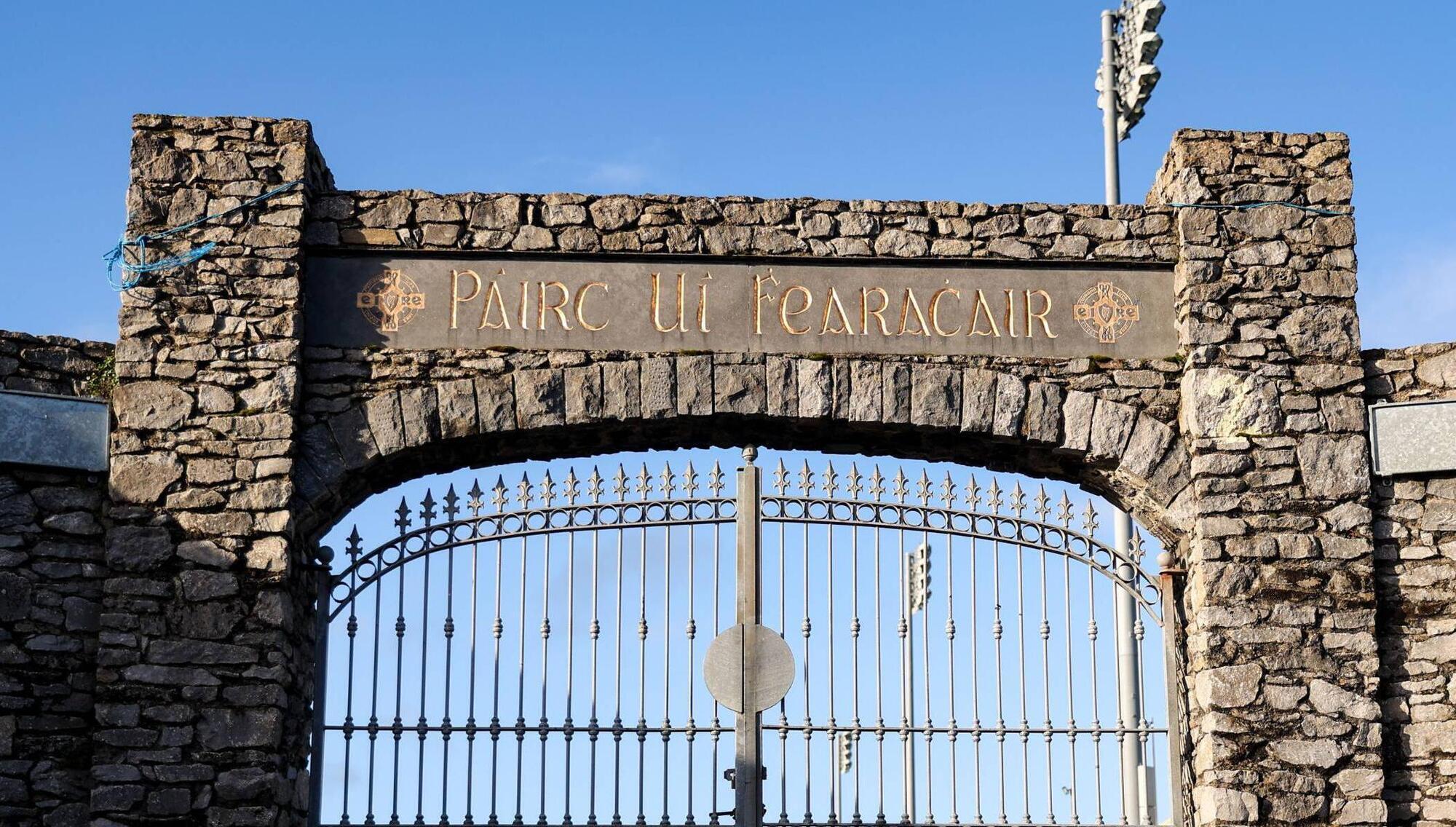
Fraher Field in Dungarvan. Pic: Michael P Ryan/Sportsfile

One of the great things about the town of Dungarvan is how well its people preserve its history.
This is a preservation that works in many ways.
The blue plaques that are set into the walls of houses and shops around the town do a great job in giving people a connection with the past.
From the remembrance of a local boxer who fought in the Olympic Games of Helsinki (1952) to the place where a United Irishman was hanged after the rebellion of 1798, there is a breadth and diversity of history that is undeniable.
The memorial to all the people of Dungarvan and surrounding areas who lost their lives in World War I is also beautifully done. When you read through the names, it is a reminder of the impact of war on the ordinary people of every place.
The museum is also a fine one, always worthy of a visit, and like the best museums, is free to the public.
The history of Dungarvan lives on in another way, however.
If you walk around Grattan Square in the middle of the town, you come to a shop called ‘The Wine Buff’. In that shop there is a photo kept behind the counter which is more than 100 years old. It features the then owner of the shop, Dan Fraher.
Fraher’s name is also still on the outside of the premises – it is there in two ways.
The first is one of the blue plaques, it notes the span of Fraher’s life (1852-1929) and describes him simply as a ‘sportsman & scholar’.
The second is a magnificent old-style tiled sign, set into the wall, which reads ‘D. Ua Fearachair’, which was Dan Fraher’s name in Irish.
The shop sign was rediscovered more than a decade ago when layer after layer of paint was torched from the wall to reveal the history beneath it.
What is now a wine shop was once the business and home of Dan Fraher. His name is known to many because of the naming of the pitch in Dungarvan. Fraher Field on the edge of the town is one of the oldest GAA pitches in the country.
It was bought by Dan Fraher around 1912, but Fraher had previously leased it from the Curran family from the middle of the 1880s, directly after the founding of the GAA.
All across Ireland, key individuals continue to be vital to the sporting life of communities. The passion and energy needed to foster any sport is ordinarily driven by a few people who put a lot of themselves into what they believe in.
It remains the case that the selflessness of volunteers to make a contribution enriches the lives of every community.
What Dan Fraher did in Dungarvan is a case in point. There was no hurling played in Waterford when the GAA was founded. In his dedication to promote Gaelic games in Waterford, Fraher was the driving force behind arranging major matches in Dungarvan.
He had moved into Dungarvan from the rural parish of Seskinane, about 20km to the north of the town, to work as an apprentice in a drapery.
It was in the early 1890s that he established his own shop at Grattan Square – The Gaelic Outfitting Store. This sold all manner of clothes, as well as jerseys and sporting goods.
All the while he was central to building Waterford GAA. Hurling began to spread into and around the county, football was also widely played and the pitch at Dungarvan was perhaps the best in the country. It staged the 1903, 1905, 1907 and 1911 All-Ireland Finals, as well as many Munster championship matches.
That Fraher was a man of his times is laid bare by two other things.
The first is his Irish language activism. After Conradh na Gaeilge (the Gaelic League) was founded in 1893, Fraher set up a branch in Dungarvan. He collected Irish books and manuscripts, used the Irish version of his name in public, and sent his son Maurice to Patrick Pearse’s school – Scoil Éanna – in Dublin when it was founded in Dublin in 1908. Maurice was one of the first students through the door. Dan himself was heavily involved in the teaching of Irish in Waterford.
The second is his political activism. Fraher believed in an Irish Republic. The IRA in Waterford used uniforms provided for them by Fraher and they bore the label of The Gaelic Outfitting Store. He was a significant fundraiser for Sinn Féin and the IRA and was imprisoned in Ballykinlar Camp in Co. Down in 1920. He was well into his 60s at that stage and the experience had an adverse impact on his health.
In many ways, Dan Fraher gave his life to improving Ireland. He volunteered for it, he argued for it, he taught for it, he played for it. And he also put his money where every other part of him was. In January 1920, he wrote a cheque for £99 as a bond to help fund Dáil Éireann.
Without these bonds, the Irish Republic would not have been able to maintain its campaign to build a parallel governing administration to the crown in Ireland.
There is a depth to his legacy which transcends short-term results, of course, but there is nonetheless a certain sadness in writing about Dan Fraher in a week in which both Waterford’s senior hurling and senior football teams are gone from the championship.
It is the only county in Ireland to have both its senior teams gone before the end of May.
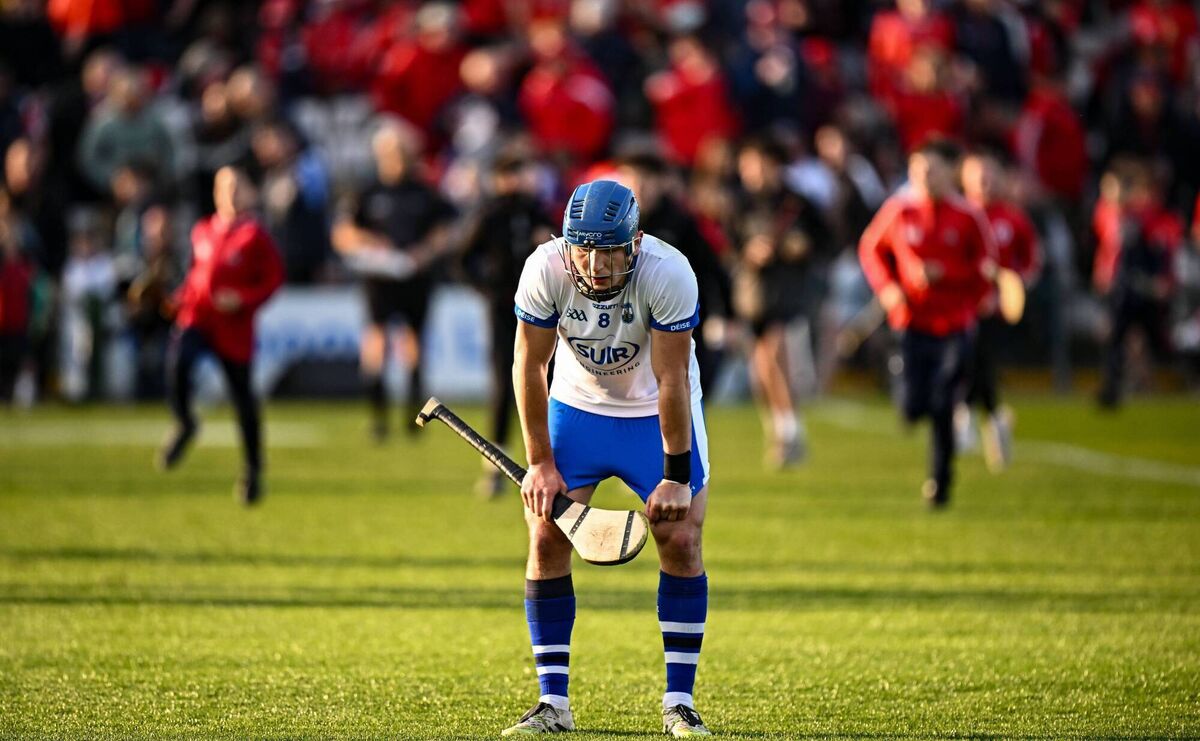
And it is a reminder of the enduring challenge for every county to become – and to stay – competitive.
The hurling team is a good one and has been unlucky. The new players coming through will surely help, but a change of fortune is important before the soft puncture of a loss of momentum leaves them slipping further behind.
The struggles to develop a winning football team in Waterford have gone on for far too long. Waterford have never won the Munster minor football championship in its near 100-year existence. They’ve won one U20/21 (in 2003) and they won their one Munster senior football championship in 1898, just two years after the motor car arrived in Ireland.
Similarly, no Waterford club team has won the Munster senior football championship. In truth, as things stand, there is regrettably no sense that Waterford will soon be promoted from Division 4 or win the Tailteann Cup despite the devotion of a small cohort of football diehards who have done some excellent work with development squads.
Perhaps the Munster Council might consider devoting some of its considerable resources to the matter?
The centenary of Dan Fraher’s death is three years away. There would be no more fitting way to mark it than by a carefully thought-out renewal of Waterford’s Gaelic future.