Kimmage right to ask thorny drugs questions
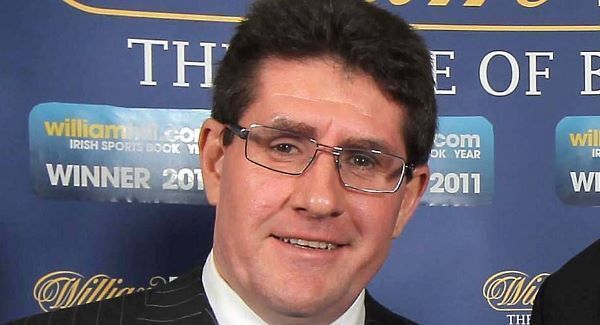

Asking awkward questions about the possible use of performance-enhancing drugs in rugby fits into no known narrative when it comes to Irish rugby, and particularly the coverage of Irish rugby in the media.
What made the timing of Kimmage’s article doubly awkward was the announcement of the Irish Rugby World Cup bid last Friday. A crisis of conscience about the purity of the game clearly offers a tricky parallel story to the taking-our-place-among-the-nations-of-the-earth spin of a World Cup bid, and this writer heard quite a few complaints about Kimmage’s cussedness. As in, this week of all weeks, etc.
In this corner of the paper we don’t agree with every aspect of Kimmage’s approach to the matter, such as calling out other journalists for not following up his story. It takes a fair amount of neck for any hack to presume everyone should jump on his or her particular bugbear simply because that hack feels they should.
But Kimmage is absolutely correct to ask his questions and to seek answers. Not because of his track record when it comes to drugs in sport, impressive though that is, but because that’s a journalist’s job.
It can be difficult to convey that at times to those involved in the sports a reporter covers: that you’re not – or you shouldn’t be, at any rate – a paid PR agent, or an unofficial games promotion officer.
Clearly a journalist needs access, and that can be difficult in any sport where a reporter has annoyed those in authority in that sport, but if a reporter doesn’t report, then what is he or she doing? Cheerleading, as Paul Kimmage said during the week? Cheating the readers? You can see plenty of that: sports opinion from the semi-embedded, sponsored content which goes easy, fatuous opinions which should have the splashing of beery urine on porcelain as their soundtrack.
The easy retort is that not every cupboard has a skeleton, and not every skeleton is a secret that will shake the foundations of the State, but that’s missing the point. A journalist isn’t there to lead the applause.
Paul Kimmage is raising valid questions about rugby, and those questions needn’t be confined to that sport. They’re applicable to plenty of other sports as well, including some sports whose members were chuckling over the negativity directed towards rugby this week.
Kimmage has this column’s support in what he’s doing, for what it’s worth (disclosure: I’ve never met the man), because he’s correct in calling out the cheerleading.
People who feel that rugby doesn’t deserve that kind of scrutiny are wide of the mark. Readers deserve better than that.
GAA elections a political minefield
I can’t say Erich Segal tops the reading list in this house, but everybody deserves to keep one of his quotations close at hand.
Segal – who wrote Love Story – taught Greek and Latin in Harvard and Yale, once remarked that the reason academic in-fighting is so vicious is that there’s so little at stake.
(I know I’ve used it before, by the way, but if it’s good you don’t cast it aside, right?) This aphorism came to mind last week with news filtering through of the various GAA election campaigns being fought around the country, with a heavy emphasis on the word fought.
The appointment of county board officers may be an enjoyable spectator sport for those of us on the outside, but a world of phone-calls, arm-wrestling, threats both veiled and unveiled, gross calumnies and outrageous falsehoods exists just out of view.
I finished the book Double Down a while back and enjoyed its description of the 2012 US Presidential election immensely: John Heilemann and Mark Halperin give a great account of the machinations (trans: savagery) just off-stage as Barack Obama and Mitt Romney fought it out for possession of the White House (note to self: recover same from loanee as statute of limitations is expiring).
Heilemann and Halperin relied on over 400 different sources to write the book, with most of those speaking anonymously. I’d say if you were to give as forensic an account of the political races seething and boiling just out of sight in GAA circles around Ireland at the moment you’d need a very similar approach.
You’d need a couple of years to write it.
You’d need a few hundred sources.
You’d need to guarantee their anonymity.
You’d need to be living in America when it came out.
Exploring sport’s dark side
Apologies for being a little late to the party on this one, but I note that Anna Krien won the William Hill Sports Book of the Year award in Britain.
She’s only the second woman to win the award, and gender is relevant because of her book’s subject matter. Night Games focuses on an incident after the AFL Grand Final in 2010, when a woman accused a player of raping her in an alleyway but widens out to consider attitudes in sport to women, with some horrific examples of misogyny any self-respecting Neanderthal would disown.
In a way this ties in with the remarks on Paul Kimmage elsewhere on this page, as Krien has mentioned how defensive people became when she asked questions about attitudes to women, and how they questioned her right to even write about such matters. Credit to her for doing so and for exposing those attitudes for what they were; it isn’t an easy read but it’s a necessary one.
(By the way, mail me at michael.moynihan@examiner.ie with the name of the other female winner and I’ll give a prize to the first correct answer. To be in with a better chance of winning, suggest an Irish sports book topic which would appeal to you.)
None compare to great Mick Barry
Commiserations here to the family of Mick Barry, who passed away last Saturday in his 90s.
Barry was the great name of bowlplaying, what American retail experts might call a category-killer – the brand name so powerful in its field that no others compare, and Barry’s pre-eminence was uncontested in his sport to such a degree that he was synonymous with it.
In his working life he spent 50 years working as a gardener in UCC. He remarked upon retiring that some of the rose bushes which had been there when he began his career there were still around as he stepped down. Feel free to supply a better metaphor for the service a great sportsman does his sport. I doubt you’ll find one, though.