'If it's down to money, shame on them': Bereaved Cork dad hits out at decision not to fund drug
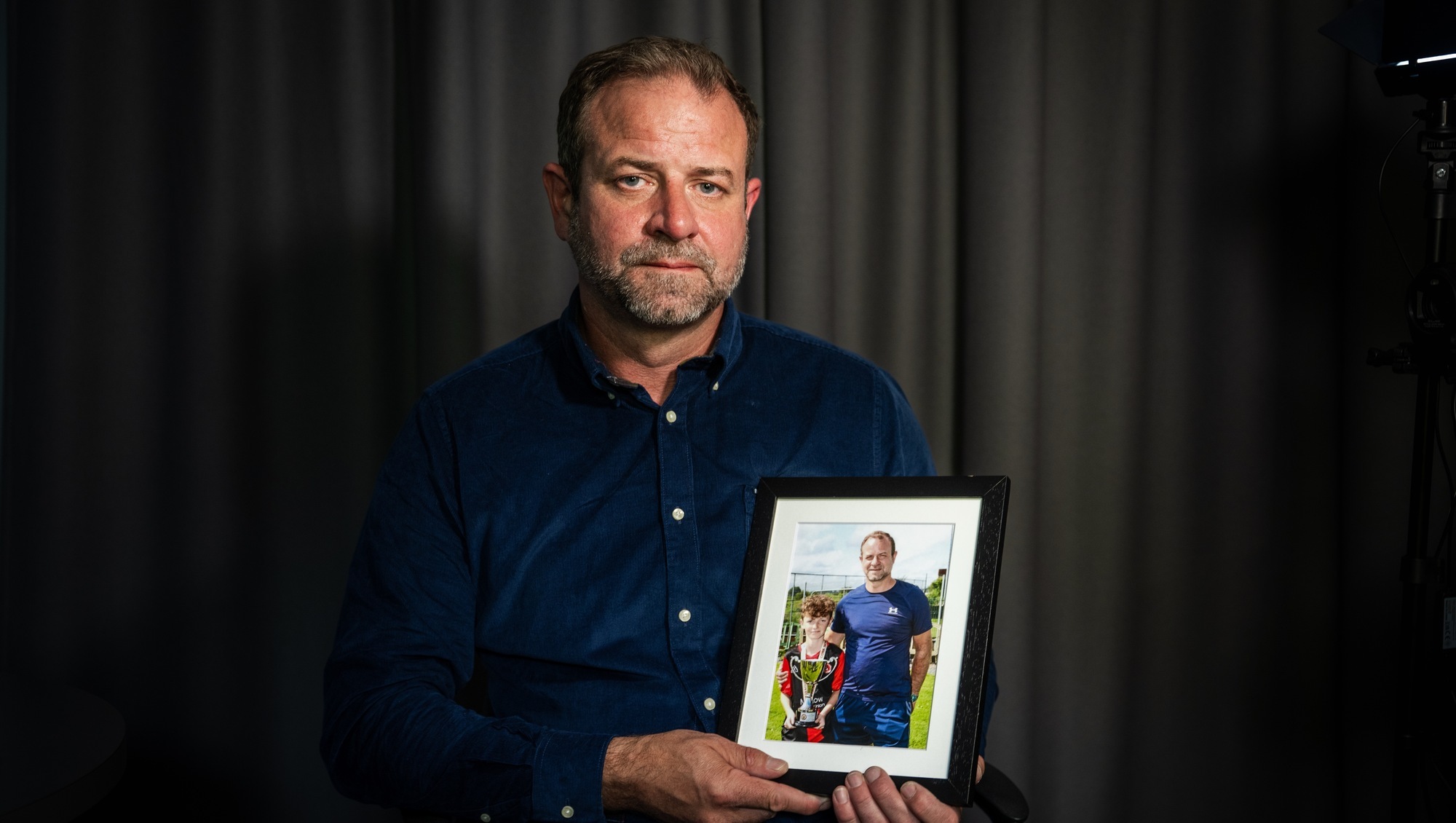
Craig Coady holds a photograph of himself and Rory celebrating a sporting success. File picture: Chani Anderson
The HSE Drugs Group has recommended against funding Skyclarys.
Skyclarys is used to treat Friedreich’s ataxia, a rare genetic disorder that causes progressive damage to the nervous system and can lead to heart complications.
The group last month deferred a decision on the drug so further research could be completed. Its recommendation will now be taken to senior HSE management in two weeks.
There are around 200 people in Ireland who suffer from Friedreich's ataxia. At the current price, Skyclarys would cost around €280,000 per patient per year.
Read More
The National Centre for Pharmacoeconomics said in December that it would not recommend the HSE provide it because it was “poor value for money”.
The centre said it was "unsure, based on the available clinical evidence", whether the drug would deliver meaningful improvements.
However, the Drugs Group subsequently considered a report from the Rare Diseases Technology Review Group, which supports the introduction of Skyclarys.
Last September, Craig Coady, who lives in Buttevant, north Cork, lost his 13-year-old son Rory to Friedreich’s ataxia, which causes progressive damage to the nervous system and can lead to heart complications.
His older son Paudie, aged 16, also has the condition and is starting to deteriorate.
Mr Coady said the HSE Drugs Group decision on Tuesday was "the worst day since the passing of Rory".
"I was positive that it would be passed today. I'm absolutely devastated. When the Rare Diseases report was so positive, I thought it would mean good news, but it seems the data wasn't positive enough."
Mr Coady said there will be another meeting with the HSE on August 25 but called on the Taoiseach to intervene.
"I'm a reasonable guy, and if I thought the drug wasn't working, I'd accept it. But we have to continue to fight."
Fianna Fáil TD Pádraig O'Sullivan said he was "utterly devastated for the families".
"This is a campaign that people shouldn't have to undertake, but because of the system we find ourselves in this position again and again," he said.
"Unless this decision is overturned by the HSE, it will be devastating."
Mr O'Sullivan said 11 other countries have agreed to fund the drug and that in some places, access has been granted while a price is being negotiated.
In the Dáil last month, Taoiseach Micheál Martin said it was a “matter of urgency for those with the condition of Friedreich's ataxia”.
He suggested that Biogen, the drug company behind Skyclarys, was “slow” in responding to the HSE.
Mr Martin said he understood that communication with patients needed to be improved, and there are “scientists and people with expert knowledge who meet to assess drugs”.
At the same time, Health minister Jennifer Carroll MacNeill said the health technology group provided an “extra opportunity” for doctors to advocate for the medication.
In a statement, the HSE said: "When considering any drug for reimbursement, the Drugs Group looks at:
- The unmet need of patients and the benefits the drug would bring to them
- The clinical evidence available for the drug — and how robust that is
- The cost of the drug
- The impact providing that drug would have on the overall resources available to the HSE and the finite budget available for new medicines, including the potential opportunity costs associated with committing significant resources to a single intervention and the impact this may have on the availability of other Drugs and health services for people across the system.
"The Drugs Group considers each drug presented to it and tries to balance the potential impact for patients against the wider health needs of the population.
"Everyone involved in this process is acutely aware of the impact their decisions have on the lives of patients and their families.
"They use their expertise and professional knowledge to weigh up the evidence very carefully, consistent with the criteria that they must apply to their decisions in an effort to achieve the best outcomes for all patients."
- Paul Hosford is Deputy Political Editor.
CONNECT WITH US TODAY



Be the first to know the latest news and updates