Port facilities must improve for offshore wind to succeed
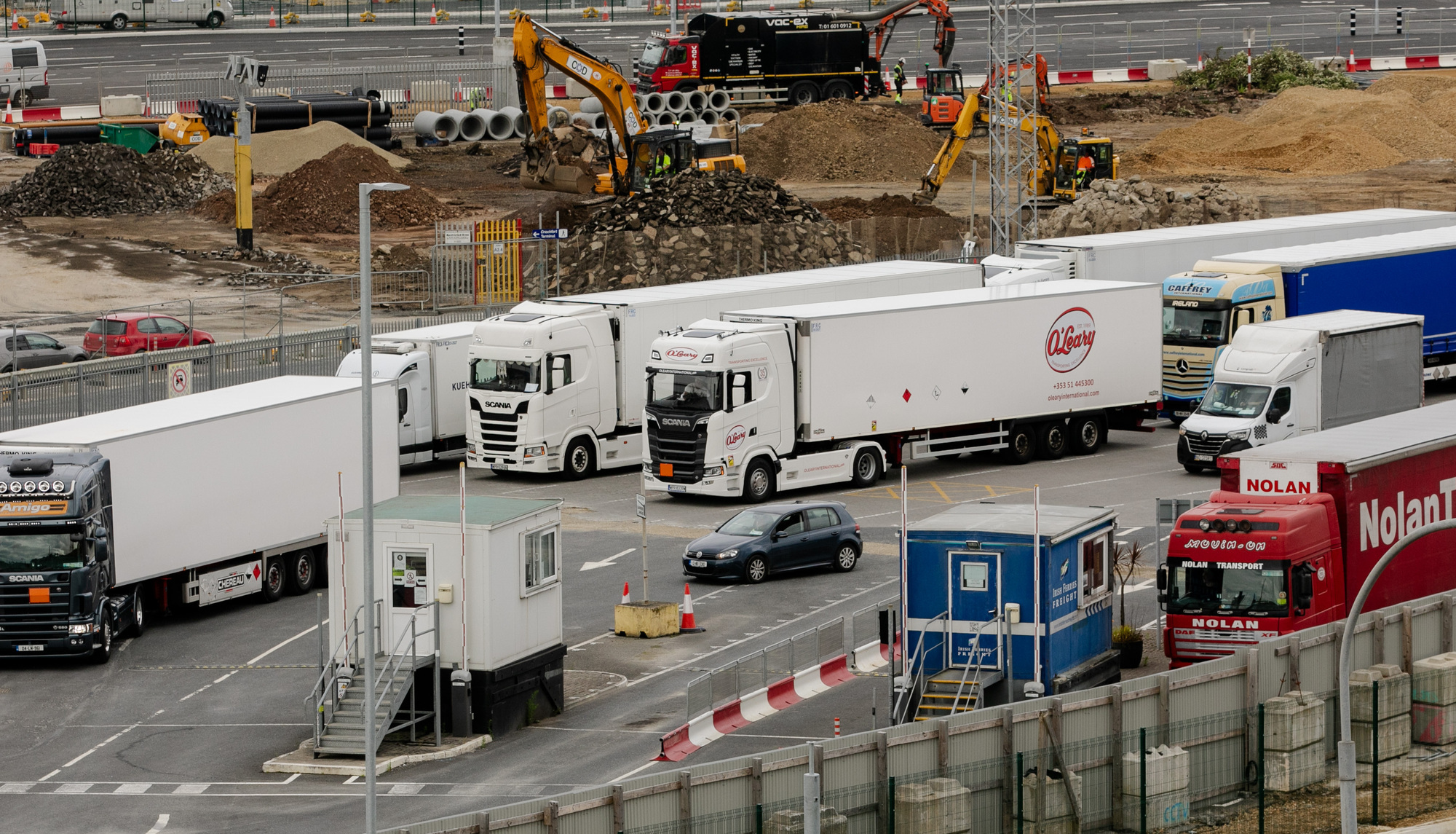
Construction work underway at Rosslare Eurpoort, Co Wexford. Dr James Carton says that the current level of investments in Irish ports is “too small to deliver what is needed over the next 10-15 years”.
Eirgrid’s chief infrastructure officer Michael Mahon once stated that Ireland has the potential to become a global leader in clean energy, like a “Saudi Arabia of Europe for offshore wind”.
The fledgling sector continues to be mired by a raft of issues, mainly the lack of port infrastructure and chronic planning backlogs, which are likely to hinder further development and investment.
“Port infrastructure for the development of offshore renewable energy has long been ignored by government,” said Dr James Carton, assistant professor in energy sustainability and hydrogen.
“There is so little being done to develop ports, it is the biggest barrier to offshore renewable energy development in Ireland,” he added.
Investment is being pumped into Port of Cork and Rosslare Europort to prepare them for potentially large-scale wind energy projects, however, Mr Carton argued they are both “too small to deliver what is needed over the next 10-15 years”. He added that between €1bn and €3bn is needed to finance port infrastructure.

Meanwhile, confidence may be bolstered among investors and developers. Following the first auction under the Offshore Renewable Electricity Support Scheme (ORESS), Maritime Area Consents were awarded to six projects through the Maritime Area Regulatory Authority, four of which have applied for planning permission with the other two set to enter the process this year.
Director of external affairs representative body Wind Energy Ireland Justin Moran said that while “there has been a lot of progress [...] the priority now is those first six projects entering into the planning system.”
He adds: “We need to ensure they are supported, that the various statutory authorities and State agencies engage with them and that An Bord Pleanála has the resources to robustly — and rapidly — assess the applications to make a determination.”
Wind Energy Ireland has extensively lobbied for the improvement of the planning process and its chief executive Noel Cunniffe warned it “continues to be the greatest barrier to the decarbonisation of our electricity system and to our country’s energy independence”.
“The continuing extremely slow rate of approvals for new projects means that, unless the proposals in this report are given the priority they deserve, we face the very real likelihood that by the late 2020s we will be connecting fewer wind farms than we will be shutting down,” he said earlier this year.
Mr Carton, disagrees and said that “planning is progressing as it does, slowly, but this is not the biggest challenge.”
He voiced more concern about the regulatory bodies involved including Mara and the lack of skilled workers in these areas.
“Many government and industry sectors can not get the qualified people needed. If we are aiming for targets it's 5GW installed by 2030; this will not be achieved,” he said.
The appetite among developers will be further tested as the Government recently approved the terms and conditions of another offshore wind auction known as Tonn Nua, or New Wave, which will be located off Ireland’s south coast and will be the State’s second auction to take place under the Offshore Renewable Energy Support Scheme (Oress)
In May 2023, the Oress1 auction procured over 3 gigawatts (GW) of capacity from four offshore wind projects — enough to power over 2.5 million Irish homes. The price of the auction, at an average of €86.05/MWh (megawatt hour) — was one of the lowest prices paid by an emerging offshore wind market in the world.
The upcoming auction bidding process is expected to take place in early 2025 and the project will procure 900 megawatts of clean energy, and is expected to save 1.8 million tonnes of CO2 emissions each year after its construction.
“The recent finalisation of the south-coast Designated Maritime Area Plan has definitely ensured interest remains high in Ireland’s next offshore auction,” said Mr Moran.
Mr Moran welcomed the south-coast DMAP but urged for more clarity on where the next ones are going to be and when will those auctions take place.
“If we’re going to maintain international interest in Ireland as a place to invest for offshore wind we need to be giving people sight of a much longer pipeline,” he said.
The Tonn Nua auction will be the first ORE auction to be held within the State’s first spatial plan for ORE development — the South Coast DMAP which was approved in early October after almost year-long engagement process with coastal communities and key stakeholders, including fishers, environmental NGOs and Local Authorities.
Including the Tonn Nua auction site, the DMAP identifies four maritime areas off the south coast in which offshore wind development will take place over the next decade. All four maritime areas are located off the Cork, Waterford and Wexford coast.
“There has been the necessary paperwork completed thanks to this government. Previous governments missed the opportunity,” said Mr Carton.
He added that this progress on offshore wind development is “far behind what is necessary and not even close to what Ireland could achieve.”
He estimated that the Irish offshore renewable energy industry had the potential to be worth in excess of €69bn in the coming years, but he said “unfortunately, looking for where Ireland is in 2024, I disappointingly suggest Ireland is currently not set up to draw this down.
“The enabler is ports, Ireland needs to build them, future-proof them. Ports organically enable the opportunity for Ireland to develop a potential huge indigenous, rural, offshore renewable energy industry, generating local jobs, innovative SMEs and drawing in foreign direct investment, all while producing clean, cheap, secure energy to power our society,” he said.
Another issue that has become a thorn in the side for renewable energy developers is objections to project development.
To circumnavigate this, Tonn Nua is expected to support a community benefit fund established by the winning auction bidder, who will pay roughly €7m per year into the fund over 20 years to communities of the south cost — totalling €140m.
The fund was created to ensure the environment remains sustainable while contributing to the economic, social, and cultural well-being of the local community through grants to local clubs and other community groups and projects.
In the Climate Action Plan, The Government has committed to achieving at least 5GW of installed offshore wind capacity by 2030. A further 2GW is earmarked for the production of green hydrogen and other non-grid uses.
Energy Minister Eamonn Ryan has just returned from the 2024 North Seas Energy Cooperation (NSEC) Ministerial Meeting in Copenhagen, Denmark, where he reiterated his commitment to offshore wind development despite lingering challenges.
“Despite difficult market conditions and challenges, the good news is that renewable energy capacity is at an all-time high in Europe and our capacity to generate renewable electricity is expanding faster than at any time in the last three decades — giving it a real chance of achieving the goal of tripling global capacity by 2030, which governments set at COP28,” said Mr Ryan.