Budget DIY hack: How to use window film for glazing and privacy
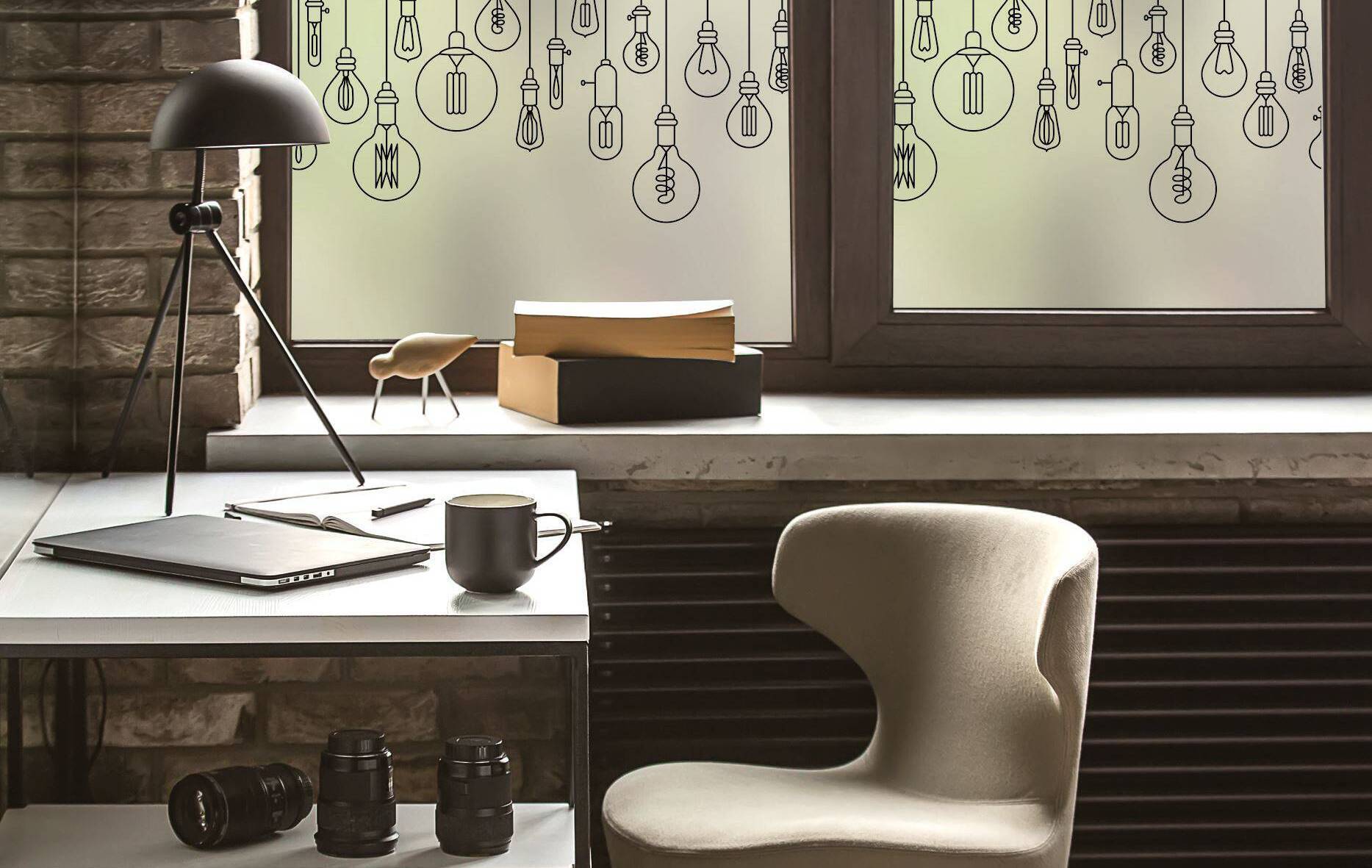
A distracting view handled beautifully with no real light-loss using Eureka from Purlfrost; from €13.40 plus delivery, Purlfrost.com (UK).
An ultrathin polyester laminate, decorative window film offers an aesthetic hit in different levels of opacity from a slight frosting recalling etched artisan glass, to areas of deeper shades, playing on the appearance of proper stained glass. It’s perfect if blinds, curtains or cafe blinds on rods are just not cutting it, or you want to layer on something extra in an artsy finish to a dull or problematic situation.
For standard windows and glazed doors on the external envelope, decorative film will still allow a good deal of light to penetrate the space. Together with the immediate look, with shifting diffused light during the course of the sun’s arc, the colours and patterns projected by the film’s design will play on other indoor surfaces, which can be really pretty.

Glazing film is usually associated with bathroom privacy. Lower panes in a sash window can be transformed into a wistful work of art, with colours and textures that will protect us from sight, reduce glare and eliminate an outdoor eyesore like a platoon of wheelie bins.
Deploy film as a cheap flip to add textures like trending flutes and reeding to interior doors and even kitchen cabinetry (apply to the inside face of glazed cabinets). Because it’s applied on the inside face of the window, the weather’s furious rages won’t lift it. You can dress up the sidelights of your front door, too, as long as the film is not a heavy solar-control product on south-facing double or triple glazing.
The cons with ornamental window film are that it’s fixed. Once installed, you cannot finesse its position like blinds and curtains unless that independent section of the window moves. No one will be fooled into thinking it’s a bespoke window at close quarters, and if it starts to peel, it’s in danger of looking scruffy. Delicate designs in white over a frosted ground tend to be more successful than those imitating hand-made, richly stained-glass panels with heavy leading. If you crease or mark decorative films during installation, they will never come right. More important still is the glass-to-film compatibility.
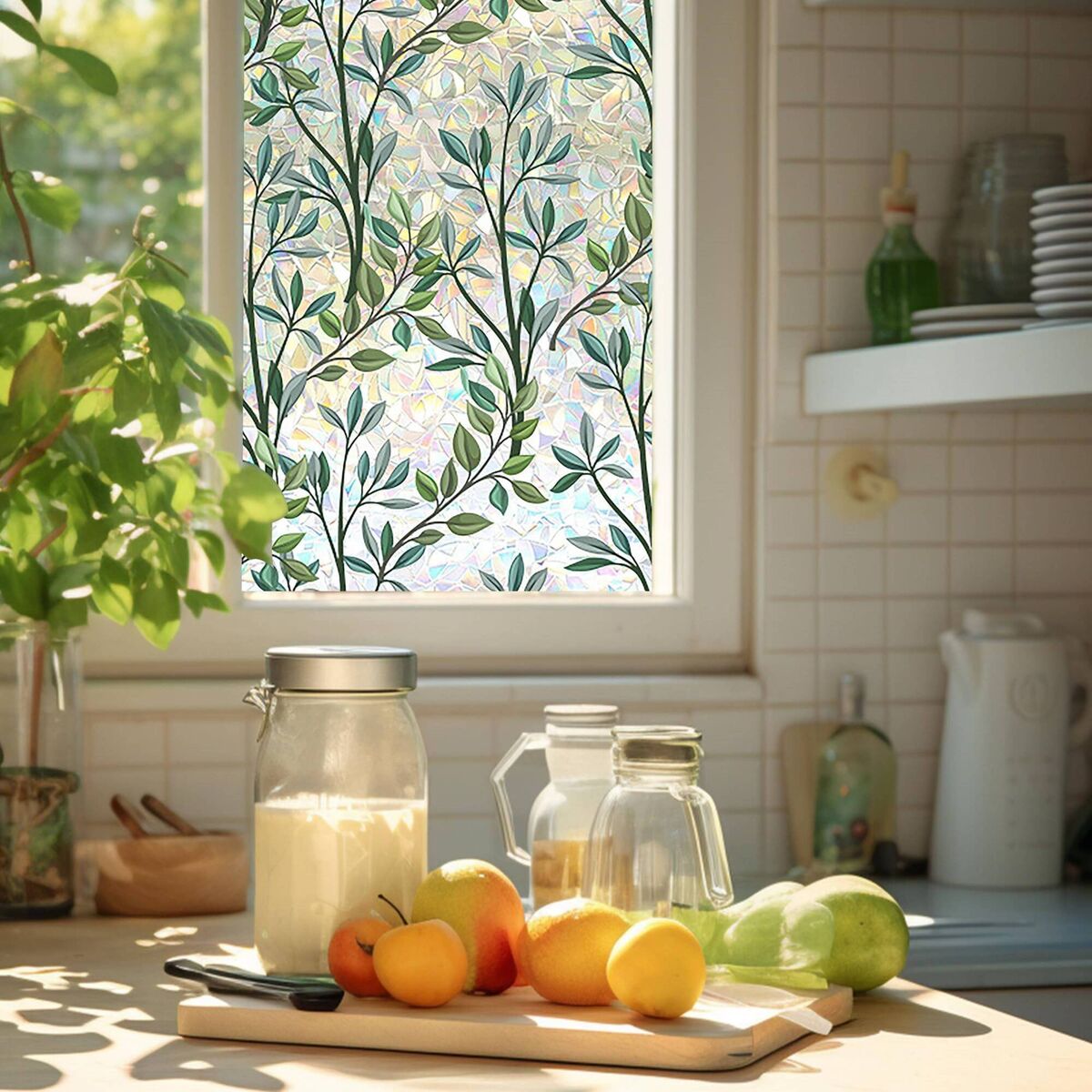
Proper, specified solar-control window film is not suited to high-efficiency double or triple-glazing. Set on the inside pane, they can trap a high degree of heat within the multiple window panes (termed loading). This can compromise the window.
South-facing windows can become especially hot. Any glass you do intend to attach film to must be undamaged and without any texture (like pebbles or reeding, for instance). Put the film over the whole area of one piece of glass, not just one area. Otherwise, we can cause thermal shock as parts of the glass get hotter than others, potentially causing it to crack.
The light decorative films we are dealing with here reduce glare, but they are not solar-control films and are generally compatible with all situations. Always check that spec.
- A solution that contains a touch of soap. No-tears baby shampoo is favoured by the pros. This is dissolved in distilled water, not unfiltered tap water, which can carry mineral deposits that can spoil the finish of a paler design. The soap-and-water solution is used to clean the window and to wet it, and then apply the film.
- A small window squeegee with a rubber edge — for drying down the window when cleaning, and for chasing out bubbles to the edge of the applied film
- · A pair of scissors, or a craft knife and cutting board. Using any razor, ensure it’s sharp and won’t snag the film.
- A ruler. Clear rulers from the kids’ schoolbags are ideal.
- A window scraper or an old credit card for cleaning specs off the glass.
- A microfibre cloth or a clean, compostable new coffee grounds filter for polishing the glass before starting and once finished, polishing the window film.
Now we cut the film to size with the scissors or a craft knife on a board. There’s a grid pattern on the backing paper, which makes this much easier to guesstimate. Don’t cut the area too short; you can always trim it back with a razor blade after the install. Leave about 3cm all round. You can tuck the film into one corner of the window or sash to measure and then aim to cut just two sides if you prefer, and the film covers your whole target area.
The next step is removing the liner from the film. Don’t fold or crease the film, or worse still, touch one area of the sticky backing adhesive to another. Once the film is off, we spray the back of the film and the window down lightly but completely with the soap solution in our spray bottle. As you put the film into position, there will be enough glide provided by that touch of soap to reposition it. Don’t push it roughly around — support it and slide it. Work from the centre out with your squeegee to fix the film to the glass. Once it’s adhered, use your credit card and a small-headed craft knife to trim any excess, tucking it behind the frame in an older sash.
Handling tinted window films for principal areas of glazing, conservatories and sliding doors of three square metres or more, I would suggest considering a professional install. Larger pieces of tinted, UV-rated film used for privacy and solar/thermal control can be tricky to slither into place without damage, and they may need a seam to cover a bigger door/window. At the very least, get an extra pair of patient hands.
One or two half-glazed doors, the odd window? Go for it, but follow the supplier’s guide with exquisite care. An installer will know if the glazing is compatible with a UV-resistant window film, heading off potential problems.
For rentals, look for static-cling films that can be snatched up at a corner and pulled straight off the window or glass, an ideal uplift for a rental (please do clear it with your landlord first). Alternatives? Sheer curtains set on telescopic rods can go up in around two minutes, and can be whipped down and carried away when you leave.
Read More

CONNECT WITH US TODAY



Be the first to know the latest news and updates