Buying a robot mower? What to consider before you make a choice
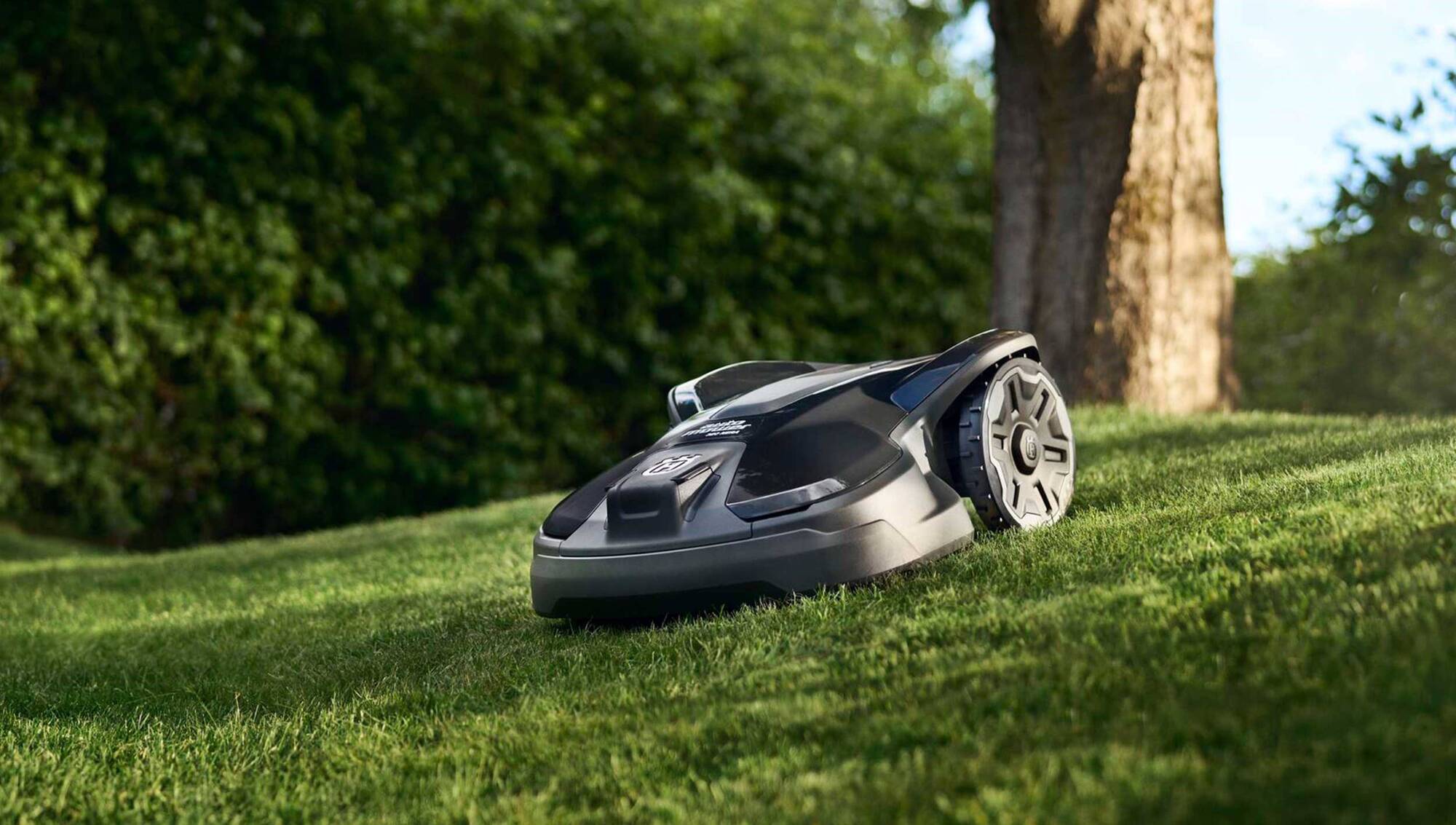
Husqvarna Nera 320 wire perimeter mower, from €2,799. Suitable for up to 2,200m2 (measure up your garden and add 20% to that number for what you need over all zones). All Husqvarna dealerships.
I gave in. He wheedled, pleaded, and then said, “Ah sure, I’m off the boil” and threw mournful blue eyes at me — the eyes that had me engaged within three months of our first meeting. We bought the robot mower. I was instantly fascinated by the technology, and I was delighted that we didn’t have to double-team the cutting of our agriculturally inclined lawn. A month on, I don’t like it — I blimmin’ love it. So, with my total defeat in mind, here’s a short buying guide if you’re similarly tempted by the coolest cut of all.
Navigation is what affects the price point and performance of robot mowers. I’m going to divide the cheaper machines from the more expensive by navigation type — the clearest designation when adding an Android vehicle to the household cavalry. With a robot mower, we need to consider range, the complexity of the terrain, cutting heights, charging times, the type of navigation, and peculiarities around working outdoors unattended. Where robots depart from manual mowers is that typical residential models do not collect to a bag, they mulch as standard, trimming and scattering the grass.
Real customer reviews will be extremely important when finding your perfect robot. Some people buy the wrong system for the job, the garden’s size, and their own expectations. Ignore serial whiners who don’t do their research. The build quality and navigation talents of various randomly operating robots (that rumble around in a grid pattern) and smart mapping-capable LiDAR robots can vary wildly. We want a robust, well-engineered, precise, reliable machine that does a consistent, methodical job.
Read More
Setting up takes time, and it’s often a contentious issue in reviews. The goal is to set-and-forget with the odd bleat to the phone app with smart models if Louis gets stuck in a rut, or you’re prompting an extra cut for a family barbecue. Most machines will return to an outdoor docking station to self-charge as needed. Most can respond to a message to go home. What we don’t want is twice-weekly fidgets. You’ll just be giving the deck the occasional clean and changing out finer blades where needed. Expect the cutting deck to offer pivoting blades on a rotating disc as standard. Fixed (solid-star) blades are tough but more likely to get hung up on unexpected surfacing and objects. Husqvarna, Flymo, Worx and Segway offer razor blades that pivot back if they hit a solid object.
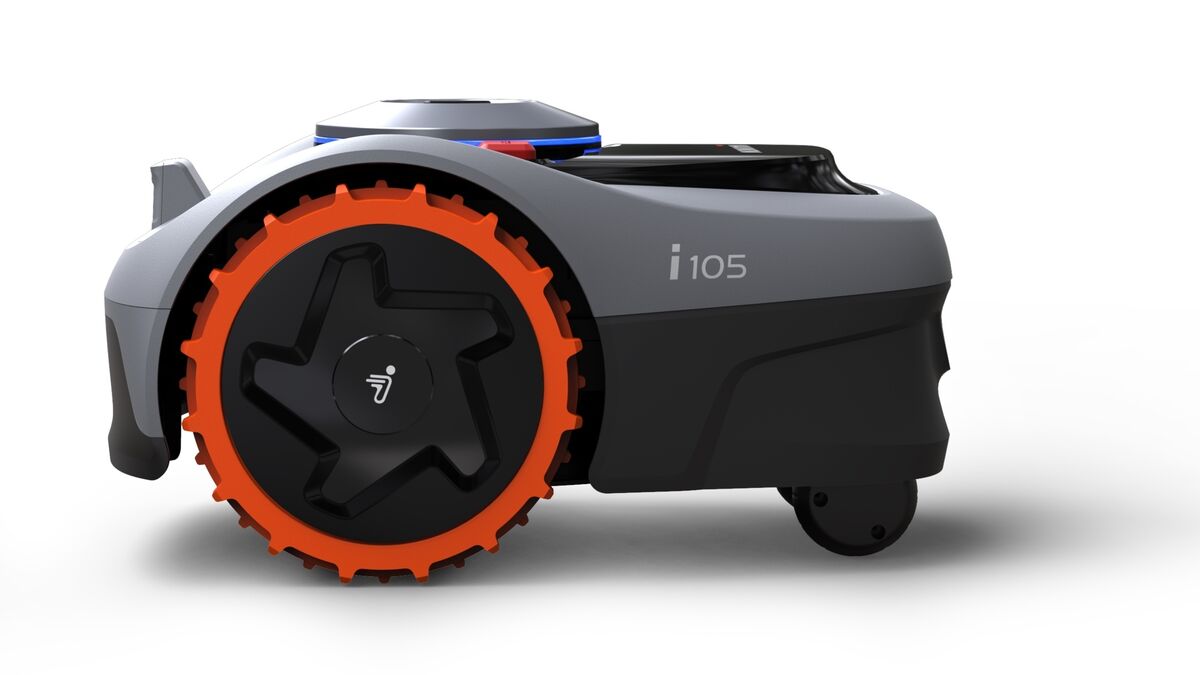
There are three broad navigation types (including one hybrid). The more advanced the tech, the more intuitive the machine will be in action. Mechanically, some machines are designed to deal better with wet, rough, challenging conditions. Let’s rumble through perimeter wire mowers, vision-style AI-navigation mowers, RTK-GPS and RTK+LiDAR (the ultimate spend). For many smaller and even massive gardens, orchards and pitches in simple shapes, perimeter-wire operation from €300 will be perfectly adequate (better branding can double this figure for even a small garden). A boundary wire is pegged and buried in a shallow trench around the space, and the mower rumbles up and down within these limits. Using transit corridors (wired in), the mower can reach additional zones. With a detachable battery, some smaller perimeter-wire machines can be taken from the garage, loaded with a battery, and off they go (no charge station needed). If the machine makes contact with an obstacle, it will bump and then go around it. Most can be set to an automatic schedule.
With vision-based infrared (IR) high-precision cameras matched to AI algorithms, we’re stepping into a “learning” machine from €500 up. These develop a map while “seeing” and avoiding random obstacles, cut to cut. They don’t require a physical boundary wire, but they do need reliable wifi or 4G, and a certain amount of light to operate successfully. IR also offers amazingly simple plug-and-play installation. Cheaper perimeter-wire and vision machines will produce a random cutting pattern, not cricket-ground stripes.
Ascending, we’re into the area of satellite navigation (GPS). There are two varieties: RTK and hybrid RTK+LiDAR. A GPS-guided mower offers additional accuracy down to a single centimetre — skimming pathways, waltzing around trees, and reducing the amount of manual cutting/strimming you otherwise have to do. The budget entry point to GPS is RTK (real-time kinematic positioning). With machines from €600, RTK uses GPS to place the machine and to explore and map the garden. Smarts are not everything, and GPS can fail under thick tree canopies. What makes the top-class RTK+LiDAR more pricey (€1000 up) is that it uses light detection and range technology controlled by lasers, taking thousands of data readings per second. It senses the garden’s layout, using a three-dimensional map, filling in the dark spots where RTK might fall off. Even with a LiDAR mower, explore user reviews to ensure it scatters the grass pleasingly. Mechanical performance matters.
When it comes to general sizing (for the deck, motor and battery size), pace out the width and length of your garden in metres (multiplied up to square metres) or use the Google Maps measure-distance tool to trace the boundary, then read off the area given in square metres. This is a useful hack for oddly shaped gardens or adding up zones. Round up 20% and choose a machine specified to at least those square metres.
The width of the deck will determine just how many passes the mower has to make to complete the job (working with the size of your garden and the battery capacity); 16cm to 20cm would be standard, and obviously a smaller machine will be nimbler in cramped quarters. Unless you have a tiny lawn or a machine the size of a Ford Focus, you can expect it to recharge one or two times during lawn grooming.
The real run times and charge times will vary with the weather and conditions, with charging periods of 40-90 minutes. Some innovative models have on-board sensors to avoid heavy rain (Eufy/Navimow/Segway) while others also include app-based weather-tracking — staying in dock during and after downpours (Husqvarna and Worx Landroid Vision Cloud).

Everything else? AWD with rubber wheels offers better grip for difficult inclines, climbing banks, crossing gravel and bumping over kerbs. Always check the maximum incline if you have an upsy-downsy garden. Cutting height runs from around 20mm to over 70mm. The settings can be adjusted on your app or manually if you have a simpler machine. A high blade is fantastic for those first shaggy cuts in spring, and I like cut-to-edge blade systems that mince those edges. In terms of noise, 50db is quiet-conversation level and highly unlikely to annoy the neighbours. What might rattle their nerves and scatter the hedgehogs are headlights. Be mindful of nighttime runs.
Once you unbox your little treasure, you just put the base into position, plug it into an RCD-protected outdoor plug, and attach the base to a roof if provided. We then dock the machine for the first time and let it charge up. What you’re looking for with a GPS-based machine (including LiDAR), is an app to download to your phone that will take your details, set up your account, and then connect you to the wifi to perform your mapping and any scheduling (set-up). Expect to wander around for a couple of hours in a bigger garden as you drive the machine using your smartphone to create the map.
Determining a virtual boundary and details, the mower will do a dry-run (without cutting) to get the lay of the land, including those single or multiple outlier zones (ours does 40). These can take in banks and bits of distant lawn in a more complex, scattered garden. The software will update automatically as you progress.
Some machines will increase speed for the mapping process, others will dawdle. It’s actually a blast. On the first run, get out a deckchair and a cup of tea and enjoy the wonder of the robot orientating itself and finally heading out on its first cut. After the first set-up, you may have to finesse edging, pathways and obstacles, editing changes with a toggle on the map. This will cut back on manual mows and missed areas.

CONNECT WITH US TODAY



Be the first to know the latest news and updates