How to keep your home cool in a heatwave this summer
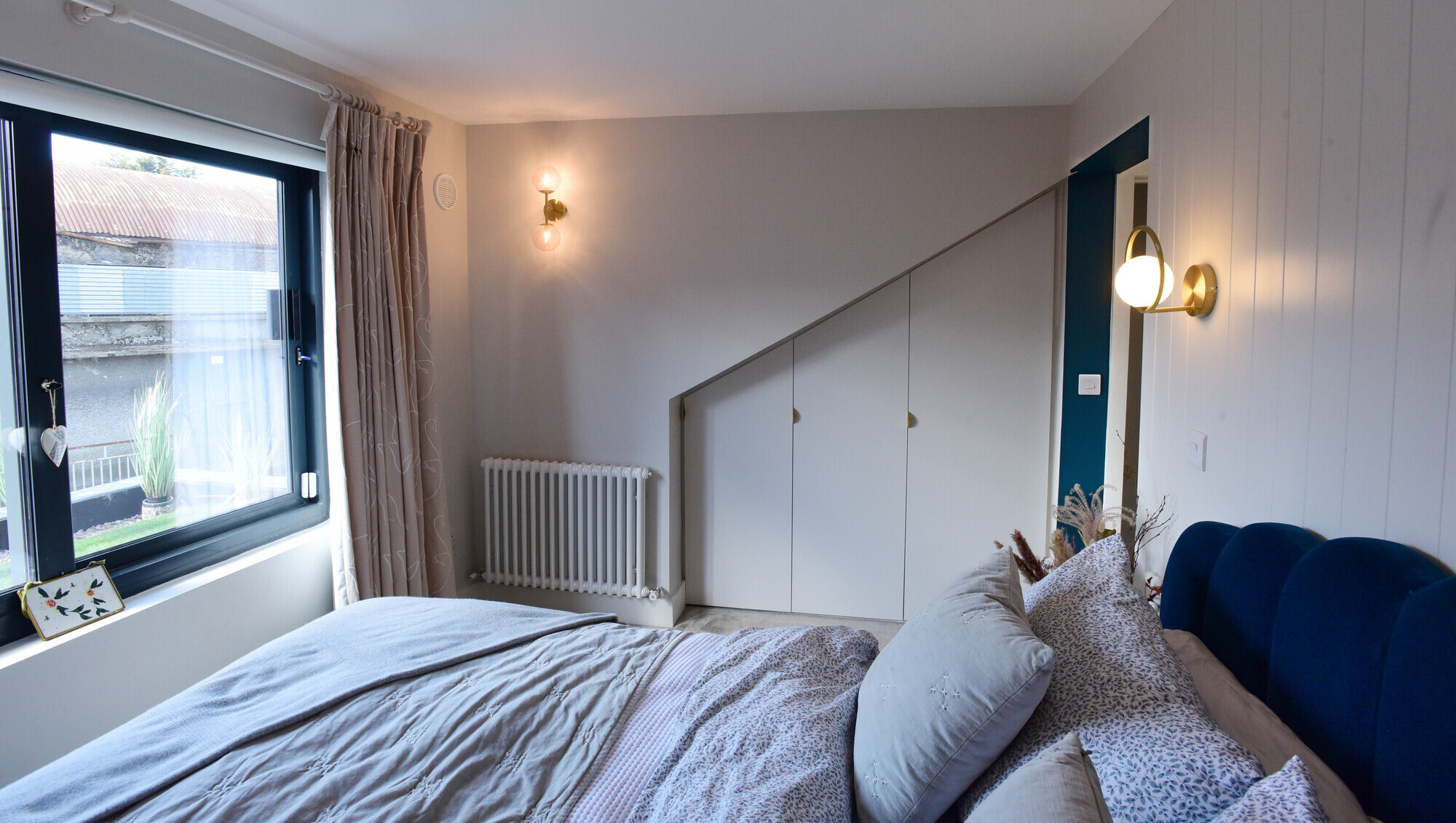
Jennifer Sheahan's large bedroom window faces southwest. Picture: Moya Nolan
The last week of May gave us a preview of what summer apparently has in store for us, and honestly, I wasn’t ready.
My bedroom — in a dormer extension, south-west facing, well insulated but with a huge window — turns into a sauna as soon as temperatures head upwards of 22 degrees.
Every year the spells of hot weather take me by surprise, and this time, as I lay there with my duvet abandoned, fan whirring, and window open to the sound of my neighbour’s windchimes, I remembered that I need to get a proper plan in place for when this happens again. Which — not to jinx anything — will be any day now.
Ireland is not built for hot summer nights. Our homes are designed to trap warmth, and we didn’t need to think about residential air conditioning until temperatures started rising and we all started putting in giant windows.
Read More
That’s changing. If the forecasters are right, we’re going to need some strategies to deal with it. Here’s what actually works.
The single most effective thing you can do costs nothing and is preventative in nature. Close your curtains and blinds on south-facing and west-facing windows during the hottest part of the day — roughly midday to early evening.
It feels counterintuitive to close curtains against the lovely, rare sunshine, but you are keeping solar heat from radiating into the room in the first place. Once it’s in, it hangs around like a guest who can’t take a hint.
External shading is even more effective than internal, because it stops the sun’s heat before it hits the glass at all. A well-placed deciduous tree, climbing plants, an awning over a south-facing window, or external shutters all make a significant difference. The colour of your house is a factor — dark paint or cladding will absorb heat, light colours will reflect it away. These are longer-term investments, but worth knowing about if you’re doing any work on the outside of your home.
Fans cool people, not rooms, which is an important distinction. A fan blowing directly on you helps evaporate heat from your body and makes you feel cooler. But having a fan blowing away in the corner doesn’t lower the air temperature in the room; it just moves the hot air around. The goal is to get cooler air in and push hot air out.
Open windows at opposite ends of the house — front and back, for example — to create cross-ventilation. The best time to do this is early morning and late evening, when outside temperatures drop.
During peak afternoon heat, keep everything closed if the outside temperature is higher than the inside. A well-insulated house will hold its cool for a while if you don’t let the heat in.

Two fans positioned strategically work better than one pointed at your face. One drawing cooler air in through a window, one pushing hot air out through another.
If you have a ceiling fan, check which direction it’s spinning: in summer, it should rotate counterclockwise to push air down and create a cooling breeze. A bowl of ice in front of a fan is a genuinely useful life hack for short-term relief — old-fashioned but effective.
Your home generates a surprising amount of internal heat. Ovens and hobs are the main culprits — on a very hot day, avoid using them if you can. Cold meals, the microwave, the BBQ, or an air fryer (which generates far less ambient heat than a conventional oven) are all good alternatives.
Turn off lights and electronics you’re not using, and turn off the immersion if you don’t need hot water. Incandescent bulbs generate a little bit of heat too, enough to make a difference; if you haven’t already switched to LEDs, now’s a good time.
Hot days are not the time to get the tumble dryer going, and even the washing machine or dishwasher can generate heat you don’t want. Similarly, hairdryers and curlers or straighteners are best left off on hot days.
The bedroom is where a bad heatwave really messes with your day. Upstairs rooms, dormers, and south-west-facing rooms are the worst offenders — they absorb heat at the hottest part of the day and hold it all night. Keep blinds or blackout shades closed during the day, even if the room isn’t in use.
Open windows and let a breeze through for ten minutes before bed, or leave them open or vented until morning if it is safe to do so. Swap your duvet for a lower tog, and use cotton or linen bedding, which breathes better than synthetic fabrics. If you’re truly desperate, popping your pillowcases in the freezer for twenty minutes before bed actually helps.
Last summer, I wrote about this dilemma in some detail — whether to invest in fixed air conditioning, try an evaporative cooler, or just suffer — and I’ve since made a decision. I rented a portable air conditioning unit from Hire Here in Dublin 8 (€50 a week), and it was very good. Noisy, and it needs an exhaust hose out a window, but it absolutely did the job. I’ll rent again this summer.
I have no interest in storing a bulky unit for the other 50 weeks of the year when I don’t need it, so rental is a smart option for infrequent use. If there’s a heatwave coming, book early — these things go fast.
I’m also now seriously considering having a ducted air conditioning system installed. Unlike the wall-mounted split systems you see in offices (which are effective but ugly), ducted systems are largely invisible — the air comes through discreet ceiling or floor vents, and the unit itself is hidden in the attic or a cupboard. It’s a meaningful investment, but for anyone planning a renovation or building a new home, it’s worth getting it designed in from the start. The disruption of retrofitting is the main barrier.

A heat pump is well worth considering if you’re renovating or due a heating upgrade. Many modern heat pumps can run in reverse in summer, transferring heat from inside your home to outside — no coolants required, so much better for the environment. It won’t give you the blast of frigid air that an air conditioning unit will, but it is still effective, and it’s working for you all year round rather than gathering dust for eleven months.
Evaporative coolers — the water-based units that cool air through evaporation — are another affordable and environmentally friendly option, and they’re portable and easy to store. The problem for us in Ireland is that they work best in dry heat, and we do not have a dry climate. Still, on a dry, sunny day, they can take the edge off nicely.
Don’t go blaming your insulation during a heatwave, or thinking you don’t need it now that the climate is getting hotter. A well-insulated home works in both directions.
The same insulation that keeps heat inside during winter also keeps heat out during summer, so a well-insulated house heats up more slowly on a hot day. The flip side is that once it’s overheated, it holds that heat just as tenaciously. The answer is to stay ahead of it
—
start blocking heat early in the day, before the house has time to warm up, rather than trying to cool it down once it’s already a greenhouse.