Letters to the Editor: Access to care a matter of geography
Ireland has the expertise, the financial capacity, and the human resources to build a world-class healthcare system. What we lack is the political will
Letters to the Editor: Access to care a matter of geography

Despite our vast resources, we are seeing a healthcare system characterised by shortages, under-investment in infrastructure, and chronic staff retention problems. File picture

As one of the wealthiest countries in the world, it is deeply troubling that our healthcare system continues to fail so many of its citizens. My recent experience has highlighted what thousands already know: For too many people, access to emergency and ongoing care has become a matter of geography and luck rather than need.

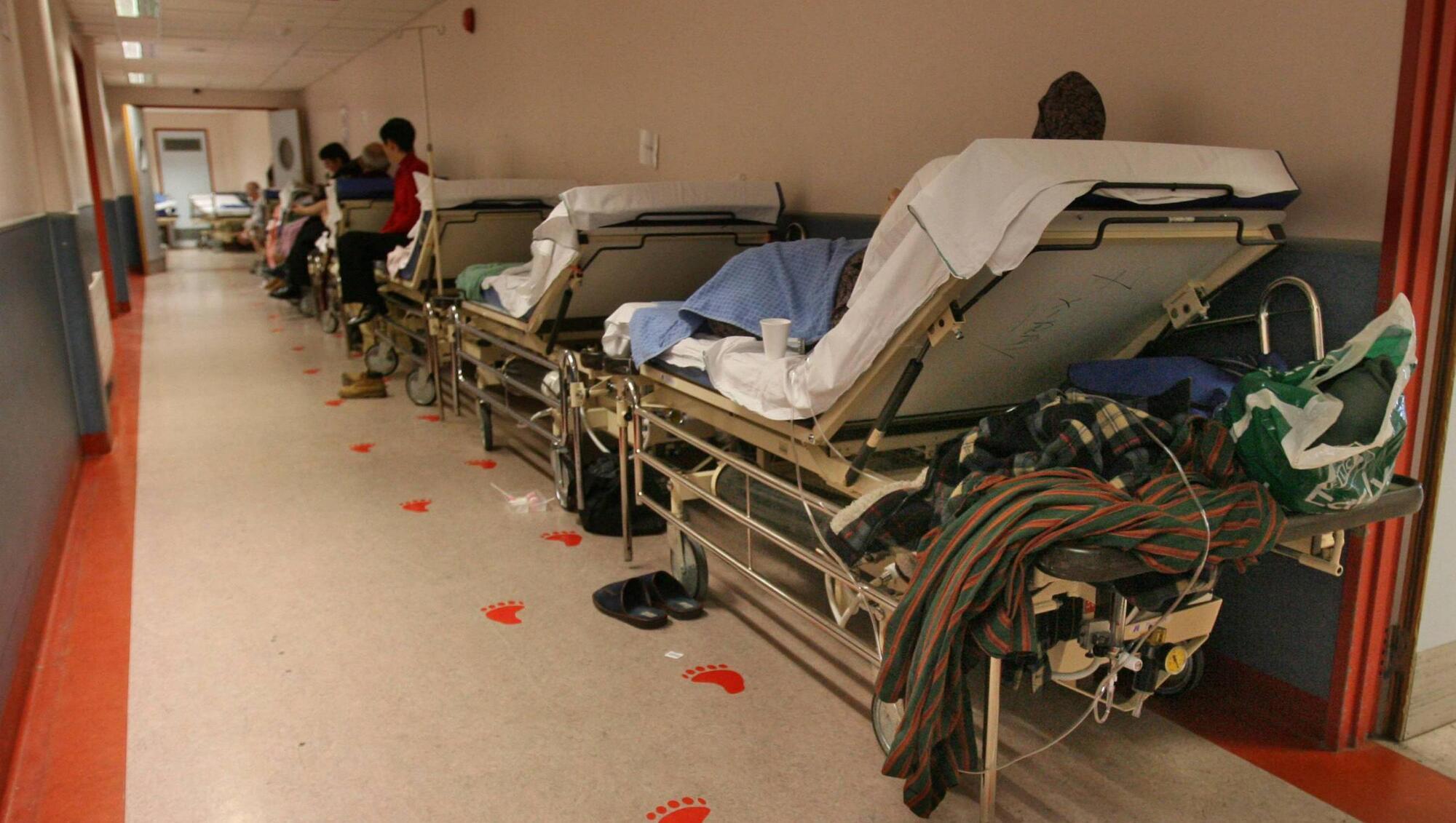
When my husband, John Brennan, recently required urgent medical attention, it took nearly four hours for an ambulance to arrive. He then spent two nights on a trolley in a hospital corridor before discharge, still in pain and with limited mobility. The care and professionalism of frontline staff were exemplary, but they are operating in a system stretched well beyond its capacity.

This is not an isolated story. Across the country, people face similar delays and difficulties. Despite our vast resources, we are seeing a healthcare system characterised by shortages, under-investment in infrastructure, and chronic staff retention problems.

Between 94%-98% of our newly qualified medical professionals leave the country to work elsewhere — an extraordinary loss of talent that reflects not a lack of patriotism but the absence of viable, rewarding careers at home.

We urgently need a coherent national plan to retain our doctors and nurses by offering competitive wages, better working conditions, and clear postgraduate and consultant pathways. Our hospitals must be fit for purpose, not merely functioning geriatric or palliative care centres by default.

For those of us living outside major cities, such as in Kenmare, geographic isolation compounds these challenges. The nearest acute hospitals are in Cork or Tralee, making emergency access and follow-up care both difficult and delayed.

We rightly invest in centres of excellence, but this must not come at the cost of basic accessibility and equity. The ongoing saga of the National Children’s Hospital — among the most expensive hospitals ever constructed globally — symbolises how misdirected priorities can overshadow the everyday realities of an overburdened health service.

Ireland has the expertise, the financial capacity, and the human resources to build a world-class healthcare system.

What we lack is the political will and structural vision to make that happen. It’s time to create a health system that values both patients and those who care for them — and one that ensures dignity, safety, and timely treatment for all, no matter where they live.

John Goode, Kenmare, Kerry

CAO a fair and efficient system for students

The Central Applications Office (CAO) has released the February 1 application data as well as marking significant milestones in its glorious 50-year history. Since the CAO was established in 1976, more than 1.5 million students have taken up places in third-level colleges.

Liaising with CAO as a career guidance counsellor, I have no hesitation in describing it as one of the most efficient and fairest third-level application systems in the world.

From humble but ambitious beginnings in 1976, it has expanded into an inclusive, user-friendly system. It aims to provide a college place for as many applicants as possible, including those with educational and health disabilities.

The CAO received 14,845 applications for 69 courses in five universities for its first intake in 1977. It has expanded hugely since 1976 by adding regional technical colleges, colleges of education, and private colleges, bringing the number of participating institutions to 45 at its peak. That number has since streamlined due to mergers and amalgamations.

The CAO application form went online in 2000, almost completely replacing the paper form. There has also been a significant increase in EU applicants, mature applicants, applicants with further education qualifications, and applications for the CAO supplementary admissions schemes.

The CAO continues to go from strength to strength as its 2026 application data for college entry confirms. By February 1, the CAO received 88,817 applications, up from last year’s 83,424 — an increase of 5,393 or 6%.

By the late closing date of May 1, applications will surely surpass 90,000.

Congratulations to CAO and its courteous and helpful staff on marking its golden jubilee. It has served young people well since 1976. Its late dynamic general manager, John McAvoy, would have got a kick out of this achievement. He championed a college entry system built on fairness, equity, meritocracy, and transparency.

Billy Ryle, Spa, Tralee, Kerry

Caverns may be able to avoid flooding

Eoin Hegarty makes an interesting point on rainwater disposal in Midleton and how water butts could slow the potential flood water. I may be able to help in the matter.

Many years ago, as an OPW employee, I was involved in the erection of the automatic telephone exchange in the town.

A building on an adjoining site had previously broken its back when large cracks developed in the walls, possibly due to ground conditions. Due to the irregular ground in the immediate area, it was decided to build the exchange on piles driven into the ground. 

Unfortunately, the last pile disappeared and, after attempts to pour concrete into the hole, it was decided that they must have hit on an underground large cavern.

One of the engineers said that the town sits on top of carboniferous cavernous (karstified) limestone, adding that the pile most probably hit the edge of one of these caverns.

It was decided to insert a couple of piles in at an angle into the side face of the cavern. Fortunately, that worked.

If a hydrological engineering study was done in relation to the possibility of using some of those underground caverns to divert rainwater into, during heavy rainfall conditions, it might avoid some flooding in the area. Obviously, other considerations such as the effect the extra water might have on the ecosystem would need to be taken into account, but it might be worth looking into as a possible solution to flooding.

Another bonus could be if physical access to these caverns was achieved during or due to the study. It could be a speleologist’s heaven, and a great tourist attraction.

Bobby Carty, Templeogue, Dublin 6W

Flat fees could cheapen efforts for justice

I am deeply concerned that our district courts will become the discount stores for justice.

The proposed flat fee for solicitors will not fatten lawyers. It will cheapen the efforts to effect proper justice.

Justice is not a commodity that can be minimised to save costs without severe consequences for fairness, equality, society, and the rule of law.

Inexplicably, the outstanding 8% of Fempi era cuts remain in place. Barristers in the district courts are on fees as low as €29.88 for certain necessary appearances.

We can’t cheapen justice any more.

Darren Lalor BL, Dublin 8

Road users have a responsibility to others

If we are truly serious about road safety and reducing fatalities on our roads, then drivers, cyclists, and pedestrians must take responsibility for our actions when we travel on our roads.

This issue of road safety comes down to personal choice we make when we either get behind a wheel, get on a bike or e-scooter, or just walking on our roadways.

So far this year, 35 people have been killed on our roads, five more than for the same period last year. A total of 190 deaths on our roads last year should give us pause for thought. But will it?

Looking at statistics and research, there is a cohort of people out there who totally ignore the rules of the road and our road traffic legislation.

The standards that are applied to all of us to ensure safety on our roads seemingly do not apply to them.

As of early 2025, there were over 101,800 uninsured private vehicles on Irish roads — marking a significant drop from 187,000 in 2022, following the introduction of the Irish Motor Insurance Database (IMID).

Despite the fall in these numbers, it is still a worrying statistic, with some drivers caught multiple times, like those caught driving while under the influence.

The Irish Motor Insurance Database (IMID) annual report for 2025 shows gardaĂ­ detained a total of 38,546 vehicles for being driven without insurance in the first two years since it began using the new insurance database, with 19,600 seized last year alone.

Some 51,024 charges and summons had been issued to those apprehended for driving without insurance since 2024, with 25,009 of those charges and summons occurring last year.

In Ireland, nearly one in five banned drivers do not hold a valid driving licence.

Very few drivers were penalised for failing to surrender their licence; in 2025, it was reported that only one out of 23,000 such drivers faced penalties.

Long-term figures indicate 21% of disqualified drivers re-offend, with more than 15,000 people banned multiple times.

The failure to match a disqualification notice with a registered licence holder makes it more difficult for gardaĂ­ to detect and prosecute drivers who continue to drive while disqualified.

GardaĂ­ make roughly one arrest per hour for intoxicated driving (drink or drugs), totalling more than 8,000 annually as of early 2026.

Penalty-point analysis from the RSA released for January and February 2026 by the National Vehicle and Driver File database shows a worrying trend.

In January alone, 522,916 drivers received penalty points ranging from one to 12 points. In February, 527,652 drivers obtained similar penalty points ranging from one to 12.

The number of notices by offence type range from 634,867 in January to 647,747 in February of this year.

In February 2026 alone, some 9,408 notices were issued for adults failing to wear a seatbelts, with notices for children under and over three years of age and under-17s coming to 3,220; dangerous driving reduced to careless driving 2,114: careless driving, 2,270; driving without reasonable consideration, 18,066; speeding, 419,888; no insurance driver/user, 16,274; no NCT, 14,636; learner driver unaccompanied, 25,975.

Similar figures can be found month-on-month in this report.

Given all of these figures, we have a duty and moral responsibility to ensure that when we get behind the wheel of a car, or use other modes of transport, that we understand our obligations and duty to the safety of others.

Christy Galligan (retd Gda Sgt), Letterkenny, Donegal.

x

More in this section

Revoiced

Newsletter

Sign up to the best reads of the week from irishexaminer.com selected just for you.

Cookie Policy Privacy Policy Brand Safety FAQ Help Contact Us Terms and Conditions

© Examiner Echo Group Limited