Revolutionary leader Daniel O’Connell (1775-1847) said that, ‘Nothing is politically correct that is morally wrong.’ It is therefore difficult to rationalise Taoiseach Micheál Martin’s decision to remove the necessity of a United Nations mandate for the deployment of Irish troops abroad.
The mandate is the core of the triple lock, which requires UN, government, and Dáil approval before troops can be sent overseas. The Irish people voted to reject both the Nice (in 2001) and Lisbon treaties (in the first referendum in 2008) because of fears of a militarised EU, but were reassured after Fianna Fáil introduced the lock.
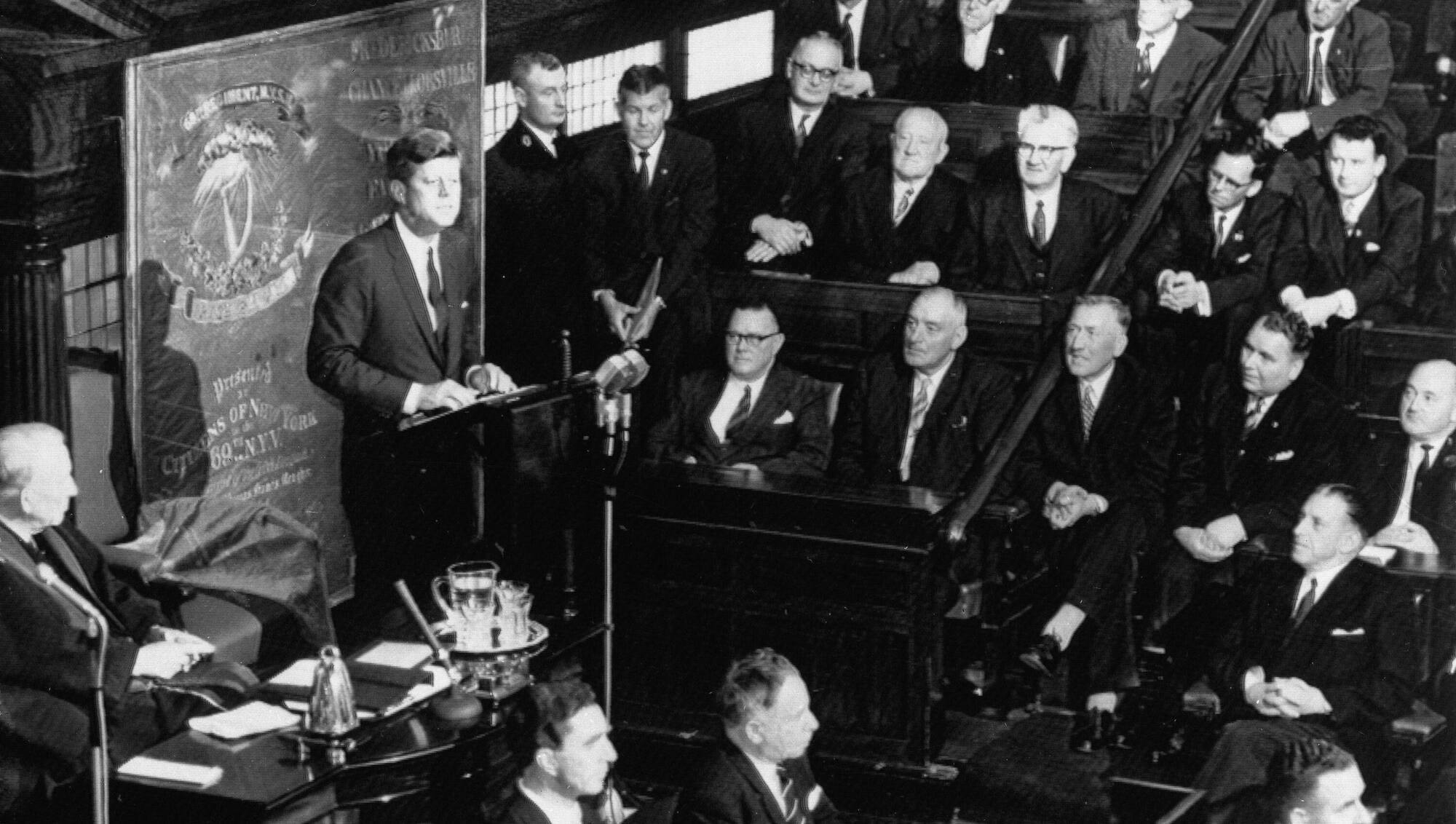
Now, there is the possibility that Irish troops could be deployed at the behest of the EU, and the EU is inextricably linked with Nato. To remove the lock would negate Ireland’s credibility as a peacemaker. Ireland needs to work for reform of the UN and be a voice for peace. US president JF Kennedy stated in his speech to the Dáil in 1963 that: “It matters not how small a nation is that seeks world peace.” It does matter that the Taoiseach and Fianna Fáil do what is right.
Ed’s note: The Government has proposed reforms to the triple lock, including removing the requirement for UN approval and replacing it with approval from the EU or other regional organisations, potentially including Nato.
Elizabeth Cullen
Lex Innocentium 21st century campaign,
Naas,
Co Kildare
‘Plane’ crazy
Two decades ago, my uncle asked if the Irish government could tell him which hospital ward, which school building, and which section of motorway had been paid for by the wealth generated by the use of Shannon in the American war effort.
If they could, then if he should ever be a patient in that hospital ward, send his children to that school, or drive along that stretch of road, he could spare a thought for the people who died in Iraq for his benefit and thank the government for their providence.
My uncle asked that question in 2003.
And now I’m asking the current Government if they can point out every hospital, school, and road that has been completed in the intervening years by this money.
And is it a fair price that hospitals, schools, and roads are destroyed around the world, with the help of US military planes allowed to land in Shannon, so that we can build those same facilities and infrastructure here?
I just spent three months in the West Bank and saw many schools, houses, and toilets with plaques that said they were built with help from Ireland. In just the last few months, many of them have either been burned down, or the residents moved or killed so that illegal Israeli settlers can take over the land.
Is the Government aware that the infrastructure Ireland funded is being destroyed by bombs that it helped to deliver by allowing the US military to stop over at Shannon?
Diarmuid Ó Cuív
Indreabhán,
Gaillimh
Garden homes
Dublin’s housing shortage has become a public-service crisis. Gardaí, nurses, teachers, firefighters, and paramedics are being priced out of the city they serve. No capital city can function effectively when its essential workers cannot live within reasonable reach of their workplaces.
The Government intends to relax planning rules, exempting small, detached, modular ‘garden homes’ (typically up to 45sq m) from the need for full planning permission. If implemented thoughtfully, this measure is a rapid means of increasing housing supply. It must, however, be accompanied by high standards and clear protections.
A well-specified, two-bedroom, timber or modular unit can be delivered for €70,000. When shared by two key workers, this equates to roughly €583 per person, per month, or €14,000 per year. That’s an affordable rent by Dublin standards, particularly when aligned with the rent-a-room tax exemption. This equates to a return on investment of 20% net of tax.
Warnings from Threshold and Age Action about the risks of substandard ‘beds in sheds’, insecure occupancy, and potential safeguarding issues for older homeowners are well-founded. These concerns do not justify inaction; they strengthen the case for robust regulation. Elderly householders will have the added security of key workers in their garden.
To facilitate high-quality delivery, I propose a practical, ‘one-stop shop’ initiative: A volunteer panel of retired tradespeople, architects, solicitors, and other professionals to assist ageing homeowners in procuring compliant units at fair cost and with suitable key-worker tenants. Properly organised, such a scheme could add thousands of affordable homes, quickly and safely.
Paschal Taggart
Rathgar,
Dublin 6
Fermoy gridlock
In the April 27 edition of your newspaper, reference was made to gridlocked traffic in Fermoy. This subject has made headlines many times over the years since the bypass around the town was completed in 2004.
When the draft plan for the bypass first emerged by way of a presentation to the town council, of which I was a member, provision was made for a direct link on and off the bypass on the eastern side of the town to accommodate emergency vehicles from the local community hospital and the then proposed fire station. This was to enable immediate access and egress on and off the bypass.
Unfortunately, due to lack of foresight, the above eastern link route was withdrawn by the then government.
The consequences of this decision have been evident over the last 22 years, with motorists experiencing traffic gridlock day in and day out, because of the lack of a direct route on and off the bypass on the eastern side of Fermoy.
Tadhg O’Donovan
Fermoy,
Co Cork
A voice from the past
As an older person, I wish to refer to the late Ronnie Walsh, who often contributed readings to Sunday Miscellany, which has been broadcasting on Sunday mornings on RTÉ radio since 1968.
The mesmeric introductory trumpet music immediately reminds me of Ronnie’s clear, pleasant, and mellifluous tones whenever he was reading or performing a work. That has stayed with me.
Peter Kennedy
Sutton,
Dublin 13
A true Dublin icon
I have been reading with interest, but not without a little nostalgia, about the recent debacle surrounding the revamping of the ‘iconic’ St Stephen’s Green Shopping Centre, which opened in 1988. Born and bred in Ireland, I lived and worked in Dublin in the late 1970s and 1980s, and have very fond memories of The Dandelion Market, a series of stalls that was set up in 1973 near Stephen’s Green and which sold clothing, furniture, and other knick-knacks and where young people hung out. To me, it is The Dandelion that was iconic, and so intrinsically Dublin.
Gaye Walsh
Seattle, formerly
Doneraile,
Co Cork