Letters to the Editor: System that fails mother and babies remains
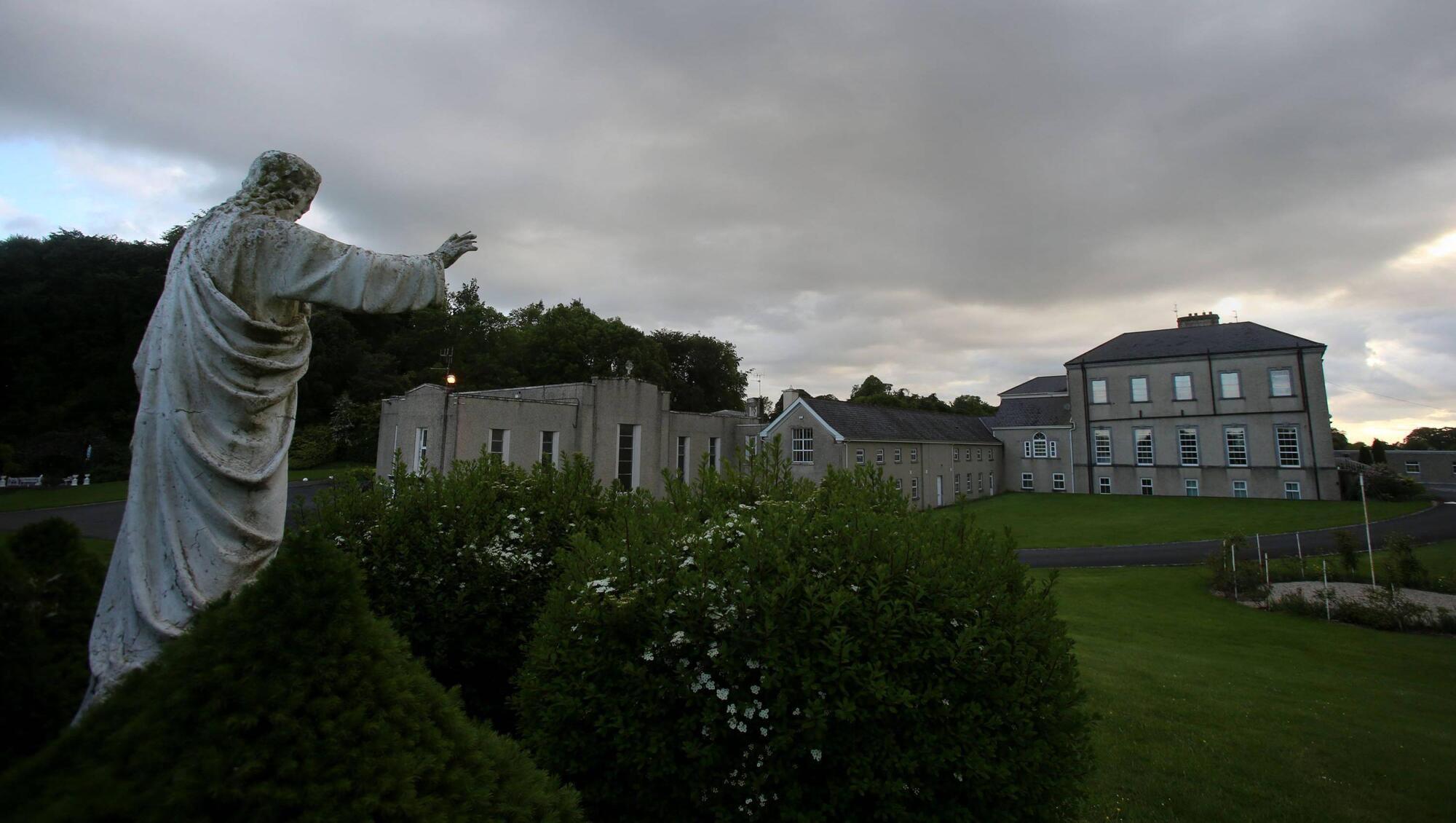
Sean Ross Abbey in Roscrea, Tipperary, which was a mother and baby home operated by the Sisters of the Sacred Hearts of Jesus and Mary from 1930 to 1970. File picture
The recent programme into Tusla has been described as “stomach churning.”
But for many of us, especially those of us who were born into or affected by the mother and baby homes, there was nothing shocking about it.
It was recognisable. It was familiar. It was the same State failure we have been living with all our lives.
What we are seeing now through Tusla is not new. It is the continuation of a system that has been failing women and children in this country for decades.
In the mother and baby homes, women were hidden away, controlled, and silenced. Babies were taken from their mothers, often never to be seen again.
Children were neglected, dehumanised, and, in many cases, died in shocking numbers.
These were not isolated incidents. These institutions were run with the full knowledge and involvement of the State alongside religious orders.
I speak from Sean Ross Abbey, where 1,090 babies and 23 young girls are recorded as having died. Hundreds of those children remain unaccounted for.
Yet the State continues to refuse to carry out a full excavation of that site.
Legislation has been brought in that allows areas to be declared “manifestly inappropriate” for excavation.
In other words, the State can decide not to look, not to dig, not to find these children.
At the same time, there are plans to build over sites such as Bessborough in Cork.
So I ask this plainly: How can a State even consider building over ground where children may still lie, while mothers are still alive searching for them?
Do these mothers not deserve to know where their babies are buried before it is too late?
We also know that children in these institutions were subjected to vaccine trials without proper consent.
That alone should have led to full transparency and accountability.
Instead, what we see is the opposite.
The truth of what happened in these institutions is still being withheld.
Not just tracing information, but the full records of how these places were run, what decisions were made, and what was done to women and children.
These records have been restricted for decades, including under 30-year rules.
By the time many are released, the people who lived through this will be gone.
That is not an accident. That is a choice.
And now, in the present day, we see the same pattern repeating.
Survivors who were excluded from the mother and baby institutions payment scheme took their case to the High Court and won.
Instead of accepting that judgment, minister Norma Foley, her Department of Children, and this Government have chosen to appeal it.
Survivors are being forced back into the very system that failed them, made to relive their trauma, and dragged through more legal battles, more delay, and more suffering.
This is not learning from the past. This is the State repeating it.
And be very clear about what this scheme means.
A mother who spent less than 90 days in one of these institutions, who had her baby taken from her never to be seen again, is valued by this State at €5,000 for that loss and a lifetime of trauma.
Tusla is now under scrutiny for failing children in care today.
But the uncomfortable truth is this: The system has not changed. The same lack of accountability, the same instinct to protect the State instead of the vulnerable, is still there.
So the questions that need to be asked are simple and urgent: When is this Government going to stop fighting survivors and start standing with them?
Why is the State appealing a High Court judgment that was decided in favour of survivors, and who made that decision?
When are the full records of what happened in these institutions going to be opened now, while survivors are still alive?
When will the State stop avoiding the truth about the children who died and those who are still missing, and carry out full excavations so families can finally have answers?
And, in light of the Tusla investigation, what immediate changes are being made to ensure that children in State care today are not being failed in the same way?
Who is being held accountable for those failures, and what consequences will follow?
When is this country finally going to treat women and children with the dignity and respect they were denied for so long?
Three things we have learned from being old enough to have teenage trans children:
Reboots are always disappointing. Save your money to spend on new, original work instead of tired old tropes;
The next generation is wise, loving, and well able to exercise its discernment in a kind and responsible manner, as exemplified by David Monaghan (“Millennials have a moral obligation to avoid the Harry Potter reboot”).
Love wins.
I am writing as a student from Longford regarding my recent Susi grant decision, which I believe highlights a wider issue in how student support is assessed.
My distance from my college has been calculated at 29.08km — just 0.92km short of the 30km threshold required to qualify for the higher (non-adjacent) rate of the maintenance grant.
As a result, I will receive approximately €3,230 instead of €7,780, a difference of over €4,500.
While this may appear to be a minor technicality, the financial impact is significant.
My weekly commuting costs alone are a minimum of €60, if not more with rising costs.

This means that a substantial portion of my grant will go towards transport, leaving very little for food, materials, or other essential expenses.
I also have concerns regarding how this distance was calculated.
The route used includes a road that does not exist from my estate, meaning the calculation does not reflect the actual journey I have to take.
I raised this issue with Susi and contacted the Department of Further and Higher Education.
However, the response I received was a general explanation of the rules rather than an engagement with the specifics of my case.
I understand the need for consistency in applying rules, but cases such as mine raise questions about whether the current system fairly reflects the real costs faced by students.
A difference of less than 1km should not have such a disproportionate impact on access to education.
I believe this is not just an individual case, but part of a wider issue affecting students who fall just short of the threshold.
I refer to the letter published on April 30 in which Brian O’Reilly urges teachers to reject the proposed senior cycle redevelopment implementation support measures and addendum.
While it is entirely appropriate that individual teachers express their views, a number of assertions in the letter require clarification.
Firstly, the claim that unions have “traded the long-term professional standing” of teachers does not reflect the reality of ASTI’s engagement on senior cycle redevelopment.
ASTI members decisively rejected the original proposals in 2025, and supported a ballot for industrial action.
Since then, the union has pursued an intensive process of negotiation with the Department of Education and Youth, including through formal dispute resolution mechanisms, to secure improvements on behalf of members.
Those engagements have resulted in tangible changes.
The addendum provides additional resources, including a €2m implementation grant for schools and the introduction of a pilot scheme for laboratory support assistants.
These are measures which did not exist in the original proposals.
The overall package also provides for additional posts of responsibility to support implementation, structured teacher input through a workload working group and an artificial intelligence taskforce, and clearer parameters on assessment in a number of subject areas.
Early rapid reviews will provide for all aspects of the reform within subjects to be re-examined, including the controversial 40% weighting for additional assessment components in science subjects.
On the question of workload, it is correct that the rebalancing of Croke Park hours is not, in itself, a reduction in overall working time.
However, it does provide for an increase in teacher-led time, recognising professional autonomy and allowing that time to be directed towards the practical demands of senior cycle implementation.
The workload review committee could also be extremely important in terms of presenting and advancing members concerns.
Teacher stress and burnout is closely associated with excessive workload.
Whether this is sufficient is a matter for members to decide.
Mr O’Reilly also raises concerns regarding legal exposure.
The addendum explicitly provides that, where a teacher acts in good faith and with reasonable belief in relation to the authentication of student work, the State accepts liability for subsequent decisions.
This represents an important clarification and protection for teachers operating in an increasingly complex assessment environment.
The measure has nothing whatsoever to do with a potential accident in a school laboratory, as Mr O’Reilly asserts.
In relation to resources, while nobody would argue that all needs are fully met, the agreement does include funding, commitments to review subject grants, and the introduction on a pilot basis of additional supports for science subjects.
Finally, ASTI has already secured significant changes to the senior cycle programme in recent years, including the external assessment of additional components and the reversal of proposals relating to examinations in fifth year.
This demonstrates that engagement and collective action can and do deliver results.
There remain, as your correspondent outlines, genuine and strongly held concerns among teachers, particularly in relation to workload, training, and the pace of implementation.
On balance, the ASTI is recommending acceptance of the senior cycle redevelopment implementation support measures and addendum on the basis that it represents a foundation on which further measures and concessions can be achieved in time to come.
This is a democratic decision for teachers themselves. ASTI will respect and act upon the outcome.