Remains of another 22 infants recovered from burial site at Tuam mother and baby home
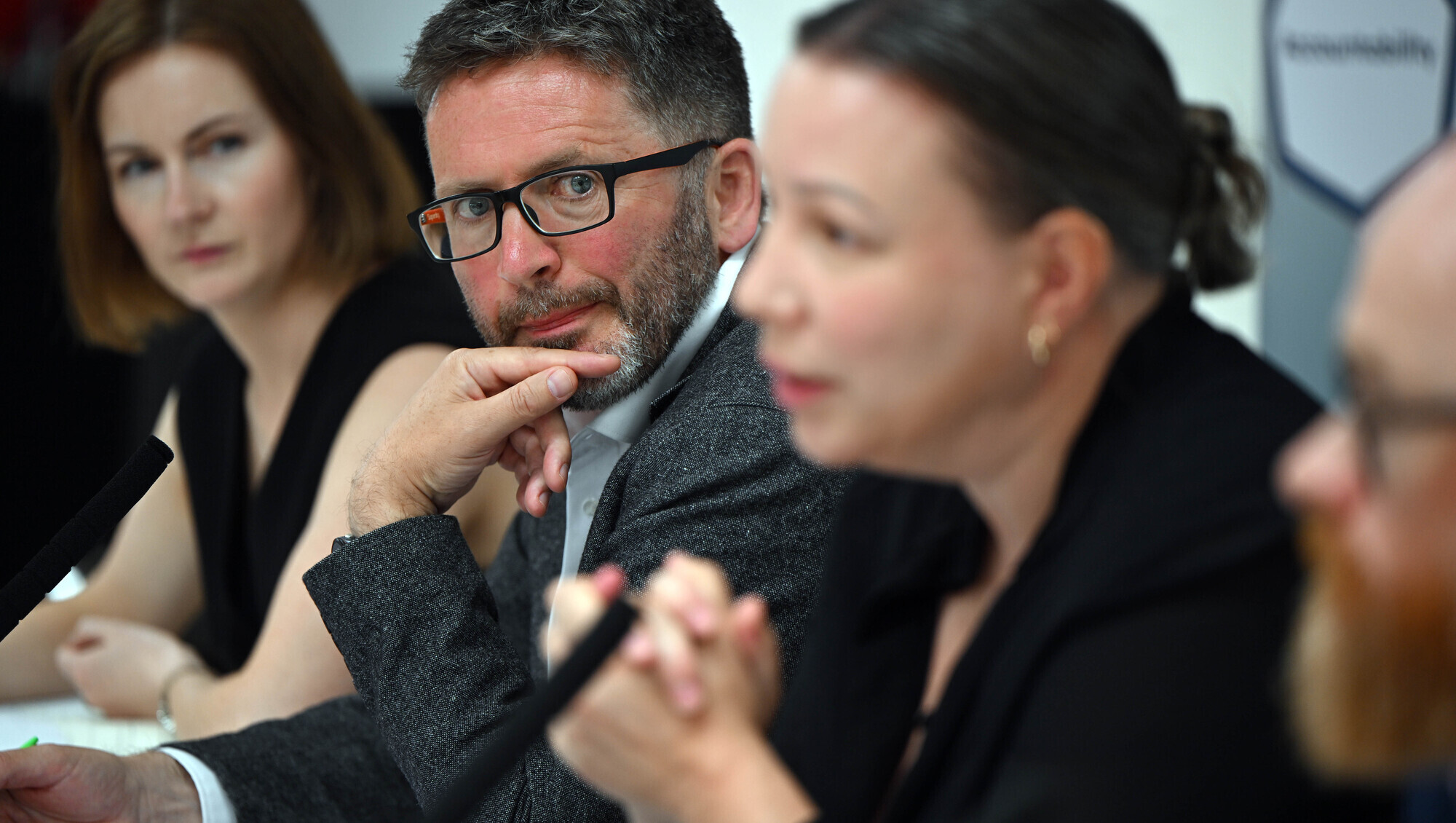
Louise Walsh, Daniel MacSweeney, Director of Authorised Intervention, Tuam, and Niamh McCullagh, forensic archaeologist at a media conference on Wednesday to mark the one-year anniversary of the first ever mass exhumation to take place at Tuam. Picture: Ray Ryan
Forensic excavating of the site of the former Tuam mother and baby home has recovered the remains of 22 more infants, bringing the total number of babies found to date to 99.
The announcement was made by the Director of Authorised Intervention at Tuam (ODAIT), Daniel MacSweeney, who is leading the exhumation.
A media conference held at the GAA club in Tuam, to mark the one-year anniversary of the first ever mass exhumation to take place here, also saw the unveiling of a new forensic facility and mortuary that will hold the remains of the infants while they will also be forensically analysed.
The building, located in Toghermore in Galway, has begun receiving the remains of the children where they are being washed and stablised as preparations are made for DNA examinations.
Mr MacSweeney said the biggest surprise for the team in working at the site had been the discovery of 99 babies in coffins at an area near a laneway that had no surface indication of graves beneath.
"We found 99 sets of remains, mostly buried individuality in a small number of cases, two or three babies in a coffin. We are going to continue to excavate this larger burial ground area.
“Whether the same concentration of burial ground will be maintained throughout it, we just don’t know. We will continue to work in both directions from there, to deal with this whole area before we go to the memorial garden.
The forensic team is currently excavating 5,000sq m at the centre of the housing estate that was built on the grounds of the former mother and baby home.
Mr MacSweeney said the current burial site that is being excavated was “stacked”, but so far, the team will have to excavate further before they “figure out in which way they were buried”.
However, he said the excavation work at the moment may involve moving closer to the gardens in the Tuam estate.
“In this burial ground, if it goes up to the wall, which is the perimeter of the workhouse and mother and baby home, that back wall is exactly where the back wall was of the workhouse.
“If they buried remains up against that back wall and they are down 2m, from a health and safety perspective, we have to go at a 45-degree angle into those gardens. That is something we are engaged in and planning for.”
The area currently being excavated is not the green memorial garden the public is aware of, Mr MacSweeney said.
He also confirmed the children recovered will be individual skeletons as well as commingled babies.
“The scale and size of the 20 tanks in the green area, we just don’t know how many individual bodies are represented in those tanks,” he said.
“We will only be able to discover that when we recover them, and whatever else there is on the site, but it is only when we have dealt with the site that we will know more.”
He confirmed also the 99 children who have been recovered to date are from the Tuam home. “It is the style of burial, the way in which they are buried," he said.
He also confirmed he did not expect the work to be completed within two years.
The budget for the next year’s work is €12m, which includes the building forensic lab and mortuary.
To date, 62 DNA samples have been given overall, which is included in the 200 enquires made form around the world about possible links to the Tuam grave.
“In nine short months, the forensic excavation team have recovered the skeletal remains of 99 infants and children at this site,” said Niamh McCullagh, ODAIT’s senior forensic archaeologist.
“This is a hugely significant development in the history of the site, and for all who are invested in it: Families, survivors, local communities, Irish society.”
Ms McCullagh said it was possible hundreds of remains would be found at the site.
“We have found 99 sets of remains in a very concentrated area. So it’s not outside the realms of probability that we will find up to 800 individuals, but it’s impossible to say at this point,” she added.
Mr MacSweeney said there had been no reason to refer any of the cases to gardaí at present.

CONNECT WITH US TODAY



Be the first to know the latest news and updates