Excavations at sites of other mother and baby institutions a matter for Government, says Tuam director
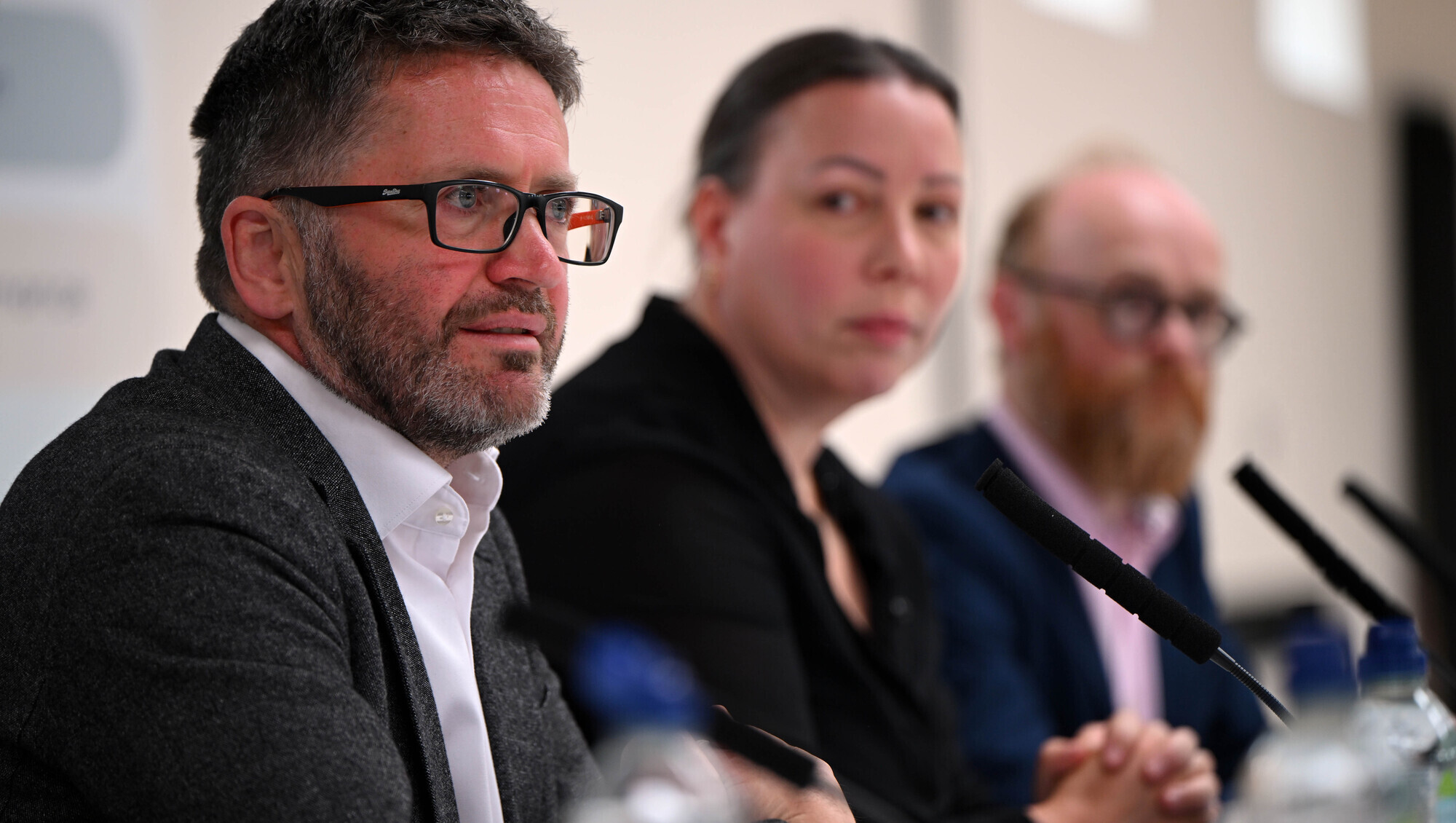
Daniel MacSweeney, director of authorised intervention, Tuam; Niamh McCullagh, forensic archaeologist; and Oran Finegan, forensic programme manager. Picture: Ray Ryan
The director of the Tuam intervention team has said any decision to carry out forensic examinations or excavations at other former mother and baby home sites will be a matter for the Government.
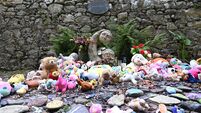
Daniel MacSweeney was speaking at a press conference this week where he gave an update on the year-long exhumation that is taking place at the Tuam site, where up to 796 children who died at a former institution are believed to be buried in a mass grave.
To date, 99 “tiny infants” have been recovered at a previously unknown burial area within the centre of the Tuam Road housing estate, which had “no surface indication” that some of the children were buried there.
This particular site continues to be excavated.
Mr MacSweeney said his team’s work at Tuam could act as a template for exhumations at Bessborough in Cork and Sean Ross Abbey in Roscrea, Co Tipperary.
“What we are working on here, and the processes we have used under the Institutional Burials Act, if a decision is made to work at another site, we have the detailed plan and example of how we have done things here.”
However, he stressed that any decision to carry out other exhumations “is a matter for the Government”.
He added: “We know that this exhumation is very difficult for the families there [in Bessborough and Sean Ross], when these things are discussed in the media so much.”
His comments come after
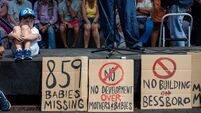
An Coimisiún Pleanála recently gave the green light for 106 apartments to be built on the grounds of the former mother and baby institution in Bessborough.
Read More
Among the documents before the planning authority were submissions from Niamh McCullagh, a senior forensic consultant with the Tuam intervention team, who also oversaw ground-penetrating radar surveys at Sean Ross Abbey in Co Tipperary in 2019.
In her submission, Ms McCullagh raised concerns about Bessborough, where the remains of hundreds of babies who died at the institution have yet to be located.
Unlike Tuam and Sean Ross Abbey, no forensic survey work or test excavations have been carried out at the site.
The Sisters of the Sacred Hearts of Jesus and Mary ran Bessborough and Sean Ross Abbey on behalf of the State. The remains of nearly 2,000 children who died in both institutions are missing.
The inspector’s report into the proposed residential development at Bessborough noted Ms McCullagh said unrecorded human remains could exist within the proposed development site.
Ms McCullagh’s recommended a programme of forensic archaeological monitoring during construction, but also acknowledged the limitations of the evidence available.
The report states Ms McCullagh concluded that, “based on the available evidence, the potential for the presence of highly disturbed human remains and/or burials exists at the proposed development site”.
She recommended a forensic archaeological monitoring programme be put in place before any groundworks begin, and that the entire site be subject to monitoring to forensic standards.
She advised that, should any human remains be discovered, they should be protected in situ to allow the relevant authorities to carry out an investigation.
Elsewhere, the inspector noted Ms McCullagh's findings pointed to “a strong potential for dispersed infant remains to be located throughout the grounds, including the site of the proposed development”.

CONNECT WITH US TODAY



Be the first to know the latest news and updates