Irish Examiner view: Triple lock debate an argument yet to be won
Wednesday's Dáil vote will do little to calm public concerns over the controversial change, with only 34% of poll respondents supporting the triple lock's removal
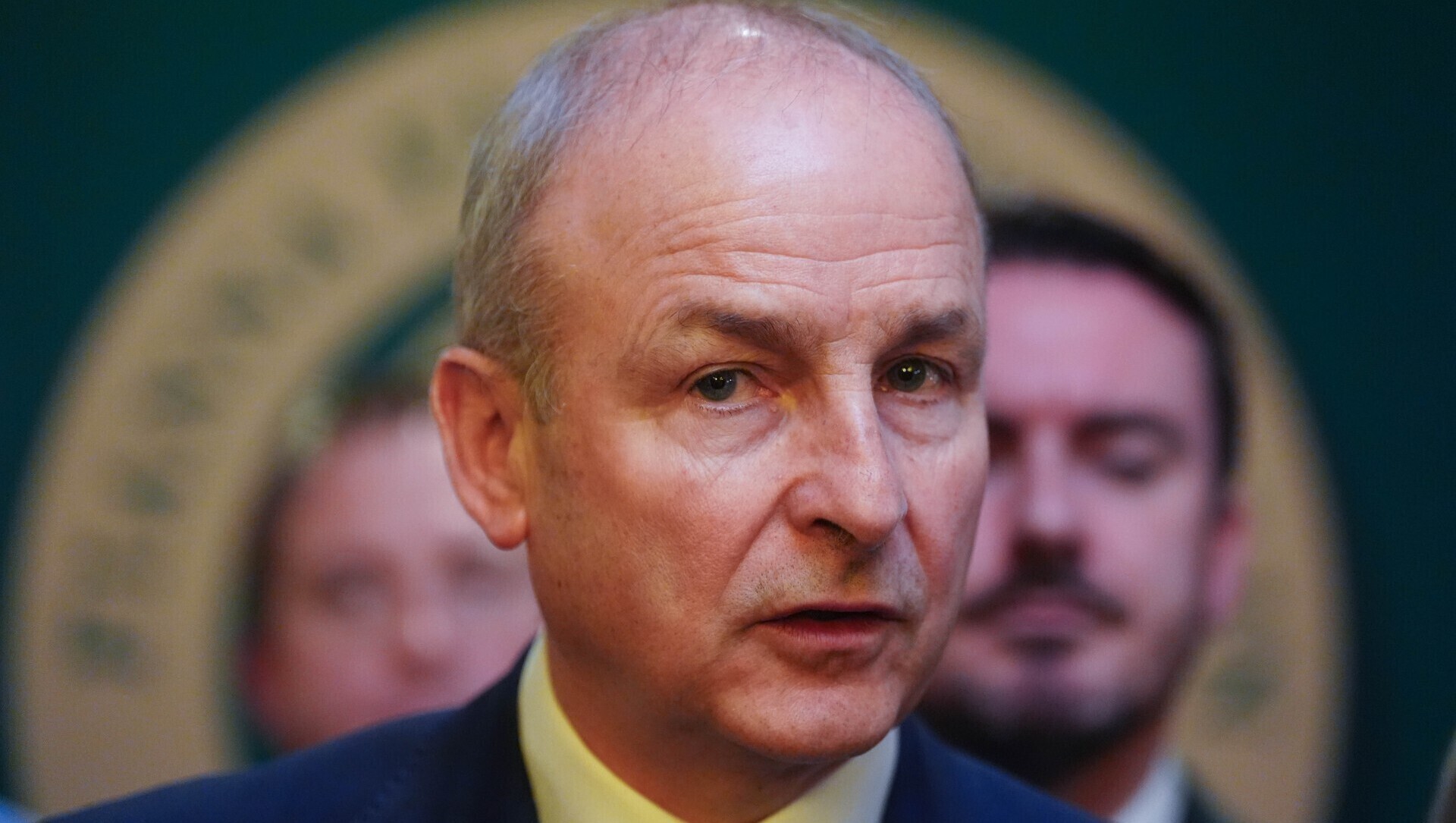
Taoiseach Micheal Martin, in 2013, described the triple lock as the core of Irish neutrality. Picture: Brian Lawless/PA

Taoiseach Micheal Martin, in 2013, described the triple lock as the core of Irish neutrality. Picture: Brian Lawless/PA

The Government has won a vote on the triple lock. It has yet to demonstrate that it has won the argument. On an issue involving neutrality, international obligations, and the lives of serving soldiers, that distinction matters.

Wednesday’s 79-71 Dáil vote advanced legislation removing the requirement for UN approval of overseas deployments. It did not complete that process.

Ministers should use the remaining stages to address public concerns rather than treating parliamentary passage as proof those concerns have been answered. There is no convincing evidence of a public clamour for this change. 

September’s Irish Times/Ipsos B&A poll found 44% favoured retaining the triple lock, against 34% supporting its removal, with 22% undecided. That is not an outright majority for retention. It is certainly not a popular endorsement of abolition.

The Government can point to its programme and its electoral mandate. But a commitment to reform does not relieve ministers of the obligation to explain what they are removing and why. Limiting Wednesday’s debate to three and a half hours hardly suggested an administration eager to explore the implications. Nor does describing this as merely a practical adjustment do justice to its significance.

The UN requirement provides a constraint beyond the Government and the parliamentary majority sustaining it. Removing that constraint changes the safeguards governing deployment, whatever assurances ministers offer about their intentions.

Micheál Martin once understood this. In 2013, he described the triple lock as being at the core of Irish neutrality. He also rejected the argument about Russia and China exercising a veto over Irish peacekeeping, dismissing Fine Gael’s position as an ideological obsession. 

Politicians are entitled to change their minds. The international environment has changed. But the Taoiseach owes the public more than an invitation to accept today’s certainty and forget yesterday’s.

Why is an argument he once disparaged now sufficient grounds for dismantling a safeguard he defended? 

Security Council paralysis is real. It deserves a serious response. Yet presenting the choice as one between removing the triple lock and surrendering Irish sovereignty to Moscow is an impoverished account of a consequential decision. Supporting multilateral authorisation is not an expression of sympathy for Russia. 

The approaching end of Unifil makes clarity more urgent. Ministers must explain the missions they envisage, the authority underpinning them, and the limits Ireland would impose. Invoking the record of Irish peacekeepers cannot answer every question about what comes next.

Meanwhile, personnel strength has recovered above 8,000 but remains roughly 1,700 below establishment. Those improvements deserve recognition; the shortages still demand action. Changing deployment rules cannot substitute for properly staffing and supporting the Defence Forces. 

The Government’s approach risks making a difficult policy debate a deeper crisis of trust. It should stop treating public reservations as obstacles to be managed and start answering them. Before asking soldiers to serve under different arrangements, it must persuade the country that those arrangements deserve its confidence. Winning a division in the Dáil may prove easier than repairing the damage if it fails to do so.

Profound failing

Perhaps the bleakest measure of Ireland’s emergency department crisis is how little the figures surprise us. We have learned to approach a hospital emergency department expecting hours of waiting, overcrowding, and the possibility of treatment on a trolley in a corridor. That expectation represents a profound failure of public confidence in the HSE and successive governments.

What should be unacceptable has become something patients and families are expected to prepare for. More than 70,000 people did not wait or left before completing treatment in emergency departments during the first seven months of this year. Another 31,821 waited longer than 24 hours to be admitted or discharged. 

These figures do not establish why every patient left, nor mean that all received no care. They nevertheless demand urgent scrutiny.

A patient’s departure cannot simply be recorded as the end of an attendance without asking whether the system failed to provide the treatment they needed. For those who remain, the burden extends beyond time. Pain, fear, exhaustion, and the loss of privacy compound the distress that brought them to hospital. Families worry; staff struggle to provide dignified care in conditions they did not create.

There are no credible solutions confined to the emergency department door. Staffed hospital beds, timely access to diagnostics, supported discharge, and adequate community services are essential to moving patients safely through the system.

Announcing capacity is not the same as making it available. The Government and HSE must be judged on measurable improvements in patients’ experiences, including prolonged waits and departures before treatment is completed.

Another winter plan will mean little if the public encounters the same conditions. People should seek emergency care when they need it. They should not have to summon the courage to endure the service itself. Resignation is no substitute for trust, dignity, or treatment.

Netanyahu's uncertain future

Benjamin Netanyahu’s political future is uncertain as Israel approaches Tuesday’s election. His departure could have consequences for the country’s democratic institutions and the influence of his extremist coalition partners. That possibility should not be dismissed. Neither should it be confused with a guarantee of justice for Palestinians.

The opposition contains differences, but removing Netanyahu is a clearer shared objective than ending occupation or securing Palestinian statehood. A successor’s measured language would offer little comfort if dispossession and military coercion continued.

The international community must resist making one man the explanation for policies sustained by institutions, political movements and successive governments. Netanyahu bears responsibility for his decisions; replacing him would not discharge Israel’s obligations.

Any new administration must be judged by what it does: protecting civilians, ending settlement expansion and respecting Palestinian rights. An election can change who exercises power. The question is whether it changes how that power is used.

More in this section

Revoiced

Newsletter

Had a busy week? Sign up for some of the best reads from the week gone by. Selected just for you.

Cookie Policy Privacy Policy Brand Safety FAQ Help Contact Us Terms and Conditions

© Examiner Echo Group Limited