Irish Examiner view: Cork docklands budget blown out of the water
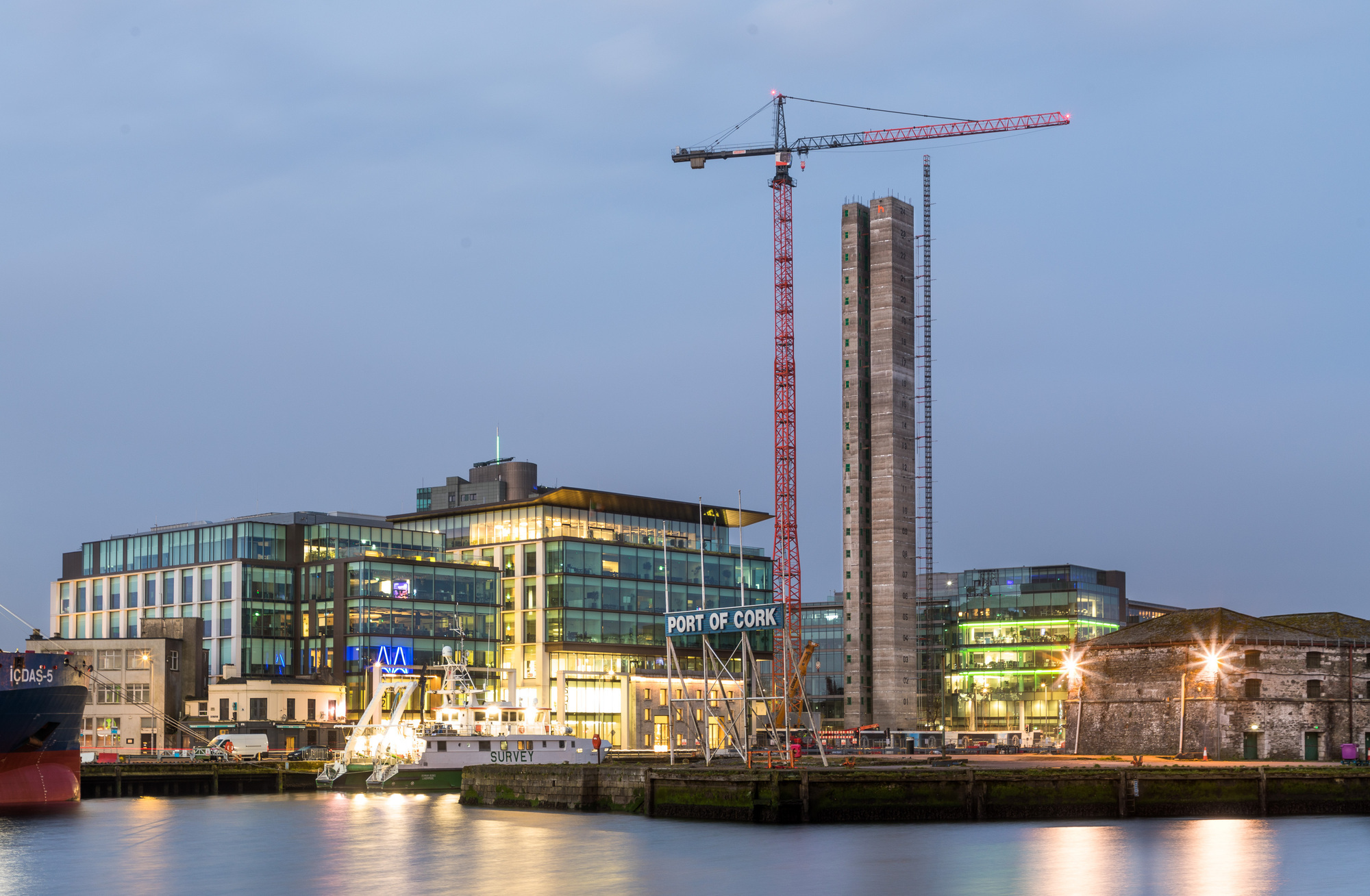
The Cork Docklands Enabling Infrastructure Project aims to deliver public realm roads, parks, and other cultural spaces for the city, as well as opening up space for 10,000 new houses.
Can it be possible that Cork’s long-awaited event centre now has a rival for the most outlandish Irish infrastructure story — and one located just a few hundred metres away at that?
This week, Tadgh McNally had a sobering report on the vaunted Cork Docklands Enabling Infrastructure Project, a wide-ranging plan which aims to deliver public realm roads, parks, and other cultural spaces for the city, as well as opening up space for 10,000 new houses.
It is the country’s largest urban regeneration, and is seen as crucial to balanced development of the region as a whole.
Its ambition may have outstripped its capacity to manage costs, however.
In 2021, the costs for the docklands development were estimated at approximately €595m, itself a substantial figure.
Now the Government has been told the total cost for the project, which is due for completion by 2038, is being estimated at €1.062bn, almost double the original.
Part of that ballooning cost is being ascribed to one significant element of the plan, the Eastern Gateway Bridge, intended to connect Lower Glanmire Rd with Monahan Rd on the other side of the Lee.
The bridge is to be completed by 2037, by which stage it is now projected to cost €311m.
The original quote was €74m, which means we now have an estimate which is four times the original cost.
This mind-boggling leap in cost is likely to spark the usual reactions in the usual sequence.
Initial shock from the public, no responsibility being taken by any stakeholder, pledges of more oversight from the Government, and further cost increases in due course.
Expansion and development are badly needed in this country, particularly when it comes to housing.
However, have we lost any sense of managing costs or adhering to budgets and estimates?
What readers should find particularly perturbing is the fact that the Eastern Gateway Bridge is just one of three envisioned in this project.
One shudders to think of the final bill.
Readers may be aware that a by-election campaign which has been dominating the news cycle in Britain for weeks finally ended this week, with the overwhelming victory of Labour’s Andy Burnham in the Makerfield constituency.
The significance of Mr Burnham’s election goes far beyond filling a vacancy in the House of Commons.
He is widely expected to challenge prime minister Keir Starmer for the leadership of the Labour Party and, if successful, he would take over at 10 Downing St.
That might have sounded fanciful when Mr Starmer swept to power with a 174-seat majority just two years ago, but since then his administration has been grappling with a variety of scandals and resignations, such as the departure of his Macroom-born chief of staff Morgan McSweeney.
The implication of one-time British ambassador to the US, Peter Mandelson, in the Jeffrey Epstein files has been seen as the final straw, and many observers expect Mr Starmer to be succeeded soon by Mr Burnham or, possibly, another candidate.

The identity of the UK’s prime minister is of course a matter of consequence for us in Ireland.
The policies and personality of the UK’s leader have the potential to impact our daily lives depending on his or her view of Brexit, for instance.
There is even further resonance, however, to Mr Burnham’s by-election victory and the possibility that he may become prime minister.
He defeated a strong Reform UK candidate to take the vacant seat, and observers have been swift to consider what that means for the UK’s political scene.
The rise of Reform, a right-wing populist party, has been the biggest political development in recent years across the water, and the party’s success means Nigel Farage, its leader, is now viewed as a credible possibility to become prime minister himself.
Mr Burnham’s victory now suggests that the Reform tide may not sweep all before it, as previously suggested.
Given Mr Farage could hardly be described as a friend to Ireland, that may not be bad news at all.
We are now entering the summer holiday period in earnest, with State exams drawing to a close and the season of concerts and festivals getting under way.
Readers could be forgiven for wanting to embrace the summer spirit fully after a long, dreary winter.
It might be no harm, however, to consider Ann Murphy’s story this week in which she spoke to a Cork woman who called for a protocol on dealing with suspected spiking of drinks.
The woman believed her own daughter had been a victim of spiking recently and said: “All I want is a pathway that if someone presents in a
hospital and if the doctors and nurses think there is a chance of spiking there, there has to be a protocol and a pathway, and it has to be logged.”
Logging such incidents is vital because the extent of spiking is hard to quantify.

Justice minister Jim O’Callaghan recently admitted there was no court data available in relation to spiking because it is not a standalone crime.
That absence of data means this may be far more widespread than we suspect.
The call for a specific protocol to deal with spiking and the new Cork Sexual Violence Centre campaign for spiking to be the subject of new, standalone legislation could not be more timely.