Changing faces: Maintaining Ireland's relationship with Britain's prime minister
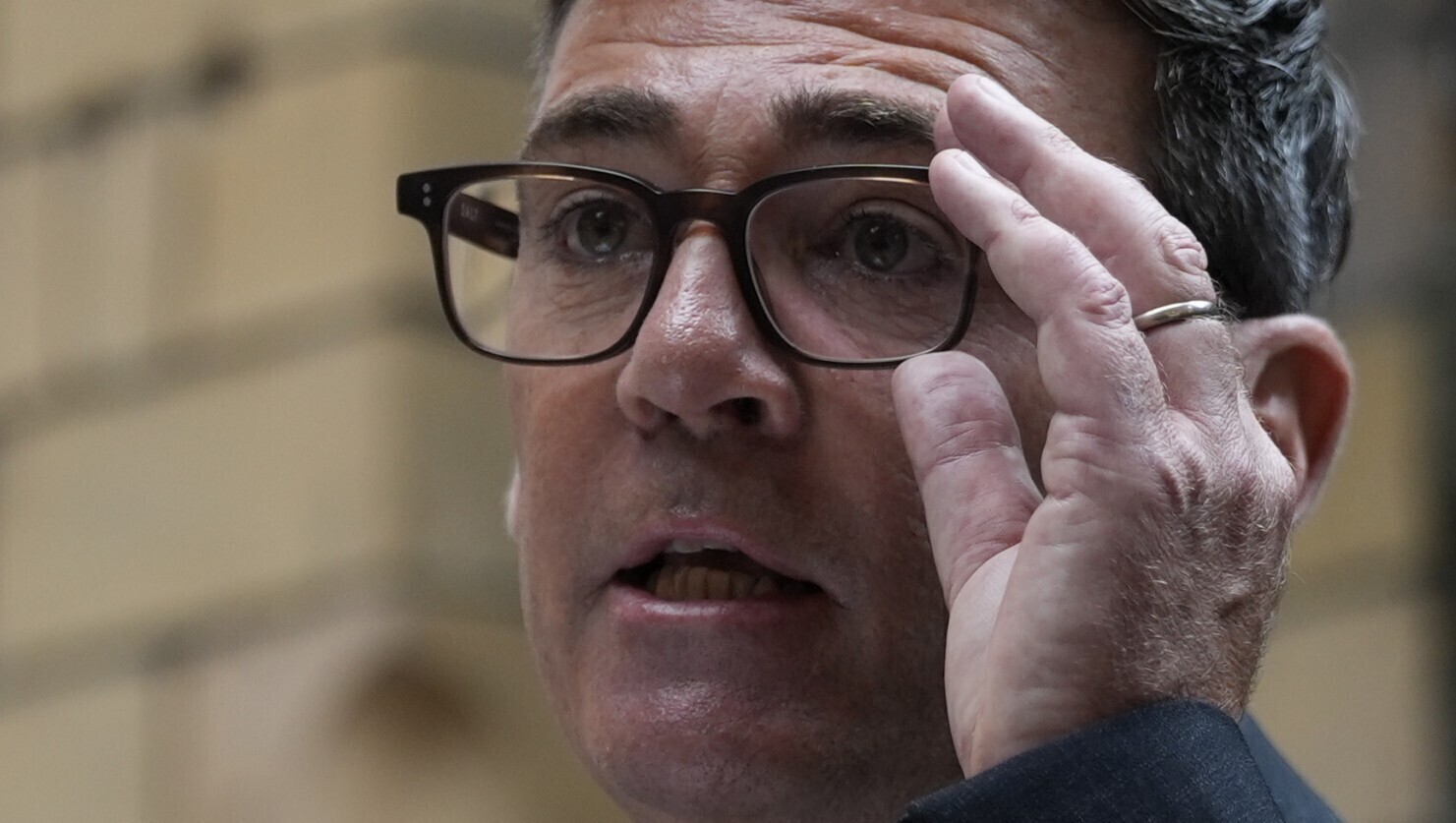
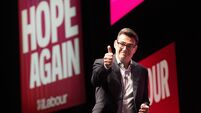
Andy Burnham is no stranger to Irish shores. Picture: Peter Byrne/PA
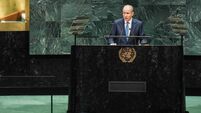
On Tuesday, Taoiseach Micheál Martin had his third phone call with a new British prime minister.
Having been in office for the ascension and implosion of Liz Truss's premiership, Mr Martin was still in office when Rishi Sunak came to power, but had rotated out of the leadership of the country when Keir Starmer swept to victory in the summer of 2024.
Having returned to the Taoiseach's office last January, Mr Martin may have expected a new leader across the Irish Sea might come after the end of his current stint as Taoiseach, which will at the latest be next November.
However, UK politics being what it is, Mr Starmer sensationally quit rather than contest his leadership as Labour saw Andy Burnham leave his post as mayor of Manchester, win a by-election, and become Labour leader and UK prime minister all within a matter of weeks.
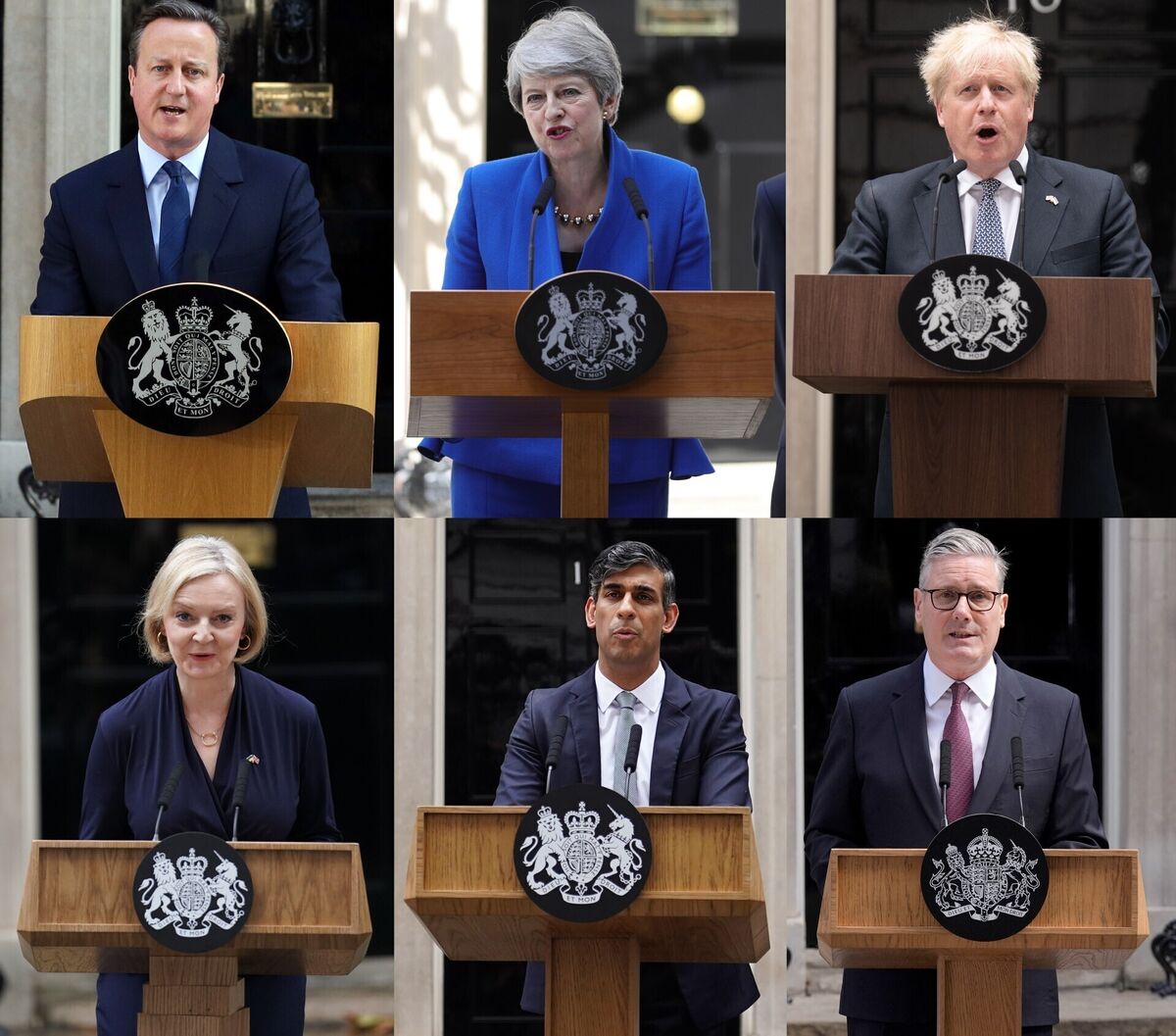
Mr Burnham’s election has been greeted positively in Dublin, but represents the seventh UK prime minister with whom relations have had to be forged in just over a decade, many of them with differing approaches and outcomes.
The man who triggered the Brexit vote in a bid to stave off his own party's Eurosceptics ended up crashing his career upon those very rocks.
Despite the impact that vote would have on Ireland for a decade, he was considered to have had a good working relationship with Enda Kenny — both centre-right recession-era leaders.
His engagement with Ireland was seen as cordial and, crucially, calm and predictable.
In 2014, Irish-UK relations were boosted by the signing of the Stormont House Agreement, just two days before Christmas.
Consensus between the five Northern Executive parties and the Irish and UK governments was reached after an 11-week talks process culminated with a marathon 30 hours round of negotiations at Stormont House, with a £2bn package offered by Mr Cameron.
During the referendum campaign, Mr Cameron argued that remaining in the EU was in Britain's national interest and repeatedly acknowledged that Brexit would create particular difficulties for Ireland.
Despite this, one politician who dealt with the UK government at the time said that the Irish position was "never really in Mr Cameron's thinking" around Brexit and that the former Conservative leader was more concerned with strengthening his own grip on his party.
Originally a "remainer", the task of beginning the actual process of Brexit fell to Theresa May, who became prime minister just three weeks after the UK had voted to leave the EU.
Ms May was quick to back the result, uttering the now infamous "Brexit means Brexit" line.
While Ms May was felt to have at least acknowledged the uniqueness of the Irish situation vis a vis Brexit, it was felt in Dublin that she was boxed in by her circumstances and a 2017 snap election which attempted to strengthen her mandate only ended with a confidence and supply arrangement which handed the DUP a whip hand.
Leo Varadkar's government, backed by the EU, insisted that legally binding guarantees were necessary to protect the open border.
This resulted in the creation of the controversial Northern Ireland backstop, an insurance policy intended to prevent a hard border if future trade negotiations failed.
This would become the central battlefield of Irish-UK relations in this time.
Many Conservative MPs and the DUP argued that it threatened the constitutional integrity of the UK by potentially treating Northern Ireland differently from Britain.
Dublin, by contrast, regarded it as an essential safeguard.
Having lost a "meaningful vote" on a deal she had negotiated with the EU by a British record margin for a government proposal, Ms May provoked fury in Dublin when she sought to re-open the Brexit Withdrawal Agreement.
Her premiership would lose 33 ministers due to Brexit before her departure in May 2019. Her tenure was seen as “at least constructive, even if you didn’t always agree” by those in Dublin.
Ms May's departure led to the election as prime minister of Boris Johnson.
The former mayor of London's three years in Downing Street would represent the nadir of recent relations.
In Dublin, Mr Johnson was seen as an amiable presence in the room, but unpredictable out of it with a focus on "throwing red meat" to Brexiteer supporters.
A leading figure in the Leave campaign, he set about renegotiating Ms May's withdrawal agreement, replacing the backstop with the Northern Ireland protocol.
The protocol kept Northern Ireland aligned with certain EU rules and created customs checks on goods travelling from Britain into Northern Ireland, which Mr Johnson presented as a major victory and assured unionists that there would be no meaningful barriers within the UK internal market.
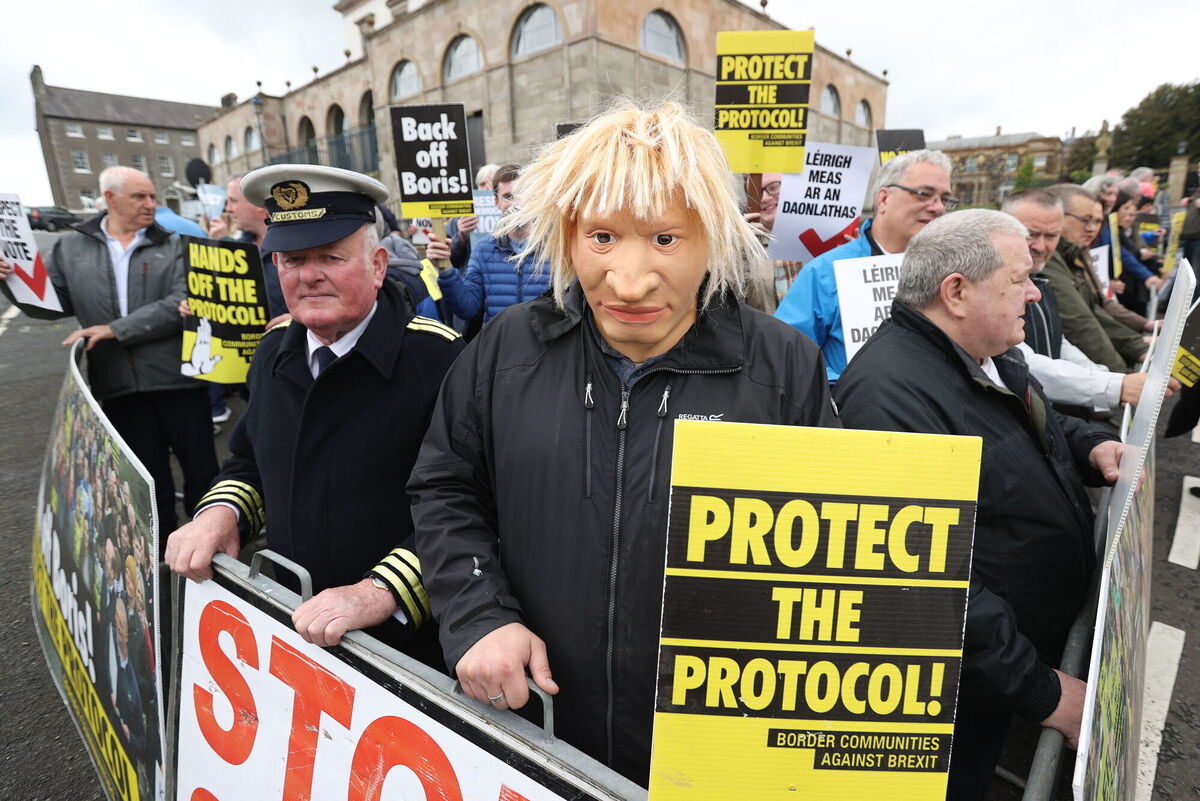
However, as soon as the protocol came into effect, the Johnson government called it unworkable and sought to unilaterally change it.
From Dublin's perspective, the principal problem was not merely policy disagreement but trust.
Irish ministers generally accepted that practical difficulties with the protocol needed addressing.
Their frustration stemmed from the perception that Johnson had knowingly signed an agreement for political expediency before later disowning it.
Away from his attitudes towards Brexit, Mr Johnson provoked outrage in Ireland in 2021 by announcing plans to introduce an amnesty to end prosecutions for crimes related to the Troubles in Northern Ireland.
The Taoiseach said the proposals were “wrong for many, many reasons” and called on the UK government to honour the Stormont agreement, but in Dublin the sense was that Mr Johnson was not attuned to the island.
In July 2022, he resigned amid mounting pressure after admitting he failed to persuade his British cabinet colleagues that he could fight on through a myriad of crises.
The departure of Mr Johnson led to 49 days of Liz Truss, the shortest-serving UK prime minister ever.
As foreign secretary, she had taken over responsibility for Brexit negotiations and adopted a firm stance on the Northern Ireland protocol, which she argued imposed unnecessary burdens on trade within the UK and weakened Northern Ireland's constitutional position.
Her preferred solution involved extensive unilateral changes rather than negotiation with the EU.
Ms Truss was not in office long enough for most in Dublin to get a read on her as a prime minister, though those who worked with her as foreign secretary did not expect much deviation from her time in the foreign office.
She resigned after just seven weeks following a mini budget which sparked a dramatic collapse of financial market confidence and a slew of resignations.
The resignation of Ms Truss and the chaos of 2022 led to the election as prime minister of Rishi Sunak, viewed as a calmer and more predictable negotiating partner for Ireland.
While he remained committed to Brexit and did not reverse the UK's departure from the EU, he prioritised repairing relations with European partners and reducing tensions over Northern Ireland.
His premiership marked a period of cautious improvement in UK–Irish relations, government sources have said over the years.
Just weeks after his election, Mr Sunak became the first UK prime minister since Gordon Brown to attend a summit of the British Irish Council on a bitterly cold November day in Blackpool.
That meeting with Mr Martin was seen as a first step in rebuilding trust and closeness between the two sides.
In 2023, the Windsor Framework, introduced by Mr Sunak, sought to alleviate these concerns through the creation of a red lane, green lane system to minimise checks on goods coming from mainland UK to Northern Ireland not intended for further travel into the EU and was agreed by all sides.
The framework was welcomed as a major improvement in Dublin because it preserved the core objectives of the original protocol: Avoiding a hard border on the island of Ireland and protecting the Good Friday Agreement.
At the same time, it addressed many concerns raised by unionists and businesses in Northern Ireland.
In general, Dublin viewed Mr Sunak as a much more pragmatic and reliable negotiating partner than his immediate predecessors.
He and Mr Varadkar had a number of meetings described as warm and cordial, but a government source at the time said that it was Mr Sunak's technocratic and pragmatic ways that made him "not the best prime minister, but the one needed for these talks".
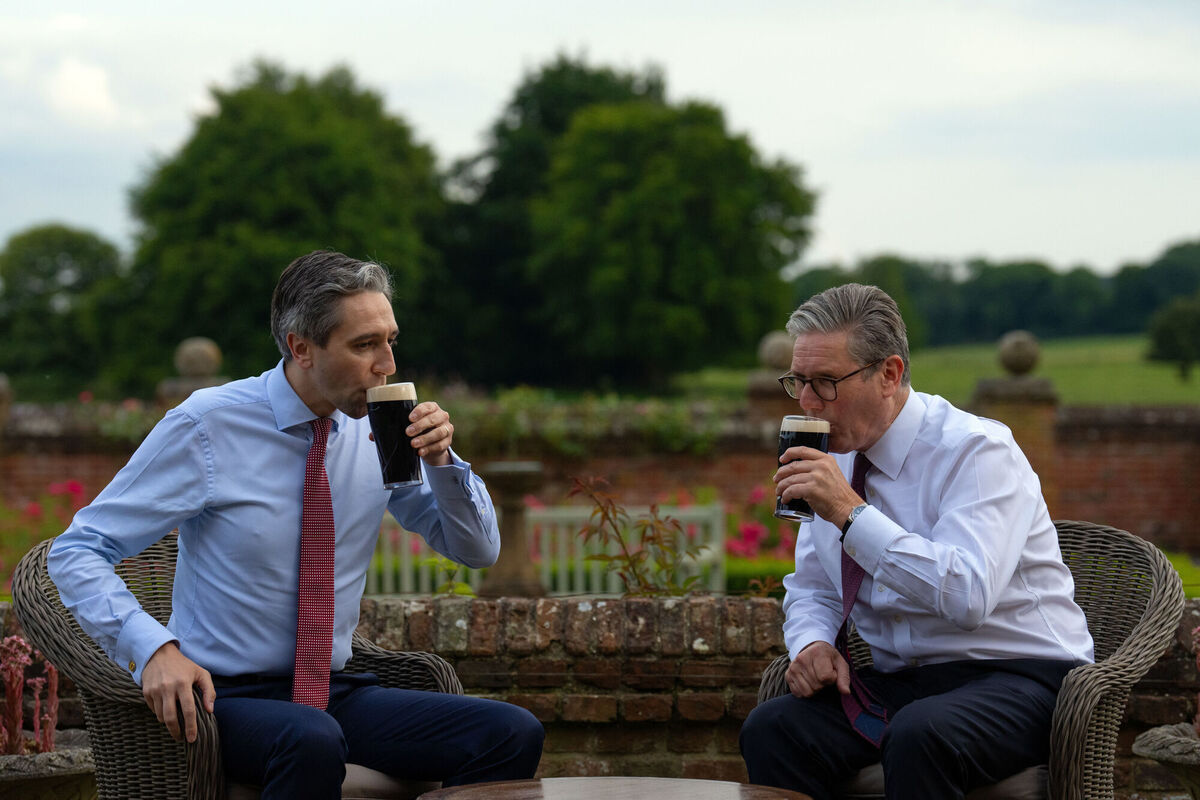
On a sweltering July 2024 day in the Oxfordshire countryside, Taoiseach Simon Harris and the brand-new British prime minister Keir Starmer sat in the garden and raised pints of Guinness.
Mr Harris had earlier stopped into the local Russell Arms pub for a few minutes to await his host, who had earlier that day seen parliament opened by Britain’s King Charles III.
There, in the prime minister's country home, the two toasted "an important reset of relations" between the two nations as they announced a new ministerial conference to be held yearly in March as Mr Starmer, who had been DPP in Northern Ireland and honeymooned in Donegal, was seen to "get" Ireland far more than predecessors.
That the Starmer government dropped its ongoing legal challenge against a court ruling which declared parts of the Troubles Legacy Act to be unlawful within weeks was also welcome.
It centred on the most contentious aspect of the act which offered conditional immunity to suspects in exchange for information about Troubles-era crimes.
The two sides have held two of those ministerial fora and spoken of expanded cooperation in areas including trade, energy, climate policy, policing, and security.
The tone of engagement has returned closer to the cooperative atmosphere seen during the Cameron–Kenny period, although with the added complexity of Brexit.
Mr Starmer has sought to find a balance there by bringing the UK closer to Ireland and the EU but insisting the UK is not rejoining the EU, single market, or customs union, limiting how far the UK–EU relationship can change.
He was liked in Dublin, but succumbed to internal pressures after just two years.
Mr Burnham has visited Ireland a number of times. His approach is seen to be a continuation of Mr Starmer’s regarding a closer relationship.
CONNECT WITH US TODAY



Be the first to know the latest news and updates