Irish Examiner view: Humanity must come before AI
In a time of cynicism and division, Pope Leo has offered a vision rooted in human dignity
Irish Examiner view: Humanity must come before AI

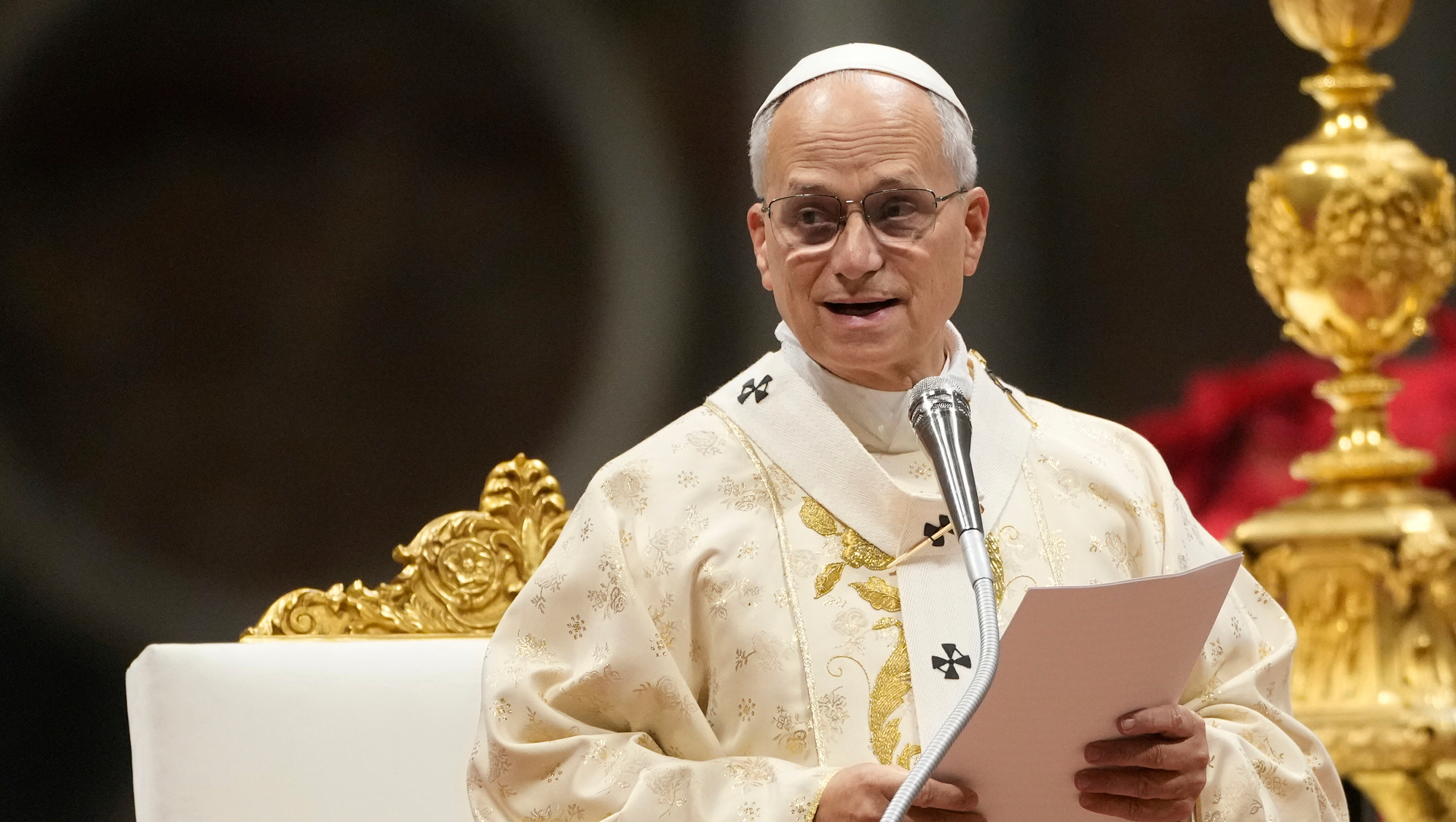
'Equally important is the Pope’s concern for the dignity of work and the danger that technological change may leave millions feeling economically and socially discarded.' File picture: Gregorio Borgia/AP

In an age when public trust in leaders is in steep decline, Pope Leo’s first encyclical, Magnifica humanitas: On Safeguarding the Human Person in the Time of Artificial Intelligence, offers something increasingly rare: Authentic moral leadership.

It arrives at a moment when AI is rapidly reshaping economies, workplaces, public discourse, and even our understanding of what it means to be human. Governments are scrambling to regulate it. Tech companies are racing to commercialise it. Citizens are left wondering whether the benefits promised by this revolution will outweigh its risks.

What distinguishes Leo’s intervention is not simply that he has entered the debate, but how he has done so. Across politics, business, and public life, discussions about AI are frequently shaped by self-interest. Politicians worry about electoral consequences. Tech firms have commercial incentives. Campaign groups often pursue their own objectives.

Leo’s encyclical is striking precisely because it appears free from such motivations. It is not a recruitment brochure for the Catholic Church. It does not seek power, influence, or advantage. Instead, it addresses believers and non-believers alike. Its appeal is not to faith, but to our shared humanity. At its heart is a simple but profound proposition: Technology must serve humanity, not the other way around. Leo argues that progress cannot be measured solely in terms of efficiency, profit, or innovation. It must also be judged by whether it safeguards dignity, promotes truth, protects meaningful work, advances social justice, and contributes to peace.

These are not exclusively religious principles. They are human principles. That is why it deserves attention far beyond Catholic circles. It does not ask readers to become Catholic. It asks them to consider what kind of society they wish to build and what values should guide humanity as it develops technologies of unprecedented power.

The defence of truth is particularly timely. Democracies are already grappling with misinformation, deepfakes, and the erosion of trust in institutions. AI offers extraordinary opportunities but also unprecedented tools for manipulation.

Equally important is the Pope’s concern for the dignity of work and the danger that technological change may leave millions feeling economically and socially discarded. Yet the encyclical’s significance extends beyond its treatment of AI. It is also a reminder of what leadership looks like. At a time when many public figures appear driven by polling, algorithms, and personal advancement, Leo has chosen to engage with the deeper ethical questions confronting society. Rather than exploiting public anxieties, he seeks to illuminate them.

Few institutions have experienced a more dramatic collapse in authority than the Catholic Church in Ireland. That loss of trust was earned through scandal, abuse, and institutional failure. Many concluded that the Church’s decline was not merely inevitable, but justified. Against that backdrop, Pope Leo’s approach is remarkable. He is not attempting to restore the Church’s standing through culture wars or demands for deference. Instead, he is demonstrating relevance through leadership. He is engaging with one of the defining issues of the century and doing so in language accessible to believers and non-believers alike.

By speaking to humanity rather than to a tribe, he is recovering something that religious institutions at their best have always possessed: The capacity to illuminate universal questions. Whether one is Catholic, agnostic, or atheist is almost beside the point. In a time of cynicism, division, and increasingly transactional leadership, Pope Leo has offered a vision rooted in human dignity, truth, and the common good. Such leadership is rare. It is also urgently needed.

Culture change needed in Defence Forces 

The opening days of the Defence Forces tribunal have already delivered a stark verdict on how Ireland’s military dealt with complaints for decades.

Evidence presented to the tribunal suggests complaints systems were not only inadequate, but frequently developed in response to crises rather than as part of a coherent commitment to accountability. That should concern far more than the Defence Forces. Culture change is a phrase often invoked after scandals emerge. Yet culture does not change through statements, strategies, or training alone. It changes when institutions build systems that people trust. When individuals believe complaints will be heard independently, investigated fairly, and resolved without fear of retaliation, behaviour begins to change. Without such structures, calls for cultural reform ring hollow.

The tribunal has heard that existing processes were often unsuitable for serious complaints because they lacked sufficient independence from the organisation itself. Witnesses described systems that were “crisis-driven” and structurally incapable of addressing the most serious allegations.

The lesson extends beyond military barracks. Every public institution — whether in healthcare, policing, education, or government — should examine if its own mechanisms are genuinely robust or merely reactive. Too often, reforms arrive only after whistleblowers speak out, investigative reports are published, or public confidence collapses.

Ireland has learned repeatedly that institutional failures rarely stem from the absence of rules. More often, they arise because systems were designed to protect organisations rather than those raising concerns. Being reactionary was never good enough. Effective accountability requires independent, transparent, and trusted processes before a crisis emerges. If the Defence Forces tribunal achieves anything lasting, it should be to remind every State body that prevention is always preferable to apology.

Beyond football

There are footballers whose records endure, and there are footballers whose character endures even longer. Bobby Tambling belonged firmly to the latter category.

The passing of the former Chelsea and Cork Celtic striker at the age of 84 marks the loss not only of one of the finest goalscorers of his generation, but of a true gentleman.


Tambling arrived in Cork carrying the reputation of a Chelsea legend, having scored 202 goals for the London club, a record that stood for almost half a century. Yet those who encountered him in Ireland remember less the statistics than the man himself. In Cork, he became woven into the fabric of football life, helping Cork Celtic to their only League of Ireland title and later giving generously of his time as a coach, manager, mentor and ambassador.

At a time when modern sport often seems consumed by ego and celebrity, Bobby Tambling represented something different: Humility, decency, and a lifelong love of football. His achievements will be remembered, but it is the warmth of the man that will be most deeply missed.

More in this section

Revoiced

Newsletter

Had a busy week? Sign up for some of the best reads from the week gone by. Selected just for you.

Cookie Policy Privacy Policy Brand Safety FAQ Help Contact Us Terms and Conditions

© Examiner Echo Group Limited