Irish Examiner view: A holy trinity
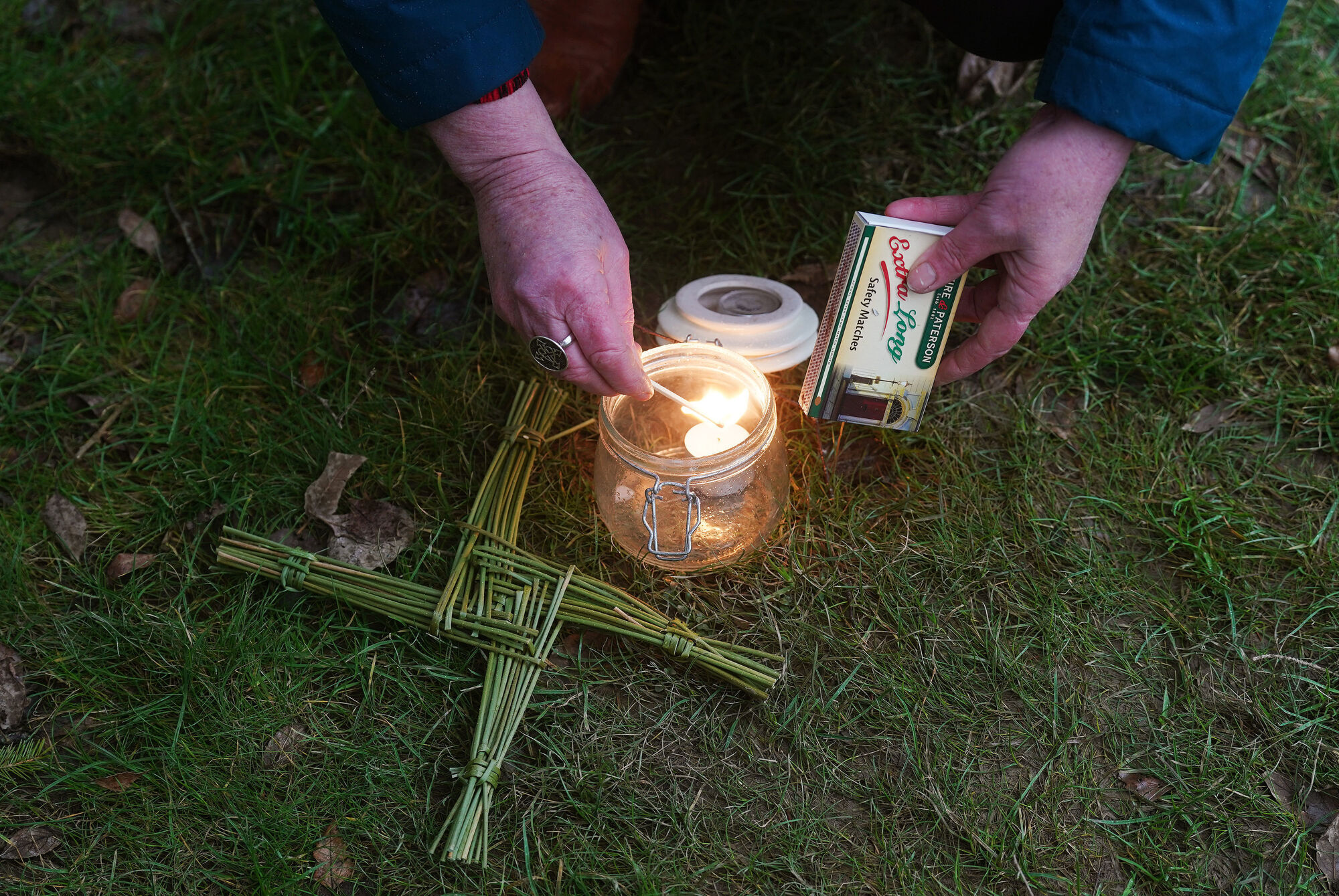
Nora Creed lights a candle alongside a traditional St Brigid's Cross made from rushes ahead of conducting a ceremony to embrace the devine feminine and honour the saint, at St Brigid's Holy Well in Co Kildare. Picture: Brian Lawless/PA Wire
This weekend many of us can look forward to a lie-in on Monday morning thanks to the St Brigid’s Day bank holiday — though yesterday, February 1, was the saint’s traditional religious feast day.
Brigid’s historical provenance is a matter of some debate, but only if you are searching for incontrovertible proof of a saint fitting the exact description handed down the centuries.
There is convincing evidence of a powerful female figure creating a church in the Kildare area of fifth-century Ireland, which would prove one of the most powerful outposts of the faith in the country.
A separate St Brigid has long been a feature of Irish Catholicism, associated with a variety of miracles, while yet another Brigid figure exists in Irish mythology, one of the goddesses of the Tuatha Dé Danann.
According to the mythology, Brigid was a daughter of the king the gods, The Dagda, was known as the Flame of Ireland, or the “fiery arrow”, and was associated with Imbolc or Imbolg, the start of the spring season.
Can we say, therefore, that the founder of a church, a creator of religious miracles, and a goddess known as the Flame of Ireland had to combine forces to create the only public holiday in Ireland named after a woman?
CONNECT WITH US TODAY



Be the first to know the latest news and updates