Saint, goddess, abortionist: Will the real Brigid please stand up?

To celebrate Brigid’s Day the spectacular Herstory Light Show by Dodeca illuminated iconic landmarks across Ireland last year.
Much has been said, and much more will be said as St Brigid’s Day becomes entrenched in our culture from 2023 onwards.
Books have been published, PhDs have been completed and wells have been drunk from, but the question remains — who was Brigid?
Let's look at the evidence and the lore, the myths and the miracles behind the woman and find out exactly how this holiday came to pass looking behind the curtain of the campaign that lobbied the government for such a day.
Will the real Brigid please stand up?
You could spell her name as Brigid, as this public holiday does, or you could write it as Brigit as some scholars do, or you could also refer to her as Bríg or Biddy, or even Brigantia — like the pan-European Celtic Goddess.
You can equally relate to her as a pre-Christian Celtic Irish goddess, connect to her as the Christian saint, or search out the woman Brigid who walked these lands and founded a powerful church in fifth-century medieval Ireland.
Between spellings and incarnations, the choices are many, but the question remains: Was she a goddess, a made-up saint co-opted from the Celts, or a real woman?
Myths of cloaks covering the Curragh aside, there’s plenty of corroborating evidence to suggest that a very powerful, and nifty woman called Brigid did exist.
Niamh Wycherley, a medieval historian at Maynooth University is the foremost authority on Brigid and her relationship with her goes way back, from taking her name at her confirmation to completing her master’s on the Kildare woman’s hagiography — the biography of saints.
She went on to write about Brigid’s relics in her PhD and in her book , as well as lecturing extensively about her.
Was Brigid real? It depends on the one you're asking about, but if you're asking about Brigid of Kildare there is ample evidence to say such a woman did exist, and with much power and influence.
"There is so much written about her, especially in medieval times, Brigid was such a big deal," says Ms Wycherley.
She was supposedly born in 451, less than 20 years after Patrick is thought to have come to Ireland (432).
"In the annals they record multiple dates for her birth and death," says the historian.
"But what is really clear in the annals is how powerful the church of Kildare becomes, more specifically Brigid's church of Kildare — it becomes one of the most powerful churches in Ireland, with a monastery of men and women, led by a man and a woman. And we have so few women written into the annals," says Ms Wycherley.
While dates of Brigid of Kildare's birth and death may vary, the historian says one thing is always agreed upon: "Every story concurs that Brigid founded the church, one of the biggest churches in Ireland". It was quite the "big deal".
By "big deal", this isn't a case of the first woman Taoiseach in 2024, or beyond, this achievement came at a time in Ireland when women were essentially slaves, with no autonomy of their own.
Brigid lived in an Ireland where women were classified as "legally incompetent" and "senseless" in legal texts, explains the historian.
The only other people who received such classification were children under the age of 14, slaves and the "insane". To be a woman in Brigid's time was to live a life as defined by your closest male relative.
"The abbess or leader of a women’s religious community was often the most notable exception to this rule.
"Female monasticism provided one of the very few routes by which a woman could achieve some social and political authority," says Ms Wycherley, and this is the role Brigid of Kildare occupied.
The historian cites another uncontested fact in history — all surviving historical sources all agree that Brigid was part of a dynasty, the Fothairt, with branches around Leinster.
Indeed, the recently rediscovered three-county Brigid's Way starts in Faughart, Co Louth.
The Fothairt dynasty of which Brigid was a part of "were fairly low key", says the historian, but still, it gave her enough sway to found and lead a church, whereas Patrick would have arrived here with no pre-existing contacts needing to negotiate entry into every townland which he came across.
Despite Brigid's connections, Ms Wycherley reckons she was a woman of resilience and resolve, going by one piece of evidence.
Medieval history shows that women who chose the Church over marriage were sometimes punished by rape, with one text claims that Brigid's "brothers were very upset that she had denied them the bride-price to which they were entitled had she married".
Having shunned marriage, Brigid established her church in Kildare, which would probably have been a small wooden building and such was her sway and influence, in the space of a century it grew to be one of the most powerful institutions on the island.
"In just over 100 years this church grew to be one of the powerful institutions in the country, how it went from zero to 100, we don't know. But no one in academia disagrees that a woman founded Kildare, and every source named her as Brigid," says Ms Wycherley.
As well as the woman Brigid, there is the saint. Facts begin to loosen and vary widely here, turning into lore and myth, although some tales have their origin in truth.
Cogitosus, an Irish monk wrote the , (The Life of Brigid) around 650 — therefore, about 200 years after her birth.
Dr Wycherley emphasises that this depiction is not to be mistaken with pure fact. It's where some of the myth around the saint emerges.
"Cogitosus's bias is clear, glorifying Kildare, 'Kildare has the most important saint', 'Kildare is great'. He is also deeply religious, he is painting Brigid as the ultimate saint, like Mary, his story is mostly to entertain, it is not a historical document," notes Ms Wycherley.
Indeed, it is in this document where St Brigid's abortion work was cited, making Brigid a patroness of the Repeal movement for some.
He details how she met "a certain woman who, after taking a vow of virginity, had lapsed through weakness into youthful desire of pleasure, and her womb swelled with child".
Brigid then, “exercising the most potent strength of her ineffable faith”, blessed the pregnant woman and “caused what had been conceived to disappear”. The woman was returned “to health and to penance”.
From abortionist to lesbian icon, St Brigid also featured during our marriage equality referendum. It was said a younger nun by the name of Darlughdach served as Brigid’s ambassador and her “anam cara” (soul friend). It was also said that they were so close they shared the same bed.
Ms Wycherley says however, that the idea that Brigid was a lesbian perhaps came more from misogyny than fact.
"Women were allowed to live within a community of women. The men hated all-women communities and that's where the lesbianism comes in — men were being misogynistic about what women got up to," she says.
Terminating pregnancy and being in same-sex relationships aside, there are St Brigid tales that are far easier to identify as myths.
She is often cited as working miracles from a young age, eager to feed the poor, multiple stories circulate where she gave away her family's store of butter or only meat when someone came knocking and on returning to her home the new meat and new butter reappeared.
Then there is the famous cloak story of St Brigid asking the King of Leinster for land for her church.
"Will you give me as much land as my cloak will cover?" she is said to have asked. Not thinking that would garner much square footage, Brigid had four sisters catch a corner of the cloak each and run towards each point of the compass.
The cloak miraculously grew and grew until it covered acres of land.
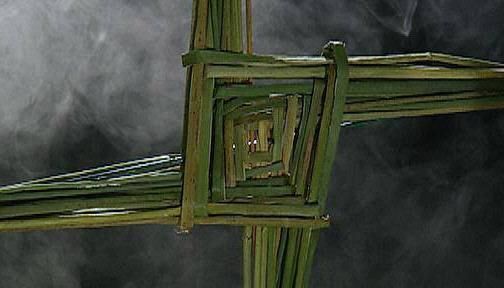
There are also stories of her turning water into beer and curing a child's muteness. Her long list of miracles meant she became a patroness to many, some of whom include midwives, blacksmiths, poets, sailors and female revolutionaries.
But if Brigid the saint was many things, so too was the goddess of the same name. The supposed Celtic goddess is known as a triple goddess. She was goddess of both the alchemical power of fire, and the healing power of water. For this, she is seen as the perfect yin and yang, a balance between fiery and diplomatic energies. She was also known as the goddess of poetry.
In Irish mythology, Brigid was a goddess of the Tuatha Dé Danann — a magical race that possessed supernatural powers, and she was a daughter of the chief of the gods, The Dagda.
Goddess Brigid is also known as the Flame of Ireland, or as the "fiery arrow" upon which to launch your greatest intentions. She is also strongly associated with Imbolc or Imbolg, which is the start of spring in the ancient Celtic calendar and mirrors the cycle of nature.
But returning to fact, Ms Wycherley says we lack the evidence to say that Celts living here ever worshipped a goddess called Brigid.
"The whole goddess thing makes medieval historians uncomfortable because we don't have historical evidence that they had an actual goddess Brigid in Ireland, but there is evidence in other places of a goddess called Brigantia.
"We can't say, 'This is how people worshipped Brigid before the saint'," says the historian.
So whether she was a saint, a real-life woman or a goddess that preceded both, our best bet, bringing all evidence to mind is that there was a trailblazing leader named Brigid who walked these lands and led our ancestors 1,500 years ago.
"To create such a massive impact in this misogynistic and restrictive society, Brigit must have been well connected, thick-skinned and defiant," says Ms Wycherley.
There would be no St Brigid's Day without Herstory — a multi-disciplinary storytelling platform, founded in 2016, that celebrates female role-models.
And how St Brigid's Day as a public holiday came to be has tinges of the same sexism that was rife in Brigid, the church leader's, misogynistic medieval Ireland.
But Brigid aside, the idea of a public holiday arose in the autumn of 2021, to honour the lives lost during the pandemic and those who worked tirelessly on the frontlines.
In the end, two holidays were announced, a one-off day last March to mark the impact of Covid-19, and a new one — though it was not always going to be called St Brigid’s Day. An "Irish thanksgiving" holiday for November was a strong contender.
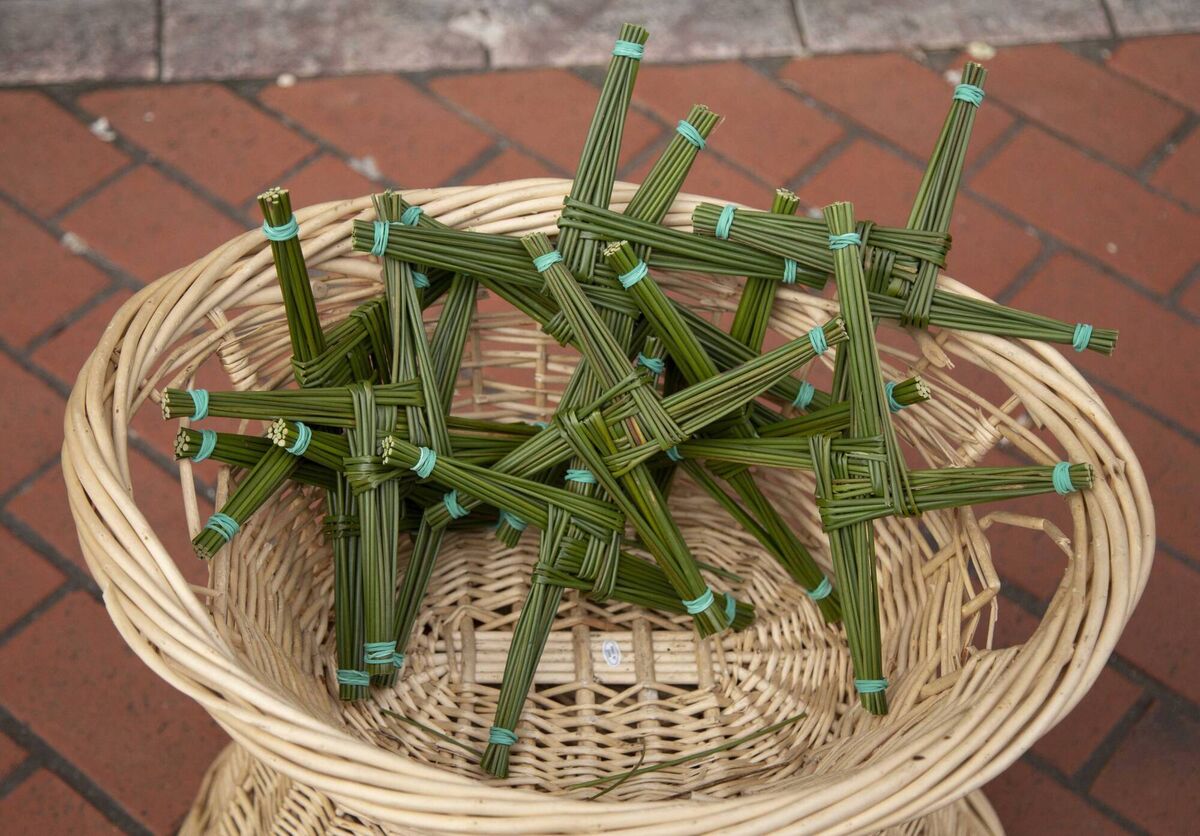
In the end, it went to a woman who walked these lands more than 1,500 years ago and who founded and led one of, if not the most, powerful institutions on the island of Ireland — the church of Kildare, during the brutal and misogynistic Middle Ages.
While St Patrick arrived in Ireland with his message of Christianity becoming our patron saint with a much-celebrated holiday, Brigid was actually of these lands, and existed around the same time.
Moreover, there is evidence of Christianity in eastern and southern parts of Ireland before Patrick ever got here.
So how did this public holiday actually get over the line?
You could say it all started with another female trailblazer, the late Josephine Hart of Mullingar, and later of London, who died in 2011.
While known in London for her 1991 international bestselling novel , that sold 1m copies, the poet and Booker prize judge, her Irish home place is now a carpark.
"Herstory came about really because of Josephine Hart in Mullingar, she was bulldozed out of modern history," says Herstory founder, Melanie Lynch.
"Meanwhile, in 2015, the council at the same time was seriously talking about building a museum for Niall Horan.
"That's how I started Herstory, it was a real catalyst. How could this trailblazer be bulldozed out of history?" says Ms Lynch.
Herstory was going to just be a one-off exhibition about amazing Irish women and then Melanie would "go back to advertising and the rat race".
As part of the exhibition planning, Ms Lynch ended up sitting down with the Royal Irish Academy. Her exhibition inspired the academy to count the number of women in (DIB). Out of 10,000 people, there were 1,000 women.
"You need to be remarkable to get into it and at the same time I was talking to children in schools they could name about five famous Irish women," says Ms Lynch.
The start of Herstory in 2016, also coincided with the 1916 centenary, and they worked to draw out all of the women involved in the Easter Rising, about which there was lots of noise.
But by 2018, when the new history curriculum for the Junior Cycle was unveiled there was no mention of any of the women uncovered.
"Within two years they were all forgotten about," says Ms Lynch, "so Herstory turned from exhibition into movement".
Some of its work in the intervening years include drawing out the role of women in the Northern Ireland peace process — an exhibition on this launches in Washington DC's Capitol Hill this month, before going on to the United Nations headquarters in Manhattan.
"One of our board directors Treacy O'Connor said: 'Let's go for a national public in her name'," explains Ms Lynch.
Herstory took the suggestion seriously and some of the advisers to the campaign included Fulbright scholar Ruairí McKiernan, poet Laura Murphy and former chief executive of the Dublin Rape Crisis Centre Ellen O'Malley Dunlop. It was 2019 and Melanie Lynch "thought it would take a decade".
"We launched the petition in 2019, it didn't get much traction, maybe 15,000 signatures, and there was lots of lobbying of politicians, I personally sat down and wrote to every politician on the island," says Ms Lynch.
Leo Varadkar tabled the idea of a new public holiday in late 2021, again just two short years after another Herstory campaign and Brigid "wasn't on the list, there was instead all this talk about Thanksgiving".
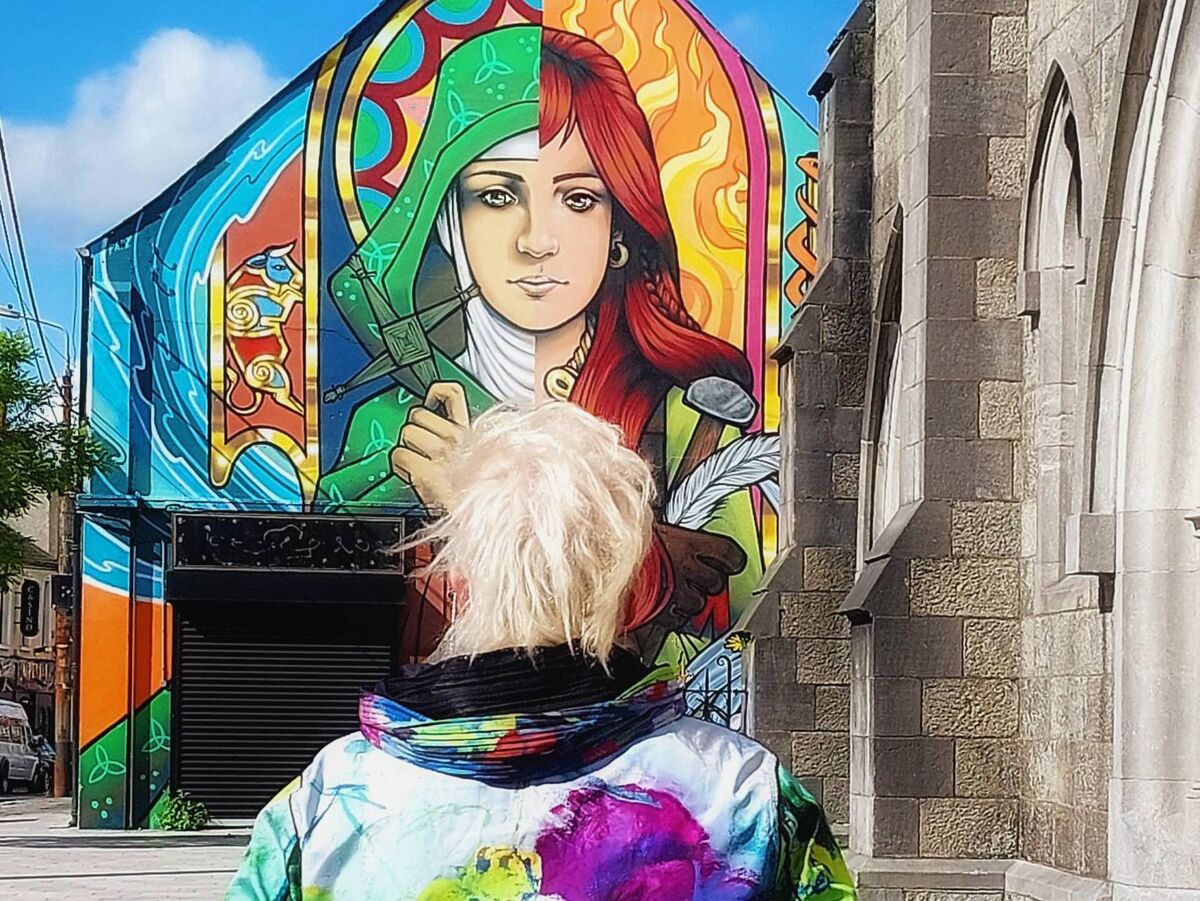
Ms Lynch said a perfect media, and social media storm, was created, with former justice and foreign affairs minister Charlie Flanagan writing a letter to the endorsing Brigid and actors like Cork's Siobhán McSweeney getting behind the campaign.
On January 19, 2022, it was made official, there would be a new recurring public holiday and it would be called St Brigid's Day, falling on the first Monday of February, except where February 1, happens to fall on a Friday, in which case that Friday will be the public holiday.
It is our 10th public holiday and only one to be named after a woman.
CONNECT WITH US TODAY



Be the first to know the latest news and updates