Irish Examiner view: Kenova secrecy is an insult to victims North and South
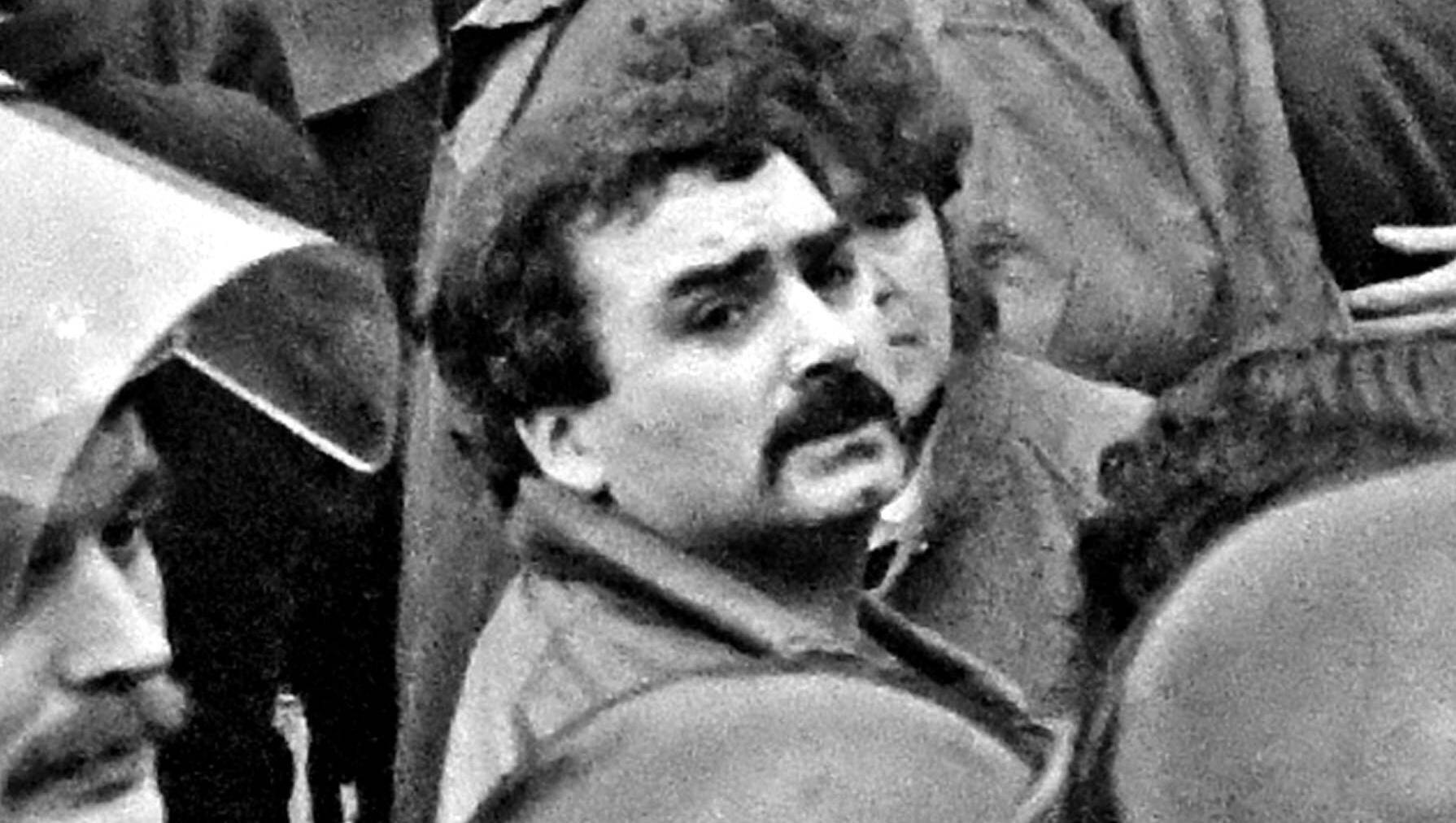
The late Freddie Scappaticci who is now widely accepted to have been British intelligence operative Stakeknife. File picture: Alan Lewis/PhotopressBelfast
The findings of a major report on certain aspects of the Troubles have featured in the headlines this week, though not perhaps for the most obvious reasons.
When the Kenova final report — commissioned by the Police Service of Northern Ireland (PSNI) in 2016 following a direction of Northern Ireland’s public prosecution service — was published on Tuesday, there was an immediate focus on its findings in relation to the British Army’s top operative within the IRA, codenamed Stakeknife.
The report found that over the course of nearly 20 years, this agent had produced “vast” amounts of information for the British intelligence services while part of the IRA’s internal security unit.
However, he was also linked to at least 14 murders.
The identity of Stakeknife is not revealed in the report because, said Kenova lead investigator Iain Livingstone, he had been prevented from doing so by the British government, which has a policy of neither confirm nor deny (NCND) on naming its agents.
Mr Livingstone has pointed out that exceptions have been made to this policy in the past, adding:
What makes this secretive attitude farcical is the fact that it is widely accepted that Stakeknife was Belfast native Freddie Scappaticci, who died in 2023 in England, having fled there and changed his name.
The report states that Stakeknife was well looked after financially by his British intelligence handlers, who also discussed protecting his assets, until his death at the age of 77.
Britain’s northern secretary Hilary Benn would not identify Stakeknife this week in accordance with the NCND policy, but the Kenova report states that NCND “cannot be used to protect agents who commit grotesque serious crime”.
There is no counter-argument to that observation.
The attitude of the British state here undercuts its moral and legal authority, adds to suspicion about its possible involvement in similar cases, and denies justice to the victims of this murderer.
It is not too late for it to make an exception, name this agent, and give closure to those victims.
The sheer variety of challenges arising from the housing crisis was on display again this week.
A report from the Society of Chartered Surveyors of Ireland (SCSI) found that affordability remains a barrier for people looking to buy apartments, instancing the cost of a two-bedroom apartment ranging between €480,000 and €650,000 for a suburban apartment.
The report stated that even if Government supports were included, first-time buyers would still need a combined salary of between €108,000 and €146,000 to afford such apartments.
Housing minister James Browne scrambled to defend the Government’s plans to increase the supply of housing in that instance, but he was surely wrongfooted by the controversy which flared over a video shared by his department earlier in the week.
The video, produced by the State’s Housing Agency along with youth organisation SpunOut, provided advice for adults forced to move back home with their parents, but it was quickly savaged by Opposition politicians, who described it variously as tone-deaf, patronising, demeaning, and insulting.
On Wednesday, Minister Browne said it was “misconceived” of his department to share the video, and department representatives stated that they had “removed the videos from our channels at the young people’s request”.
The best one could say of the video is that it is a misguided effort to help people in very difficult situations, though whether adults need to be told to contribute to a household by doing chores, as suggested in the video, is dubious.
The point made by Rory Hearne of the Social Democrats, when he said the video was “normalising something that should not be normalised”, was more pertinent.
The judgement of those who chose to share the video may be questionable, but there can be no debate about the scale of a crisis in which adults must abandon the prospect of living somewhere other than their family home.
A focus on bridging the funding gap mentioned by the SCSI report would be a better use of the department’s time.
During her campaign for the presidency, Catherine Connolly was outspoken about her wish to make Irish the working language of Áras an Uachtaráin if successful, and now that she is in office she is certainly promoting the first language of the State.
This week, she launched (The New Irish Dictionary), the first comprehensive monolingual “Irish-Irish” dictionary, at a special Foras na Gaeilge event in the EPIC Irish Emigration Museum in Dublin.
Instead of offering English-language definitions of Irish words and concepts, the new dictionary’s definitions are also in Irish.
“A contemporary monolingual dictionary is an essential resource in any living language, in which the language itself and its uniqueness are defined in its own words and by its own community, instead of constantly being defined through the medium of another language,” she said, and her points are persuasive.
The Irish-Irish dictionary sidesteps the obvious obstacle involved with using an Irish-English dictionary — the deployment of an English lens through which to see Irish language and culture.
Now, as President Connolly pointed out, this groundbreaking publication places “the Irish language and Irish speakers on an equal footing with other modern languages and communities”.
Bail ó Dhia ar an obair.

CONNECT WITH US TODAY



Be the first to know the latest news and updates