Dorcha Lee: The triple lock was never the problem — only the third lock
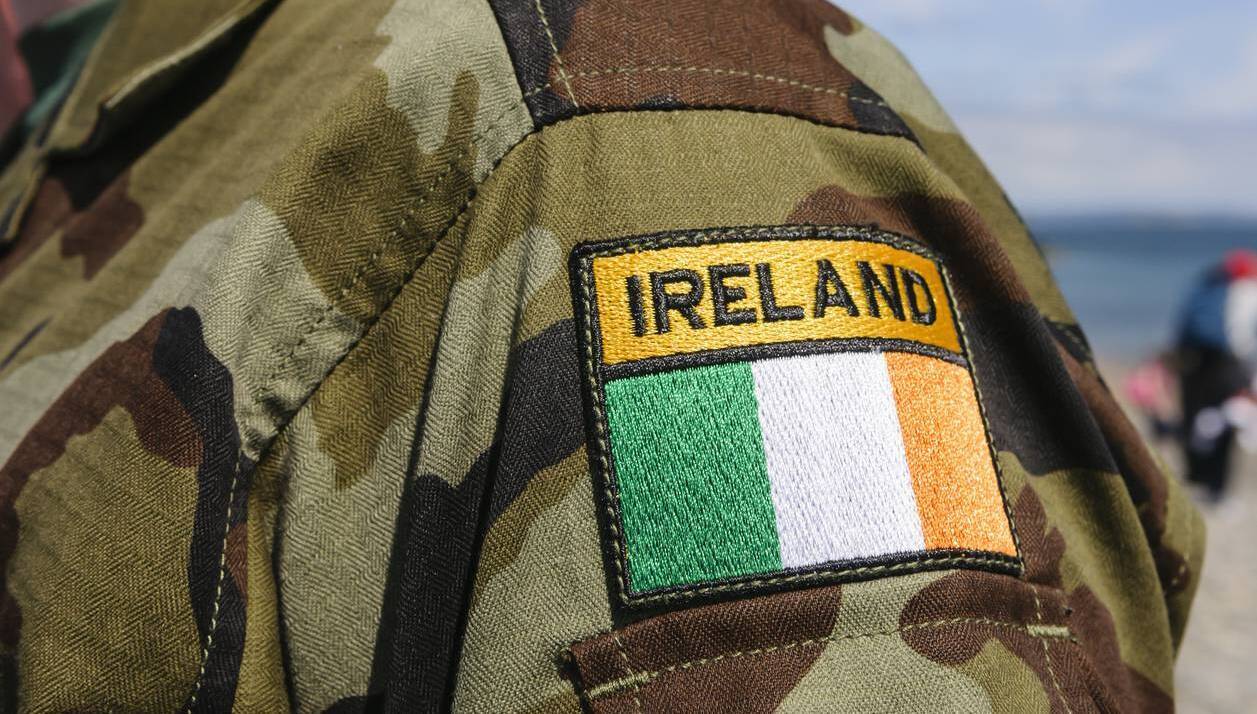
In Ireland, the triple lock refers to the requirement that three separate approvals are needed before Irish troops can be deployed overseas. Picture: iStock
On June 6, 2001, news came from Dublin the referendum on the Nice Treaty was in trouble. To the Irish in Brussels, working in the EU institutions and in our permanent representation, shock gave way to fear, incomprehension and a sense of betrayal. We braced ourselves for an uncertain reaction.
My place of work, that week, was with the working group of the EU Military Committee, which comprised the deputy military representatives of the then 15 member states. The military involved in the EU were very much the ‘new kids on the block’, having only been brought together, on an interim basis, in March 2000.
International media reports, on Nice going down, were vicious, especially the UK tabloids. The Irish had benefited greatly from EU membership but then had blocked the EU from ratifying the Nice Treaty. We had bitten the hand that fed us, with no regard for those applicant nations waiting anxiously to join the union.
Or to paraphrase a cadet classmate, a master of literary aphorisms: It was like the snake in the grass that reared its ugly head and threw a spanner in the works.
During a break at a working group meeting, the Danish deputy military representative got up, walked around the table, shook hands with me and said: “Welcome to the club”. He was referring to the Danish Protocol which blocked their active participation in the EU military institutions.
Their observer status limited them to attend certain meetings without speaking rights. Us four neutral nonaligned — Austria/Finland /Ireland and Sweden — always had a line of informal contact with our Danish colleague.
Within this normally congenial working group, I was one of the longest serving members, just about to complete three years and return home. We four neutrals worked very closely together, often having a common opinion on military issues, in particular, in tapping into our corporate UN peacekeeping experience.
Read More
We ensured that experience was reflected in the various procedures we were setting up within the EU Military Committee and military staff. The other 11 member states were member countries of “the other organisation across town”, as we called Nato.
They were always pushing the Nato model, but we neutrals/ nonaligned, backed up by our diplomats in the Political and Security Committee, made sure the EU military institutions were not subject to a Nato ‘Anschluss’.
However, within the working group, where I held illusions of my own importance, I found myself being sidelined by the Swedish chair, not even acceptable as a seconder for the most minor amendments. Similar situations were happening in other committees and in the technical groups.
My Italian colleague, who sat beside me for years in different fora, expressed amazement that such complex technical issues as the Nice Treaty would ever be put directly to the people in a referendum.
The council made clear there would be no change in the text of Nice. The main purpose was to facilitate enlargement of the EU, and unless all member states ratified the Treaty, it would remain blocked, halting the enlargement. None of the other three neutral/nonaligned member states supported the Irish position.
The big mistake of those drafting the Irish amendments was to include a commitment by Ireland for the third lock ie, UN approval. Effectively, this meant each of the five permanent member nations of the UN — China, France, the UK, USA and Russia — had the power of veto on Irish troops serving in certain missions abroad.
The first and second locks — government decision and Dáil approval — were never a problem, but the self-inflicted third lock, empowering other nations to negate the first two locks, seriously undermined our national sovereignty. None of the other 191 member nations of the UN vested similar authority in the UN.
Perhaps those Irish officials who came up with the third lock idea thought they were displaying a high-minded moral position in support of the UN? In this regard, we Irish were putting the UN up on a pedestal, ignoring the failings of the organisation.
Don’t get me wrong. The UN has, in the past, played a great role in preserving world peace. Without the UN, the survivors of the third world war would be staggering around the nuclear wastelands trying to avoid the fourth world war.
However, as far back as the 1990s, UN secretaries general acknowledged the increasing difficulty in getting agreed mandates for UN peacekeeping and peace enforcing missions. Boutros Boutros-Gali was the first to emphasise the need to use chapter VIII of the charter and have regional organisations take over this role. These regional organisations are able to get a consensus on missions without getting UN approval.
For example, the EU could set up an operation to rescue NGOs and missionaries in Africa, many of whom might be Irish, but the triple lock would block our participation.
For decades, I have suggested a minimalist solution, that is, to amend the triple lock by adding “or EU approved" missions. But getting rid of the triple lock entirely is the best solution by far, as it allows the option for participation in peacekeeping missions run by other organisations, such as the OSCE, (Organisation for Security and Cooperation in Europe), the AU (African Union) or Nato.
The context has also changed. In the past four years, major powers have abandoned the rules-based order, returning to the discredited concept of spheres of influence. The UN itself is a product of the rules-based order with the UN Charter at its very heart. The decline of the rules-based order is matched by the decline of the UN as the leading influencer in maintaining world peace. The world is as it is, not as we would wish it to be.
Some members of the Oireachtas, whose voting support lies with those who want to retain the triple lock, are sadly putting their personal interest ahead of the national interest. Among them are a few who really understand the negative implications of retaining the triple lock.
They are supporting a measure which limits Ireland’s sovereign decision-making. They are effectively ceding the right of veto, over the overseas deployment of our troops to the five permanent member states of the UN Security Council. By doing so, they are also undermining our policy of neutrality.
Why are these public representatives proposing to limit the powers of our political institutions? They clearly don’t trust the judgement of their colleagues to make the right decisions. Perhaps it is the old national inferiority complex coming back to haunt us again? Or maybe it has something to do with votes.
In our times, crises arise overnight, requiring our Government to be able to respond rapidly. The first duty of the State is to protect our citizens, and the Government’s duty, in this regard, is not limited to our shores. We do not need to empower other nations to decide these issues for us.
- Colonel Dorcha Lee is a defence analyst, and former military adviser with DFA in Brussels

CONNECT WITH US TODAY



Be the first to know the latest news and updates