Bomb scares and cyber attacks: Ireland's response to threats hampered by neglect
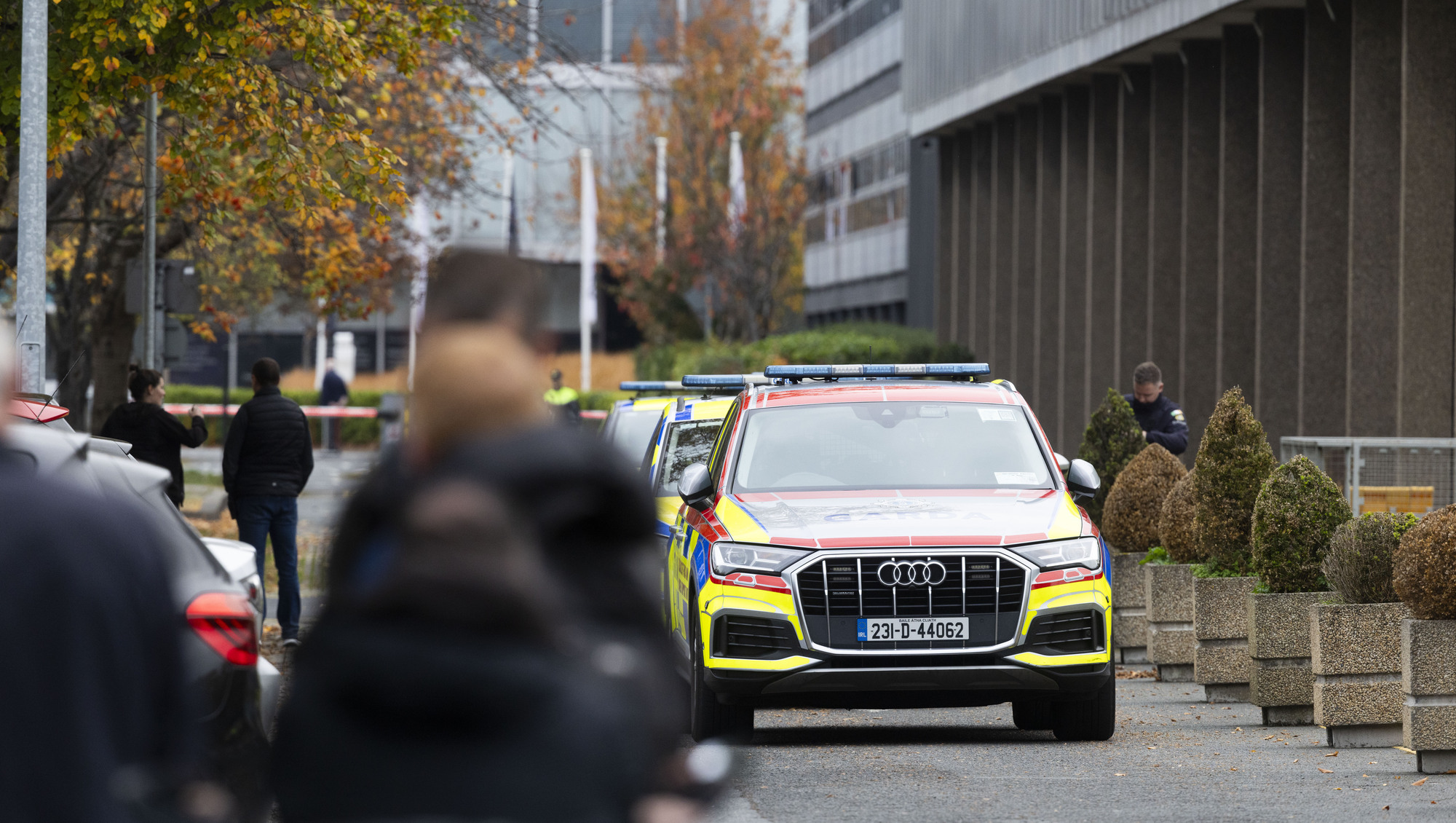
Gardaí surround RTÉ Studios in Dublin after the station received a bomb threat. Picture: Sam Boal/Collins
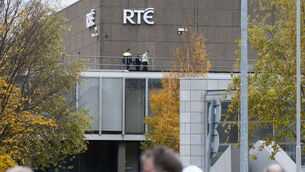
There was consternation — and a sense of bewilderment — in radio stations on Friday morning after an email dropped saying a bomb would go off in 45 minutes.
In Montrose, RTÉ producers managed to put on a music pre-record instead of the show on RTÉ 1 as the building was cleared, with the presenter himself able to resume live programming after an hour or so, via its mobile broadcasting unit.
RTÉ, along with Newstalk and the Independent newspaper group, all received the same email about a bomb.
The email claimed to be from “Mikail Andropov”, who said he was “one of the leaders” of a group responsible for the bomb threats plaguing European aviation this week.
Those hoax bomb threats, affecting 30 flight on Thursday and seven on Tuesday, continued on Friday morning with more incidents.
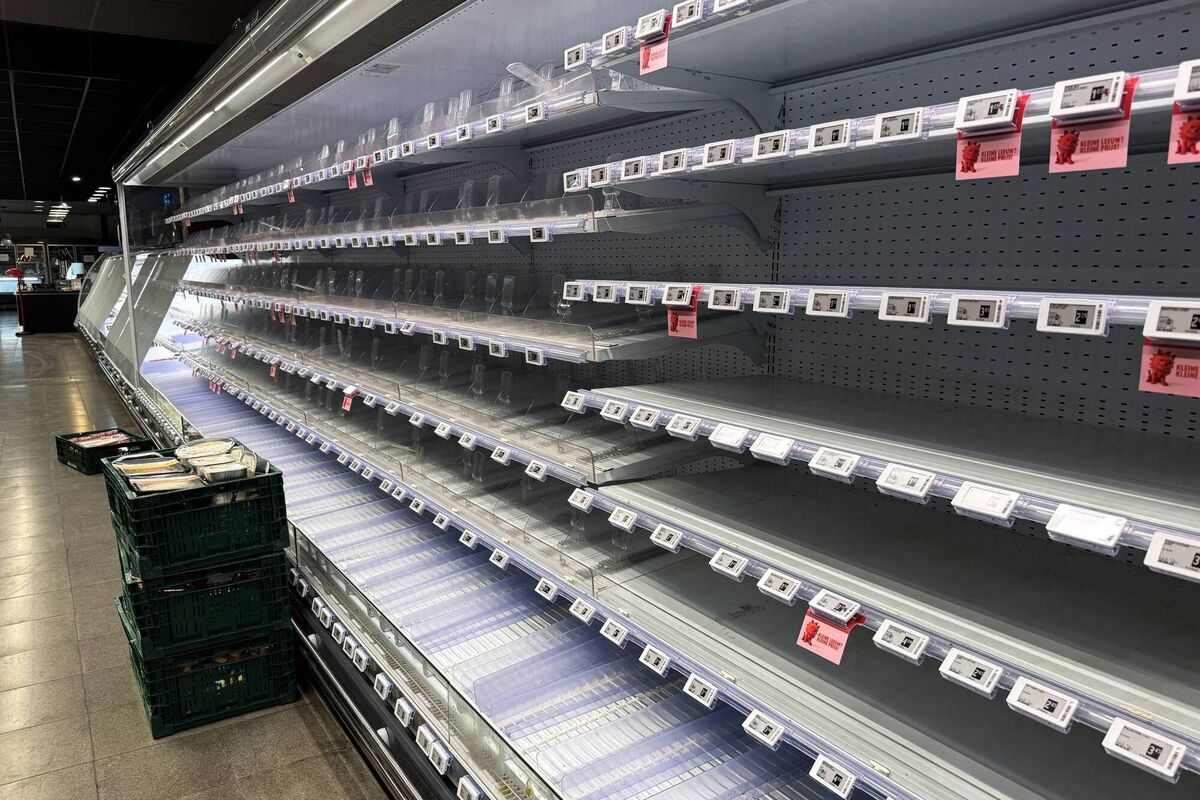
These cases followed coordinated cyber attacks on supermarket refrigerators across Europe, and of blood banks in a number of countries.
Prior to Friday’s events, certain cyber groups or extreme political groups were purporting to be claiming responsibility — including the “Male State” extreme misogynistic group in Russia. But a report by BBC Russia was told by the founder of the group it was not involved.
Read More
“The thing with claims, you don’t know if they are lying or not," one security source said. "You have to ask why are they claiming — is it to sow confusion or is it that Russia wants to send the message it’s them.”
Security sources have stressed investigations by aviation bodies and police — and by cyber agencies in relation to the supermarket attacks — will take time.
Finding evidence of who is behind them is another thing, and attribution can be very difficult.
As reported in the Irish Examiner on Friday morning, security services are assessing as “credible” the likelihood Russian intelligence is involving in the various incidents, as part of a “hybrid” campaign targeting Europe.
While it is possible a sophisticated hacker group may be behind the various attacks and incidents, it is considered more likely Russian services are behind it, using various aligned groups.
European intelligence services are sharing information and analysis with each other and producing shared assessments for their respective governments.
As unnerving at the bomb threats to Irish media are, they fit in to the existing threat assessment carried out by Garda HQ in relation to next week’s international summits in Dublin.
The threat assessment, prior to this week’s events, had rated as “substantial” — the third of five security levels — the likelihood of an incident, such as a cyber-attack, drone incursion, bomb threats or disruptive protests.
Sources have stressed the substantial assessment does not mean a physical attack, such as a terrorist attack, is likely.
The threat assessment is treated as a “live” document and subject to updating.
Next week’s events will involve the largest, and most complicated, policing and security event in the State and Garda HQ has been planning it since last year.
The European Political Community summit is being held on Thursday, with 55 heads of state visiting Ireland, including, it is expected, Ukrainian president Volodymyr Zelenskyy.
The next day, the EU heads of state will hold meetings — the last of Ireland’s high-level events in its presidency of the European Council.
Political, financial and military support for Ukraine — in the midst of escalating civilian deaths and bombardment of energy infrastructure with the winter coming — will be top of the agendas.
Ukraine’s deputy foreign minister told an EU presidency meeting in Dublin on Thursday it desperately needs air defence systems and interceptor missiles if the country is to survive.
There are concerns the bomb threats to media could escalate to include the planting of suspect devices — most likely hoaxes — in order to demonstrate the “seriousness” of those behind the actions.
The understands technical and physical surveillance is being carried out by both gardaí and the Defence Forces, targeting their respective areas of responsibility.
The target list is thought to include violent political extremists or terrorists, serial demonstrators and individuals linked to hostile states.
Ireland’s intelligence services, including the National Cyber Security Service along with the Garda National Crime & Security Intelligence Service and the DF Military Intelligence Service, are not helped by decades of neglect, to varying degrees.
While the NCSC has seen significant improvement in its staffing, budgets and accommodation, it is still waiting for serious new powers under the National Cyber Security Bill 2024.
The heads of the bill were published in August 2024, but the final bill is still awaited, with enactment likely to be well into next year.
Ireland is also being taken to European courts for failing to implement the EU cyber-directive NIS2, which will bring in legally-binding regulation for cyber security in 18 critical sectors.
As the has published many times before, and again this week, Ireland still does not have a national security strategy. Supposed to be published in 2021, it has been continually deferred.
Despite successive years of “record” defence funding, Ireland is still languishing at the bottom of the EU table for defence spending, far below the EU average.
A dedicated national security centre, with a full-time national security coordinator, was a key recommendation of the Commission on the Future of Policing in Ireland in September 2018.
What was recommended never came to pass and what was set up — the National Security Analysis Centre — was downgraded in 2025 to a secretariat.

CONNECT WITH US TODAY



Be the first to know the latest news and updates