The spin and misinformation around the triple lock is eye-watering
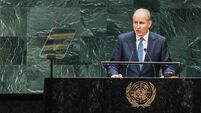
I am demanding this debate in the Senate is as a result of a sustained campaign of misinformation and disinformation in Ireland’s public discourse to undermine and mis-represent the crucial role the triple lock plays in Ireland’s long-held policy of militarily non-aligned neutrality. Picture: Derek Farrell/RollingNews.ie
This Wednesday in Seanad Éireann, I am introducing a private member’s bill which calls on the Government not to abolish Ireland’s triple lock mechanism. The triple lock requires a UN Security Council mandate, Government approval and Dáil approval in order for Irish troops to be deployed overseas in a formal international military mission.
I am demanding this debate in the Senate as a result of a sustained campaign of misinformation and disinformation in Ireland’s public discourse to undermine and mis-represent the crucial role the triple lock plays in our long-held policy of militarily non-aligned neutrality.
A number of glaring myths and untruths are repeatedly being peddled in a public narrative that is designed to manufacture consent among the Irish people for ending our de-facto neutral status.
The false language and spin around the government’s proposed Defence Amendment Bill — scheduled in the Government’s legislative programme this autumn — is eye-watering.
First of all, the triple lock is not being "reformed" or "amended" — it is simply being removed. If the Government guillotine this abolition by a whipped vote, the triple lock — guaranteed to the Irish people by Ireland’s solemn ‘National Declaration’ in 2002 and further reinforced by the EU’s Seville Declaration — will no longer exist. There will be no other oversight mechanism or safeguard on the matter of where we deploy Irish troops in the future.
Read More
Bluntly speaking, any future Irish government, of any composition, will be in a position to send any number of young Irish men and women to any conflict anywhere in the world by simple government majority.
The community of decision-makers that will make these decisions is the same collective that has left Ireland practically defenceless in the air, maritime, ground and cyber domains.
The second myth is often repeated by the Taoiseach and other Government ministers to the effect that we need to remove the triple lock to safeguard our proud tradition of peacekeeping.
Let me be very clear here. In the absence of a UNSC mandate, any future military mission we would participate in would not be a peacekeeping mission. It would not be a UN blue helmet mission. Instead, it would be de-facto a peace enforcement mission of some kind.
Future international military missions — in the absence of a UNSC mandate — will be modelled on coalitions of the willing, stabilisation forces, taskforces, or as we have seen most recently, major combat operations in the Strait of Hormuz, or "special military operations" in Putin’s criminal invasion of Ukraine.
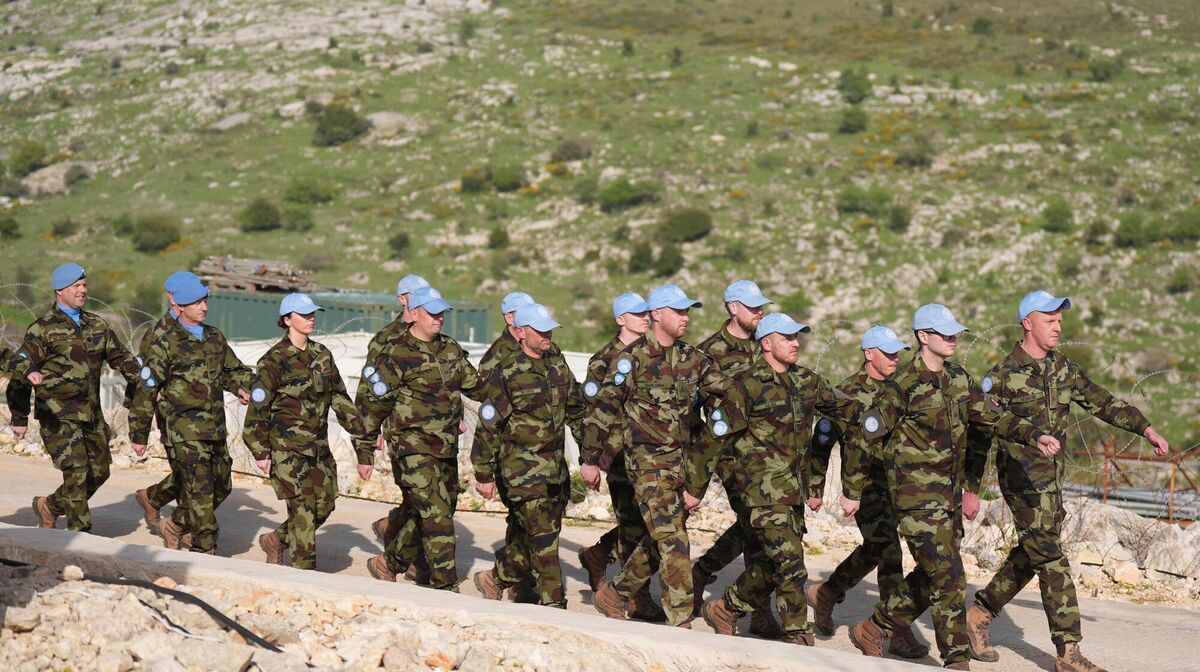
In this period of escalating military conflict, global turbulence and flux, it will be impossible to field an international peacekeeping mission in the mould of classic Cold War UN forces such as Unifil in Lebanon — which deployed with consent from all parties to the conflict.
All future missions will be in contested zones, for example, as has been suggested, an international "coalition of the willing" proposed for Donbass in Ukraine. President Volodymyr Zelenskyy signed a letter of intent for such a force, co-signed by French president Emmanuel Macron and then British prime minister Keir Starmer.
The Kremlin has responded by saying such a force would be "unacceptable" and a "legitimate target" for resistance groups and Russian forces.
So, when government spokespersons and ministers talk about "peacekeeping", the Irish people need to be aware that this is shameful misinformation at best, and deliberate disinformation at worst.
Other myths circulating include the canard that because of the triple lock, Ireland can only send a maximum of 12 troops abroad at any one time to assist Irish citizens caught up in crises such as the dramatic evacuation of Irish passport holders from Kabul, or Sudan.
It was confirmed to us in the Joint Oireachtas Committee on Defence and National Security that no such limit exists for humanitarian or rescue missions and Ireland can send as many troops as it wishes to assist her citizens — or the citizens of other nations — caught up in man-made or natural disasters, as these are not formal military missions, but ad-hoc emergency responses.
Europe is arming itself, proposing to spend almost €1,000bn on re-armament. Global powers such as Russia and the United States have abandoned the rules-based world order and have launched illegal military operations without any reference to the United Nations or the laws of international conflict.
This is precisely the moment when Ireland should not abandon the mechanisms — flawed as they are — of the United Nations. It is a myth to assert the triple lock gives Russia or China or the United states a veto on where Ireland sends its troops.
Putin, Trump and Xi Jinping do not care where Ireland sends its troops. The Irish people by solemn declarations and the sovereign will of the people have chosen to be bound by the multilateral principles of the United Nations.
Suggesting there is no link between the triple lock and our neutral status is akin to suggesting there is no link between the steering wheel and the brakes on a car.
If the current Government sets its face against the will of the people, and abolishes the triple lock with a whipped vote in the Houses of the Oireachtas — the Irish people deserve a referendum to explicitly place neutrality in Bunreacht na h’Éireann, as is the case in Switzerland and Austria.
In the meantime, the Irish Government should invest in the men and women of Óglaigh na hÉireann and invest in whole of society resilience to meet the significant challenges that climate change and global insecurity will bring to Ireland.
- Tom Clonan is a senator and a retired captain of the Irish Defence Forces


CONNECT WITH US TODAY



Be the first to know the latest news and updates