I’m an atheist and even I can see the Church is losing its way
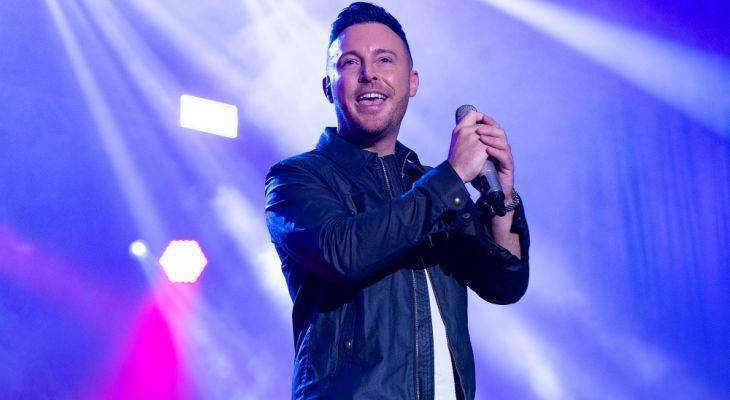
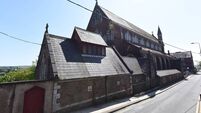
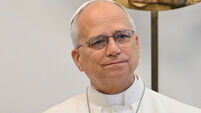
Bishop Kevin Doran has strongly backed a Boyle parish priest's decision to cancel a proposed Nathan Carter Christmas concert in a local church.
I have been playing the piano in my local Catholic church for almost 50 years. I’m also an atheist.
I appreciate that those two statements sitting beside each other might seem more than a little confusing. But to me, they have never been contradictory.
Our previous parish priest, who was with us for more than 40 years and is now sadly deceased, was well aware of my lack of religious belief and never had an issue with it. He understood, as I did, that my contribution was never really about faith. It was about community.
I grew up in rural Galway in the 1970s, at a time when church and community were almost interchangeable. Sunday Mass was obviously an act of religious worship, but it was also so much more than that.
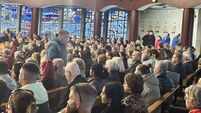
It was where we met our neighbours, where families gathered, where friendships were made and renewed, where people marked the great moments in their lives and where a community came together every single week. Music was, and is, an intrinsic part of that.
I started playing in our church as a child and, almost half a century later, I still do because I believe deeply in the power of community, that intricate fabric that binds us all together. Continuing to play music there is my small contribution to a place and a people who gave me a great deal.
Read More
All of which brings me to Boyle, and a decision that I find very difficult to understand. In recent weeks there has been considerable controversy over the cancellation of a Nathan Carter Christmas concert in St Joseph’s Church in the town. The decision was made by the new parish priest and has been strongly supported by his bishop.
A couple of years ago in Ballaghaderreen, just down the road from Boyle, I attended a wonderful concert in St Nathy’s Cathedral featuring Lúnasa and Mary Coughlan. I’m also a regular attendee at the superb Feakle Folk Festival, where artists like Martin Hayes and Steve Cooney enthral audiences at St Mary’s Church in that beautiful East Clare village.
In neither case is there anything remotely disrespectful about what happens inside these remarkable places. They’re filled with people, music and joy, and I always feel a palpable sense of local pride that some of Ireland’s most respected and cherished artists have chosen to perform in these small towns and villages.
That matters because places like Ballaghaderreen and Feakle don’t have an endless selection of large auditoriums or concert halls. Their churches may be the only buildings capable of accommodating a substantial audience.
More importantly, these churches have stood at the heart of those communities for generations. And that is why I think the decision to cancel the Boyle concert raises a much bigger question than whether Nathan Carter should be allowed to sing in a Catholic church.
It raises a question about what the Catholic Church now believes its buildings are actually for. Of course a church is a sacred space for people of faith. Nobody is suggesting otherwise. But sacred does not have to mean sealed off from ordinary human life.
Indeed, I would have thought that one of the great strengths of Christianity was precisely the opposite. The sacred is also found in how we treat one another, in fellowship, compassion, generosity and community.
I may not believe that Jesus Christ was divine, but I fundamentally believe in much of what he taught. Love your neighbour, care for people who are struggling, welcome the outsider and serve others rather than yourself. As a blueprint for living a decent life, it’s about as good as it gets.
That is why I struggle to reconcile those values with a decision that prevents a community from using one of its most important buildings for a respectful evening of music.
There is an irony here that the institutional Church should perhaps reflect upon. For generations, people in towns and villages all over Ireland built, maintained and supported these churches.
They fundraised for them. They cleaned them. They repaired their roofs. They sang in their choirs. These were not simply buildings belonging to an institution. They were community buildings in the deepest possible sense.
And at a time when Mass attendance has declined dramatically, when many churches are quieter than they have ever been, and when the Church itself is asking what its future relationship with Irish society should look like, the answer cannot be to close those buildings off even further.
That makes the language of last weekend’s National Synodal Assembly particularly striking. Fr Declan Hurley spoke of becoming “a Church that is a community of belonging”, while Cardinal Mario Grech urged the Irish Church to consider “re-purposing and re-positioning the Church” for a new era.
So let’s see those powerful words in action. Invite people into our churches. Fill them with music, conversation and laughter. Fill them with children and families. The Jesus I learned about in school would be at the front door welcoming them.
Allow these extraordinary buildings to remain at the heart of the communities that created and sustained them.
There will obviously be limits. Nobody is suggesting that every form of entertainment is appropriate in a church. Respect and common sense matter. But that is very different from deciding that a concert, carefully organised and respectful of its surroundings, somehow diminishes the sacred nature of the building.
I would argue that it enhances it. A church without people is ultimately just bricks, timber, stone and stained glass. It’s the people who give it true meaning.
Perhaps the greatest danger facing the Catholic Church in Ireland today is not that its churches will be used too much by their communities. It’s that they will be used too little.
And I cannot help wondering which vision is closer to the Christianity I was taught as a child.
Is it a closed door protecting a sacred space from the community outside, or a church filled on a winter’s evening with neighbours, music, joy and local pride?
I know which one I recognise.

CONNECT WITH US TODAY



Be the first to know the latest news and updates